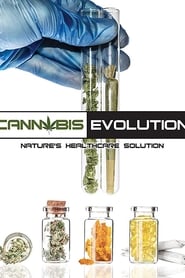
Cannabis Evolution
تنزيل الترجمة English
معلومات الإصدار
الوسوم
معاينة ترجمة English
أول 200 سطر.
- I think medical marijuana
should be legalized because of its amazing health benefits.
When I got sciatica from moving heavy objects,
medical marijuana not only helped with my pain
but made me feel a lot better when I was walking around.
Not only that, but it's helped countless of my friends
who either have a family member
or have seizures themselves,
made the seizures either go away completely
or decrease them from having multiple seizures
to either a few a day or being able
to actually get around and do everything normally.
And by helping muscular pain and seizures not alone,
when one of my family members got cancer,
medical marijuana was not only able to help them
but it was able to mitigate a lot of the symptoms
and ultimately kill a lot of the cancer cells which,
I did the research and I can see
that medical marijuana helps with cancer relief as well.
So with all these benefits, helping with muscular pain,
helping seizures, helping people who have cancer,
there's no reason not to wanna legalize medical marijuana
so it can help the millions of people,
the millions of Americans who suffer from these conditions
in a natural and safe way,
'cause I've seen other people, myself,
try pharmaceutical drugs off the shelf
and it had bad effects.
It's not something that I would recommend to anyone.
- For thousands of years,
humanity has been using the cannabis plant
to treat various medical conditions.
The ancient Chinese, Egyptian and Greek peoples
all recognized the immense medical potential
of this often misunderstood plant.
Thousands of years later
in the most technologically-advanced age of human history,
medical marijuana is a controversial topic.
The early 20th century saw a vilification
and prohibition of marijuana,
a movement born out of greed, lies and racism.
Only now are scientists beginning to confirm
what the ancients knew, that marijuana is one
of the most medically applicable plants
Mother Nature has to offer.
Medical marijuana has the potential
to treat a wide range of psychological
and physiological conditions from cancer to PTSD.
Nevertheless, the illegality of marijuana
and the War on Drugs has stifled research into the drug.
It is time to dispel the lies and address the facts.
and controversial plants to ever sprout.
Hi, I'm Ahmed.
I'm from India and I think selling marijuana
should be made legal because of its medicinal properties.
A lot of research has proven
that marijuana is very helpful in treating lot of diseases
like joint pain, eye ailments, et cetera,
so that's why I think it should be made legal.
Also, it can be a good source of income for the farmers
and it can be also a good source of revenue generation
for the government, and also I think
that if cigarette and alcohol are legal,
then why not marijuana
which is considered to be less addictive?
Thank you.
- It is a story of thousands of years
and millions of people.
It is the story of a herb called cannabis
and a drug called marijuana.
Infamous but misunderstood.
The psychoactive drug, marijuana,
has been one of the most controversial substances
of the past two centuries.
Often known as weed or cannabis,
marijuana has been used for thousands of years
both recreationally and medically.
The 21st century has seen a rise in the awareness
of the medical benefits of using the marijuana.
This documentary shall explore the origins,
uses and benefits of medical marijuana.
But what exactly is the drug marijuana?
Marijuana, also referred to as weed or cannabis,
is a drug derived from the cannabis herb
sometimes referred to as hemp.
There are three known species of the cannabis plant,
all of which are indigenous to Central Asia
and easily recognizable by its unique leaf pattern.
The cannabis plant produces a group
of chemicals called cannabinoids.
These cause a range of physical
and mental effects when consumed.
In drug form, the plant usually comes in the form
of a dried flower buds called marijuana,
a resin called hashish, or various extracts
known collectively as hashish oils.
The main psychoactive properties of the plant
come from the flower of the plant
rather than the leaves as is sometimes assumed.
Cannabis is the fourth most popular recreational drug
on Earth behind caffeine, alcohol and tobacco.
In the United States alone,
an estimated 100 million Americans have
or do use marijuana recreationally.
The main effects of recreational marijuana
include a feeling of relaxation and slight euphoria.
The side effects often include feelings of hunger
or a possible increase in heart rate.
The effects of moderate recreational use
usually wear off within three hours.
The most common ways in which marijuana is used
include smoking like a cigarette, using a pipe,
using a bong, a vaporizer,
or sometimes ingested when included in ingredients in foods,
the most famous of these being the weed brownie.
In most countries, the perceived adverse effects
of recreational marijuana upon society and the individual
has led to the possession, sale and use
of marijuana to be made illegal.
In recent years, the illegality of marijuana
has come under scrutiny by many doctors, scientists,
and researchers who cite the medical benefits
of the drug's properties upon individuals suffering
from a range of ailments such as Alzheimer's,
cancer, Crohn's disease, glaucoma, multiple sclerosis,
nausea, PTSD, and general pain.
In its various medical uses,
the drug is known as medical marijuana
to separate it from its more common recreational uses.
The term medical marijuana refers
to the use of the whole unprocessed marijuana plant
and its pure extracts in treating the psychological
or physiological condition.
It must be sourced from a medical-grade cannabis plant
that has been meticulously grown
without the use of toxic pesticides and fertilizers.
Despite calls for fewer restrictions,
the FDA is yet to approve it as a medical treatment,
stating that there still have not been enough studies
proving the safety and effectiveness of the drug.
One reason for this lack of research is due to the fact
that the DEA considers marijuana a Schedule I drug,
the same category as substances
such as LSD, heroin and ecstasy.
Because of this, researchers are required
to possess a special license
to study the beneficial aspects.
Another reason for the limited application
in research of medical marijuana
is the fact that more than a century,
marijuana has been vilified by the media.
For example, one particularly absurd infomercial
from the '90s shows two young men socializing
when suddenly one of them starts to smoke marijuana.
Seconds later, the boy has shot himself in the head
with a rifle in an apparent fit of hysteria.
This is a wild exaggeration of the effects of marijuana.
The drug does not cause any suicidal fits of madness
and those who partake in such fearmongering
are the very people who understand the drug the least.
This documentary aims to dispel the myths
and address the facts.
We shall explore the effects and functions of the drug
and how it can be applied logically to medical benefit
of many who're suffering both physically and mentally.
However, in order to fully understand marijuana,
we must start at the beginning.
The usage of cannabis by humans dates back
to at least 3000 BC.
Ancient humans valued the plant
for its medical and recreational uses
as well as the plant's ability
to be turned into rope and fiber.
The psychoactive properties of the drug
were especially popular for ritual and religious uses.
Cannabis has a history of medical use
dating back thousands of years
and was first used by the ancient peoples
of India, China, and Japan.
In China, the use of cannabis in medicine
was probably a very early development.
The ancient Chinese regularly used the plant in cooking,
so the discovery of its medicinal properties
was a natural progression from this.
In 2737 BC, the Chinese emperor Shen Nung
who was also a pharmacologist wrote a book
on medical treatments methods which included a section
on the medical benefits of the cannabis plant.
The emperor recommended using cannabis for ailments
such as constipation, gout and rheumatism.
Cannabis is still considered one of the 50 fundamental herbs
of traditional Chinese medicine.
In India, cannabis is also mentioned
in the Hindu Vedas texts dating to between 2000 and 1400 BC.
Cannabis use also became a ritual part
of the Hindu festival of Holi.
The cannabis plant soon spread from East Asia
to the Middle East and Africa via trade.
An Egyptian papyrus from 1550 BC describes medical cannabis
and recommends its use for pain relief.
More English subtitles for Cannabis Evolution
- Cannabis Evolution 2019 1080p WEBRip x264-RARBG · 9 downloads · 2020-07-06
التعليقات
No comments yet. Be the first to leave one.