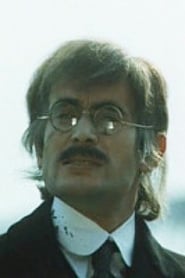
Hipoteza
تنزيل الترجمة English
معاينة ترجمة English
أول 66 سطر.
HYPOTHESIS
This title should be understood literally.
There was no professor.
This situation didn't happen.
But let's assume that...
There is an old, university town.
In Austria, Hungary, Poland or in Germany.
Anyway, somewhere in Central Europe.
Details don't matter.
We could also imagine we're in Scandinavia or the Balkans.
The essential element of the story is the old university.
And a wide river with a high bridge.
High just like this one.
As an example.
This film was made in Torun.
Let's also assume, that it's 1913.
Why? In order to feel some distance.
Only a few of us remember those times, so we can make up things quite freely.
Many things could have happened then.
It's 1913.
A time of European empires and kingdoms,
the time of our grandfathers and great-grandfathers.
Full of opposites, waves of strikes
injustice and harsh social conflicts.
It's autumn in our town.
Let's say it was beautiful.
Who would feel like checking in old yearbooks if it's true?
Anyway, newspapers back then didn't write about the weather.
They printed worrying information about the situation in the world.
But since the place was so peaceful, nobody cared.
The university was a peaceful place too, not like nowadays.
Students and police officers had at least normal relations.
Now let's assume that there is a young professor N.
His existence is hypothetical, it cannot be proved.
One morning after a lecture, professor N. went for a walk.
Seemingly, this trivial incident is not important for mankind.
However, let's assume that N. is a genius.
He's been very talented since he was a child.
When he was eight, he regularly won at chess against his father.
Being in secondary school, he easily solved difficult tasks.
When he was 21, his extraordinary talent for mathematics got him a PhD,
with hopes of becoming full professor.
Ladies and gentlemen, let me present my hypothesis to you.
And then let me prove it.
Let's assume that...
P_i equals
M v_i
square root of 1 minus v^2 over c^2...
We won't follow the lecture. The thing is not about mathematics.
This hypothesis may be a usual scholarly puzzle.
But it may also be the beginning of a revolutionary theory.
Let's assume that after the lecture he went for a walk by the river,
as was his wont.
Objectively speaking, it was autumn.
Birds were singing.
The sun illuminated the first yellow leaves in vivid shades.
There were neither children nor sun on the professor's mind.
But rather the foundations of a great discovery
that could make him as important as the great luminaries.
But before it happens, if it's going to happen at all,
the professor will continue his walk.
And now a choice appears.
He may head for the bridge or go back downtown.
His entire life may depend on this seemingly trivial decision.
Maybe even the course of history.
Meanwhile,
التعليقات
No comments yet. Be the first to leave one.