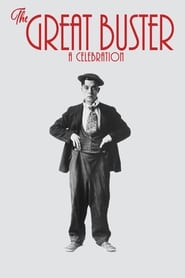
The Great Buster: A Celebration
تنزيل الترجمة English
معلومات الإصدار
الوسوم
معاينة ترجمة English
أول 196 سطر.
Guest: There's a great story about Buster Keaton,
who religiously previewed all his comedies, you know?
And took a picture out, I think it was called, "Seven Chances,"
and it was a wonderful reaction to the picture,
and it didn't have a good ending.
It just sort of laid there at the end.
It was a great chase, with women chasing him,
because they were all brides, a wonderful scene.
And it sort of petered out and that was it.
And the audience, and he felt something was wrong.
But, right toward the end of the scene,
he's running away from these women,
and he's running down a hill, and rocks got dislodged,
and rolled after him.
There was a big laugh from the audience and that was it.
And he said we're going to shoot a new ending.
And he went back, and he shot for about a week,
and he built an avalanche.
He started with three rocks, and he built it to bigger
rocks, and finally these huge boulders, you know,
the size of those cameras rolling down after him.
Well, it's one of the great sequences ever done.
Dick: Why did Keaton hit the skids?
That's one, seems to be one of the sad mysteries
of Hollywood.
Frank: Well, he was essentially a panto...
pantomime artist and when sound came along, they,
the pantomime artist went out of business really.
And also they were killed by, by something
brand new, cartoons.
Guest: Chuck Jones, who directed most of the
great Bugs Bunny, Roadrunner cartoons,
and he said he was totally influenced by Buster Keaton.
Narrator: Joseph Frank Keaton was born October 4th, 1895,
in Piqua, Kansas.
He was the son of vaudevillians Myra and
Joe Keaton who were a married comedy team
touring the country.
That's how they happened to be in Piqua, Kansas,
a small farming community they were passing through
when Myra went into labor.
James: He was born literally in a trunk.
His parents were part of the Family Medicine Show,
and he was considered part of the company
at the age of 11 months.
James K: He wandered on stage one day when they were doing
their act and bothered them.
And the audience thought it was funny.
Narrator: By the time he was four years old,
little Joe Frank Keaton had actually become a star
in Vaudeville, the youngest ever.
James: Buster was dressed exactly the same as
his father, Galway whiskers and the bit.
Joe Keaton would be on the top of the table doing his
various acrobatic maneuvers, and Buster would come up
behind him with a broom, and he would sweep the broom
across, and knock him down.
And so that's how that act began.
Narrator: Famous as a human projectile his father used to
throw at his mother during their act now known as
the Three Keatons.
The Three Keatons was considered one of the
roughest acts in Vaudeville at the time.
Were it not so funny, people would be appalled or aghast
at how Buster was treated on stage,
but it was all pretty much an illusion.
Dick: They had a handle on him, like a suitcase.
They would throw him around the stage.
Johnny: Had a little handle on his back,
so they could throw him better.
Narrator: In several states, his father was accused of child
abuse since the act mainly consisted of little Joe
being thrown everywhere imaginable on the stage,
and once famously he even had an annoying heckler
in the audience.
James K: I said, he would throw you into the audience?
He said the old man wasn't a bad guy.
He would always say tighten up your ass
before he threw me.
Narrator: They were arrested numerous times,
but managed to get around the law because as Buster put it,
the law read that no child under the age of 16 shall do
acrobatics, walk wire, play musical instruments, trapeze,
and it named everything.
But none of them said you couldn't kick him
in the face.
James: Really it defies logic that Joe Keaton would want to
seriously or intentionally injure his son because Buster
was the star of the act.
The Three Keatons, they were getting $750 a week,
$250 of which were Buster's.
This was at a time when a child get an allowance of a
nickel a week, and here he's tooling around in his own car
at the age of 12.
Narrator: His father had taught him how to take a fall,
however, as well as other acrobatics.
And in fact out of over 10,000 performances,
little Joe only got hurt slightly twice.
But, boy, did this kid love making people laugh.
Every time he took a fall, they laughed,
which is how he got his famous moniker.
According to Buster's father Joe,
it was the famous magician Harry Houdini,
a personal friend of the Keatons,
after watching the kid fall down a flight of stairs
unhurt at the age of six months who said,
that's some buster your kid took.
Now it may not have been Houdini who said it,
but what the hell?
Buster in those days was known to mean a fall.
Nothing could have been more appropriate.
Eventually, Buster Keaton took the funniest falls
in pictures, a virtual symphony of them
throughout his career.
Any way, back to that later.
The Three Keatons, Myra, Joe, and Buster,
became one of the most famous acts in Vaudeville,
repeatedly touring the country.
And along the way, the act grew.
The Three Keatons became the Four Keatons.
Then, the Five Keatons.
But, in 1917, when Buster was 21 years old,
the Keatons' act broke up.
Louise: Our parents had to give up the Vaudeville act
and he set off to support us all.
Harry: Yeah, he was determined that Louise and
I would get the schooling that he never had.
Narrator: Buster goes to New York and gets a contract
to appear in the Shubert Brothers annual variety show,
in this case the Passing Show of 1917,
booked to open at the Winter Garden Theater on Broadway.
But, the Fates had a different idea.
Walking down the Manhattan street,
Buster runs into an old Vaudevillian pal of his who
was accompanied by a tall, large man known all over the
world as Fatty Arbuckle.
As luck would have it, Roscoe Arbuckle a star since 1914
was just beginning to make two-reel comedies for a guy
named Joe Schenck at the Colony Studio
on East 48th Street.
Two reelers run about 20 minutes each.
Arbuckle says to Keaton, why don't you come over and watch
us make a couple of scenes?
Paul: And once he saw Fatty Arbuckle shooting,
he was changed.
He knew what the future held for him.
Narrator: Buster falls in love with what he sees,
breaks his contract with the Shuberts,
and starts working under Roscoe Arbuckle's direction
for the Comique, they called it co-me-key,
film corporation, which was turning out a series of
two-reel comedies.
The very first screen appearance of Buster Keaton
takes place in an Arbuckle short called "The Butcher Boy,"
released in 1917.
In October of the same year, that's 1917,
Keaton and the entire Comique Company move across the
country to make their films from then on in a town called
Long Beach in California.
The following year with World War I raging in Europe,
Keaton is drafted into the army.
He serves in France, mainly entertaining the troops.
Patricia: In World War I, he lost some hearing
in one of his ears.
Bob: He was not a soldier on the front line,
but maybe in training or something he was near
a cannon or a gun that went off.
And that affected him for the rest of his life.
Narrator: Buster comes back in April of 1919 to continue his
work with Arbuckle, from whom he learns a great deal about
directing films since Arbuckle directs all his
own work and enjoys mentoring his new pal.
French: Fatty Arbuckle had largely taught Buster Keaton
how to do film.
Buster Keaton had taken Fatty Arbuckle's camera
and taken it apart, and put it back together again,
just to see how it worked.
And Fatty Arbuckle nearly killed him.
Narrator: The Fates entered the picture again in December of
1919, when Arbuckle is signed to a contract at Paramount to
star in feature length films.
In those days, remember, while features were considered the
main attraction, shorts like Arbuckle's or Chaplin's
were a very popular and commercial addition to them.
People would go out of their way to see these shorts,
sometimes they could be the whole program.
So, Joe Schenck turns Comique over to Keaton,
to direct and star in two-reel comedies to be
released through Metro.
Keaton sets up production at the old Charlie Chaplin
Studios in Hollywood, now named the Keaton Studios.
And so between 1920 and 1923, Buster Keaton directs,
writes, and stars in 19 quite popular two-reel comedies.
He first makes one called the "High Sign,"
a title referring to a ridiculous gesture which
identified members of a gang.
The Great Buster: A Celebration subtitles in other languages
More English subtitles for The Great Buster: A Celebration
- The Great Buster 2018 BRRip XviD AC3-XVID · 31 downloads · 2022-01-23
- The Great Buster: A Celebration 2018 BRRip XviD MP3-XVID · 37 downloads · 2020-08-22
التعليقات
No comments yet. Be the first to leave one.