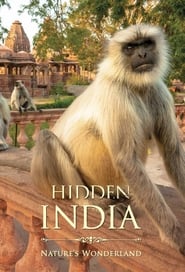
Hidden India
Stáhnout English titulky
Informace o verzi
Tagy
Náhled titulků v jazyce English
Prvních 180 řádků.
India is a land of over one billion people.
An acient world...
...is a forging a bright future.
It may look like there's little room for wildlife.
But away from the hustling bustle...
...there are exotic kingdoms of rock and ice...
...dense jungle...
...great desert...
...and mighty river.
All busting with life.
Here nature has been woven into people's lives.
Wilderness holds strong.
And the wild spirit of India thrives.
This...
...is hidden India.
Hidden in the far east of India in the grassland of Kaziranga National Park...
...is a one biggest animals in the world.
Weighing up two tons...
...it can run at 40 kilometer an hour.
The one horned rhino.
Almost hunted to exctintion, these grasslands are one of their last strongholds.
Containing half the world's population.
They are almost entirly built of grass.
Eating up to 25 kilograms a day.
This lush landscape wouldn't exist if it wasn't for one very important event:
the Indian monsoon.
The Indian monsoon is one of the biggest weather system on earth.
At its peak 17 million tons of water falls on the land every minute.
It has a direct impact all over South Asia.
Affecting the lives of over 1,5 billion people.
It begins at India's southern tip...
...then travels over 3500 kilometer across India's vast and very landscape...
...until it releases its last rains in the far north east.
Tracing its path backwards across the country...
...show the effect this life-changing rain has on India.
How it lures some of India's iconic wildlife out into the open.
And how those animals cope as the water is slowly reclaimed ...
...by unlimited heat of the dry season.
No where is the effect of the monsoon more visible...
...than in one of the last places it visits:
Kaziranga.
Lie in the floodplain of the mighty Brahmaputra River it takes the full force of the flood.
At the end of the monsoon, the Park has become a water world.
It's not that this bothers the one-horned Rhino.
They are perfectly at home in this environment.
When they're not cruising the waterways looking for food, they rest and indulge in a bit of pampering.
These obliging minor birds pick out parasites in those hard-to-reach places.
This extensive flood would appear to be the last thing the plants at Kaziranga would want.
However the water is laden with nutrients...
...picked up on its long journey all the way from the Himalayas.
These nutrients feed the land and give the vegetation all that it needs to grow.
Providing a home for a wide variety of animals ...
...including over a thousand wild elephants.
India's biggest population of Buffalo.
And the highest density of tigers in all of India.
However the grasslands of Northeast India aren't just the domain of giants.
Right down at the ankle height of a Rhino...
...this new grass also conceals one of India's smallest and rarest animals.
This pygmy hog.
No bigger than a rabbit, they're the smallest species of pig in the world.
For the pigs the grass isn't only something to hide behind...
...they also use it to weave a nest.
They're designed for single occupancy.
However this females nest is having to accommodate a few extras.
She has recently given birth to seven tiny piglets.
Each one is small enough to fit in the palm of your hand.
That's still big enough to cause trouble.
She has a busy a few months ahead of us.
The piglets birth was timed to coincide with the end of the monsoon.
As it is now that there is the most food.
But this lush new growth, brought by the monsoon rains can be more of an inconvenience for others.
This is a male lesser florican.
To him, the arrival of the monsoon signals the start of the breeding season.
Like the pygmy hog, this is time to coincide with a bounty brought by the monsoon.
But he still needs the females to see him.
There is really only one way.
He jumped up to 2 metres in the air...
...calling as he does though.
Advertising himself to any female that can see him.
And if that single feat wasn't enough:
He'll repeat it up to 500 times a day.
Looks like today is not his lucky day.
It is now at the end of the monsoon that India is at its most productive.
For India's animals, it's time to cash in.
To those outside India, it's a perfect time to visit.
Here on the Tibetan plateau to the north of the Himalayas...
...Demoiselle cranes are gathering.
They have spent the summer breeding a thousand kilometres away in Central Asia.
But with winter approaching and temperatures due to plummet to minus 20 degrees Celsius...
...It's time to get out.
They're on their way to India to take advantage of the post-monsoon bounty.
Standing in their way are the tallest mountains on Earth.
The Himalayas.
The cranes used the rising favor to gain height.
They will need to climb up to 5,000 meters if they are to get over the mountains.
As they get higher, the winds become much more unpredictable.
Stronger send them off course.
And they are forced to turn back.
A second group of cranes try a different route along a valley.
But they are flying straight into a hidden trap.
This is a hunting ground of Golden Eagles.
They pinpoint one of the younger cranes.
Separating it from the group.
The Eagles hunt in pairs...
...and though the first one misses
the young crane is driven straight into the clutches of the other.
It may be a juvenile, but the crane still weighs almost the same as the eagle.
Gaining control the Eagles have their prize.
The flock presses on, their migration must continue.
At this altitude, they are on borrowed time.
The Himalayas run across the North of India.
For most of the year, they are locked in snow and ice.
But in these late summer months, concealed among the impenetrable peaks...
... there are secluded valleys where a hidden army is at work.
Alpine's flowers are making good use of the recent rains and short growing season,
providing perfect food for bees.
Here in the mountains, they have the biggest species of honeybee in the world.
The Giant Cliffs Bee.
Their hide the built high up on the exposed rock.
On this one cliff alone there are over two million bees.
Workers returning to the nest, laden with nectar and pollen...
...tell other members of the hive where they found their food...
...by performing what is known as a waggle dance.
The directions are coded in the dancers body positions.
And whilst the observers follow the tip-off...
...the returning bee must make its way into the hive to deliver its precious cargo.
Not always an easy task.
Because the hive is fully exposed,
the only way the bees can defend it is with their bodies.
They line up several rows deep to form a defensive shield.
It is all for a good reason.
Hornet.
Voracious predators, they are here to hunt bees.
Separated from the rest of the hive a single bee doesn't last very long.
The hornet screws around the hive hoping to strike unsuspecting bees.
But the guarding bees have a defense strategy.
As soon as one bee realizes a hornet is approaching...
...they lift their abdomen up in a threat display.
The alarm ripples through the colony creating a Mexican wave.
This coordinated visual display shows the hornets that is dealing with an army...
...rather than a single soldier.
It's enough to blur out the individual and stops the hornets from attacking.
It's not just hornets that are interested in these giant bees.
For the people of the Himalayas hidden in the hive is nature's superfood:
honey.
In India's neighbour and Nepal they use smoke to help them access it.
Believing there to be a forest fire the bee start to evacuate the high.
With the bees leaving the next problem is getting to the hive.
Suspended 50 meters off the ground, wearing no gloves or shoes...
...the honey collector descends into forms of angry bees.
He has to remove the lower part of the hive where the larvae are...
...to get access to the honey ridge top.
Now balancing a basket on the end of the pole with his feet...
...he collects the honey.
It's a feat of dexterity and a feast for the villages.
Though one hive has been destroyed...
...the honey hunters make sure there are many left unharmed to carry on the population.
When the monsoon reached the Himalayas...
...the water ran off the rock and into the mountain stream.
Those streams combining with others groove...
...becoming the Ganges.
Like the Brahmaputra it too has burst it banks under the pressure of the monsoon rains.
This flooded land have some of the most fertile growing conditions in India.
Food grown here feeds over 500 million people.
It may look like there's no room for wildlife.
But hidden amongst the crops there are many that call this home.
And are welcomed by the farmers.
Frogs feed on insects that can damage crops.
Indian apple snails feed on algae that if left to get out of control could smother the field.
These man-made fields become a wildlife haven.
Attracting in predators, like open bill stork.
Animals play a pivotal role in the Hindu religion..
They are revered with many gods taking animal form.
the stork are a sign of good luck...
...as well as a healthy habitat.
Luck is something the rice farmers need...
...as not all the animals appearing in the paddy fields are equally welcomed.
The rising waters have pushed Cobras and other venomous snakes out of their burrows and into the world above.
In their hunt for dry land they come into contact with people.
Cobras rise up and hiss of the warning.
Hidden India subtitles in other languages
More English subtitles for Hidden India
- BBC Earthdden India E03 Land Of Rivers 2016 DOCU 1080p BluRay x264-iLLUSiON-eng · 31 downloads · 2020-02-20
- BBC Earthdden India E02 Land Of Mountains 2016 DOCU 1080p BluRay x264-iLLUSiON-eng · 30 downloads · 2020-02-20
- BBC Hidden India · 6 downloads · 2020-02-15
Komentáře
No comments yet. Be the first to leave one.