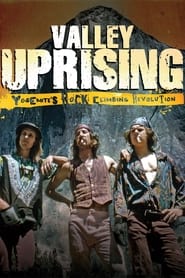
Valley Uprising
Stáhnout English titulky
Informace o verzi
Tagy
Náhled titulků v jazyce English
Prvních 200 řádků.
Why do people climb walls?
That's a really good question.
'Cause we're insane!
Can't be any other reason!
The beautiful thing about climbing to me is you can't justify it.
It doesn't pretend to be anything useful.
Some of us need to go up there, forging into the unknown.
Your whole being is completely absorbed in the experience.
A moving meditation.
Your sense of awareness just opens up,
and you feel like you could go on forever.
If you're a climber and you dedicate your life to the pursuit of gravity
you have to make a pilgrimage to Yosemite.
Here is the place.
There's only one Yosemite.
The proving ground.
The center of the universe.
The mecca of rock climbing.
This is where it all started, where it really took off.
The history of rock climbing is written on these walls.
It's a lineage. We all come to the valley to stand on the shoulders of giants.
To push yourself and to push the sport, and to see what's possible.
It's a bunch of mad men doing crazy things...
Trying to leave their mark and set new standards.
Pushing the limits and also pissing off the status quo.
People living on the fringe.
Strange, scruffy nutcases.
Seekers, visionaries.
Weirdos.
Living that dirtbag existence.
Hiding out from the law.
And vigorously following our dreams.
Life's pretty good here in Yosemite Valley, baby!
Woo! Yeah!
Yosemite's rock climbing revolution began with a generation of climbers who came of age in the 1950s
A time when America was feeling anything but adventurous.
And so they joined the stream of family life in the suburbs.
In the years following the Second World War, the nation had settled into a safe, comfortable routine
of well-trimmed lawns and newfangled kitchen appliances.
Stupid American 1950s dream
You're supposed to get married, have kids immediately, buy a dishwasher.
Just look at those gleaming dishes!
Just an absolute bland time.
In mainstream America, safety and comfort were the primary values.
There wasn't any outlet for the spirit of adventure.
But it was also a time of change.
Out in California, the beatnik movement, led by writers like Jack Kerouac,
called on young people to shake off the conformity and explore other ways of life.
Many flocked to the coffee houses and jazz clubs in the city.
Others hit the beach to catch waves.
While an adventurous few, inspired by Kerouac's vision of a rucksack revolution
headed for the hills. Where they would go on to discover the world of rock climbing.
It started in small suburban crags outside of San Francisco and Los Angeles.
When I first came across climbing down there at Stoney Point,
I thought, "Wow, this is wonderful!"
That danger, that commitment and risk
We got hooked, frankly, on the adrenaline of it.
Back then, rock climbing was mostly seen as practice for mountaineering, with a conservative focus on safety.
Old fuddy-duddies had all these rules. Can't climb a certain thing unless you're a qualified leader
But we wanted to have fun and said, "Fuck this!"
We all started out, you know, with tennis shoes basically.
Stole some ropes from the telephone company.
No harnesses, you know, you just put the rope around your waist.
It was character building.
In the hands of these young rebels climbing would become a new adventure sport
that seemed to defy gravity and common sense.
Rock climbing - that kind of intensity was lacking in a lot of our lives
but also in the culture at large in those days.
It was a counterculture sport and it felt really good to be on the fringes.
On their quest for first ascents and virgin rock, the climbers explored ever deeper into the mountains of California.
About 200 miles east of San Francisco lies one of the great scenic wonders of the world.
Until they landed in Yosemite.
Yosemite National Park is centered around a 15 mile long valley
bound by glacier carved walls of vertical rock.
Just acres of beautiful granite, absolutely smooth and steep.
Almost made a believer out of me.
Must be a god who can make something like that.
It was a place that we could live out adventures.
Gathering in Yosemite Valley was a group of climbers who would go on to etch their names in the history of these walls.
Guys like Royal Robbins
Yvon Chouinard
Tom Frost
Steve Roper
and Chuck Pratt.
We were a hardcore of really devoted climbers
trying to raise the standards and push themselves.
The primary vibration in the air was one of high adventure.
Up until the 1950s, climbing in the valley was led by John Salathe
an eccentric Swiss who foraged for his dinner in the meadows
and established the first big climbs on Yosemite's walls.
When we got to the Valley, the king of Yosemite at that time was John Salathe.
He climbed with such imagination and daring that we tried to emulate him.
Salathe would mentor this new group of climbers in the rock craft of Yosemite.
Using steel wedges called pitons to ascend the cracks, and plotting routes up the faces.
Balls out stuff, way the hell up there!
Like you're going to the moon or something.
The idea of devoting your life to climbing didn't exist anywhere else.
We have a purpose. Climb hard, put up good routes.
Only through climbing can you find yourself, bullshit like that.
None of us expected to ever have a job.
We were going to be hobos, basically.
And we were going to climb forever, and that was the extent of it.
The epicenter of the emerging climbing scene was Camp 4.
A shady patch of the Valley floor, that became the Sherwood Forrest for this band of merry mountaineers.
Living in Camp 4, instead of making money the ideal was to reduce the overhead.
It wasn't the way normal people lived.
One summer, I went to a damaged can store and bought a bunch of damaged cans of cat food.
And that's what we ate.
I mean, it was a total dirtbag existence.
Life in Camp 4 really took on an anti-establishment, countercultural tone.
There was a whole revolution of attitudes going on in our society at that time.
Climbing was just a manifestation of that.
We were barbarians and vulgar.
We drank a lot, chased women - tried to chase women.
Not very successfully, I must say.
But the beatnik bacchanal in Camp 4 was at odds with a very different set of values in Yosemite National Park.
Yosemite was a park for tourists, designed for people from the suburbs to enjoy nature without sacrificing comfort.
Young and old alike are intrigued by the captivating loveliness of this waterfall.
Uh oh! Look at our ice cream.
The tourists did not like us because of our raunchy language and loud parties.
Everybody was inebriated, just raucous.
Some poor camper would come over and say, "Can you guys tone this down?"
You know, "You're offending my family."
The rangers would come and break it all up.
We hated authority.
I still hate authority.
Climbing in those days was not a respectable activity to be doing.
It was an outlaw activity.
They did not like these strange, scruffy, abnormal
human beings coming in and using their facilities and disrupting the decent people.
LIZ I was working at the Ahwahnee Hotel.
The Yosemite management was very conservative.
Climbers, they weren't popular because they would go in and eat off other people's plates.
I was not supposed to associate with climbers.
We were actually told that we would lose our jobs.
Which made it really even more interesting to do.
The first time I went to Camp 4, there was a party in the woods.
A climber was sitting directly opposite me.
He just stared at me and said,
"You are a beautiful woman."
My first thought was, "This is certainly an intense person."
The man across the campfire was Royal Robbins, a climbing legend in the making.
Even to this day, I consider myself a climber, first and foremost.
Whenever I get on the rock, I feel it's something that makes me whole.
LIZ It was always about climbing. It was his life. He didn't think beyond it.
Royal was very competitive with everybody.
Robbins was a driven person.
To earn the respect of your peers, you had to raise the ante.
And I remember wanting to do something better than what's been done.
Robbins was emerging as a leader in Camp 4 at a pivotal moment in rock climbing history.
The gear had evolved, the techniques were in place.
The rock climbers had matured to the point where they are up to tackling the great challenges of the sport.
But the great challenges remain undone.
Robbins set his sights on a wall far bigger and steeper than anything that had been attempted.
The North West face of Half Dome.
Arguably the most photographed feature in the world.
Massive and intimidating.
More than just another rock climb, this iconic formation - 2,000 feet tall
would require an expedition into the vertical.
Going up on a wall, something that's 2,000 feet, you're up there for multiple days in a row.
No one knew if they had the skills and the equipment, and the technique to survive that long on a wall.
It was big, it was scary.
The face of Half Dome just stood there and said, "Try me if you dare!"
Early one spring morning, Robbins gathered up a small arsenal of gear,
and with a team of three, set off to make history on Half Dome.
The team would follow a trail of cracks upwards, moving slowly as they drove in pitons and hauled their gear and water.
Nights were spent tethered to the side of the wall, and days climbing higher and higher.
Until retreat to the ground became impossible
and the only way off Half Dome was over the summit.
This is one of the great acts of committing to the unknown, just sort of lighting out into mystery.
We felt like we entered a different world then. This was a vertical world.
The five day ascent of Half Dome set a new standard of difficulty
and cemented Robbins' status as America's first climbing icon.
When you picture Royal...
That crazy name, Royal Robbins. The King already, I mean, my god.
Picture a proto-beatnik intellectual, hard at work reading the classics.
A very serious, earnest man, absolutely determined to prove himself as a great Yosemite climber.
You want to be the first, you want to be the best.
It's natural.
But there was one man vying for Royal's title as King of the Big Walls:
Warren Harding. An impish road surveyor with his own appetite for glory.
His mother had named him after a president, but in his thirties he was still living at home,
boozing heavily, and curing his hangovers with the adrenaline rush of climbing.
When you picture Harding, you're picturing a hardhat construction worker with a serious drinking problem,
and a penchant for a lot of women, radical sports cars, a really childish sense of humor.
Our personalities were quite different.
They're opposites. They're personality opposites.
The clash between Royal Robbins and Warren Harding is a clash of the titans in climbing lore.
Both men had long coveted Half Dome.
And when Robbins snagged the first ascent, Harding went for the one cliff in Yosemite that was even bigger:
El Capitan.
Take the Empire State Building.
Stack it up three times
And you've got the biggest wall in Yosemite Valley.
A thousand feet taller than Half Dome, El Cap was beyond the imagination of even Royal Robbins.
El Capitan was impossible.
We all knew that. We didn't even consider it.
I mean, the thing is so huge. You'd be on it for the rest of your life.
El Cap was the realm of the absurd. It was futuristic.
But not for Harding.
Valley Uprising subtitles in other languages
More English subtitles for Valley Uprising
- Valley Uprising 2014 1080p WEBRip x265-RARBG · 59 downloads · 2020-08-29
- Valley Uprising 2014 1080p AMZN WEB-DL DDP2 0 H 264-alfaHD · 52 downloads · 2020-07-16
Komentáře
No comments yet. Be the first to leave one.