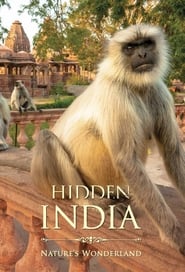
Hidden India
Stáhnout English titulky
Informace o verzi
Tagy
Náhled titulků v jazyce English
Prvních 168 řádků.
India is a land of over one billion people.
An ancient world...
...it is forging a bright future.
It may look like there's little room for wildlife.
But away from the hustle and bustle...
...there are exotic kingdoms of rock and ice.
Dense jungles.
Great deserts.
And mighty rivers.
All bursting with life.
Here nature has been woven into people's lives.
Wilderness holds strong.
And the wild spirit of India thrives.
This...
...is hidden India.
Tucked away in these hidden valleys this river appears serene.
But look closer and there is a different story.
These are smooth-coated otters.
The river is everything to them.
Their home, their hunting ground...
...and a place to raise the family.
This clan is made up of two adults and three cubs.
Constant calls help them to keep in touch.
Rolling in the sand on the banks of the river keeps their coats clean.
Strengthens family bonds,
and provides a bit of fun for the cubs.
But where a large family really comes into its own is when it's time to find food.
They hunt as a team, herding schools of fish in the shallows.
The cubs are still learning but practice will one day make perfect.
India's rivers are bursting with life.
They provide so much for those animals and humans alike...
...that they are held in great reverence.
The Ganges, the iconic river of India.
It runs 4000 kilometers across northern India.
Tracing its journey to the sea reveals why it is so significant.
It supports over half a billion people...
...becomes a sanctuary for some of India's most elusive wildlife...
...and for many it is the embodiment of the divine.
The Ganges is born in the Himalayas.
Here there is the Earth's largest concentration of freshwater ice outside the polar caps
It is imprisoned in the 15,000 glaciers...
...that are hidden among the most inaccessible mountains on earth.
Only the hardiest animals call it home.
Himalayan wolves, rarely seen.
They are an ancient branch of the wolf family.
Isolated by the Himalayas, they've evolved shorter legs for climbing...
...and thicker coats for protection against the weather.
The pack must be constantly on the lookout for food...
...and this deep snow is impeding their search.
However their world is about to change.
The spring thaw is beginning.
Releasing the frozen water from the grip of winter.
It is this thawing ice that forms the source of the Ganges.
These beginnings are of huge spiritual significance to the people of India...
...and are honoured with temples.
Here in the middle of the Himalayas is the Dev Bhoomi or land of the gods.
The temples here have been silent all winter. Conditions are far too extreme for people to live here year round.
Now the thaw has begun and the ancient pathways cleared...
...this group of pilgrims are drawn back up, the mountain to the sacred rivers beginnings.
All this noise has disturbed one Himalayan resident...
...who has stayed hidden all winter beneath the blanket of snow.
The Pika.
He's known locally as the friendly mouse, but is actually a member of the rabbit family.
He has survived the winter thanks to a stash of dried grasses collected the previous summer.
With a return of spring, he's able to take advantage of the fresh food on offer.
He has a short window of opportunity.
Pika have a high body temperature .
At night here it can drop below freezing...
...whilst in the middle of the day it can climb to 25 degrees Celsius.
He'll overheat if he stays out in the sun and must take cover.
Here in the day of Dev Bhoomi the spring melt is now in full swing.
It said that the goddess Ganga was called to earth to purify mankind...
...and cleanse the ashes of the death.
Ganga agreed to come but fell from heaven with such force...
...that she would have destroyed the earth.
So another god Shiva caught the deluge in his hair...
...distributing it into gentle streams.
These sacred streams cloudy with minerals washed off the land...
...merge with others forming a river.
But it is not called Ganges until it reaches here the village of Dev Pryag,
where the Alaknanda and Bhagirathi join.
This is the point where it leaves its turbulent beginnings behind...
...slowing as it grows.
The pace of the river eases however life around it begins to quickly.
Thousands of people across this foot bridge every day...
...but it has a hidden danger.
There are bandits that require a payment to proceed.
Rhesus macaques.
As natural climbers, these monkeys have no trouble navigating the high wires of the bridge.
They are born opportunists and can't, turn down the prospect of an easy meal.
Some travelers offer up payment freely.
Whilst others need more persuasion or a helping hand...
...to give up their goods.
For the monkeys, it's easy living.
They've adapted well to the urban jungle.
As the Ganges continues its journey through the foothills of the Himalayas.
Her karma waters now start to become a home for more and more of India's wildlife.
Mahseer fish.
These huge carp have traveled from their spawning grounds in the fast flowing waters upstream.
The rivers pace here is much less demanding.
A prize for any fisherman, Mahseer face many dangers on their journey.
Here they can feast in relative safety.
Priests and worshipers from riverside temples provide offerings to the fish.
That they see as manifestations of the deity Vishnu.
So the Mahseer can grow fat on handouts.
The largest can grow to a meter in size and weigh 50 kilograms.
Leaving the Himalayas behind, the Ganges now flows into the plains of northern India.
Here it is met by the Chambal.
This river origins are not in the Himalayan snows...
...but the barren hills that edged the Thar desert in the west of India.
It is home to over 300 species of bird.
Indian skimmers are year-round residents.
They hunt by using their sense of touch.
Trawling the shallows they wait till, they're lower bill hits a fish before filling it out.
White egrets and spoonbills also find plenty to eat from the riverbed.
Soon they are joined by visitors from far-off lands.
The bar-headed goose.
These migrants have traveled over a thousand kilometers from as far afield as Tibet...
...to bask in these placid waters.
As the birds settled to roost, an unusual creature is about to arrive.
The dark of night conceals one of India's strangest inhabitants.
This is a female gharial...
...an ancient and extremely rare type of crocodile.
There are only 1200 left in the wild.
She's drawn to the banks of the river by sounds coming from beneath the sand.
These strange calls are from her young buried in an underground nest.
She has stood watch for 70 days guarding them and waiting for this day.
While their long snouts can open the egg...
...the baby gharial need their mother's help to dig them out of the sand.
Instinct drives them to the safety of the river.
Gharial are nocturnal hunters.
Their sensitive streamlined snouts snap shut the instant they feel a fish.
Best not to stray too close.
The following day the youngs haven't been just far.
Their mother is a devoted parent.
She will stay with a young for up to six months protecting them.
And when she leaves to hunt there are others to take over guarding duties.
Both male and female adolescent guardian will stay close to the family ...
...helping to keep them out of harm's way.
The further the Ganges travels from its source...
...the more demands are placed on it by people and wildlife.
It's waters are a lifeline to over 500 million people.
Throughout its length, it holds great spiritual significance.
Huge temples attract tens of thousands of people every evening for rituals at the river's edge.
Bathing steps called ghats allow devotees to cleanse their souls...
...and send blessings down the river.
At Sonapur the Ganges meets one of her tributaries the Gandak...
...and grows to four and a half kilometers wide.
This is a spiritual place.
But also a place to do business.
Here is the largest cattle market in Asia.
For over a thousand years, traders from far and wide have met on this spot...
...to trade livestock and flaunt their skills.
The biggest attraction is the working elephants...
...intricately painted to enhance their majesty.
For an elephant to look its best means a cleansing bath in the holy waters.
Each morning the elephant and its mahout will head down to the river for a good scrub.
Working with elephants is a 4000 year old tradition in India.
But as India modernizes, sites like this will become increasingly rare.
As the river flows through the plains, the summer sun becomes a thief of water.
In the heat of the dry season temperatures can rise to 50 degrees Celsius.
The rivers recede by up to a meter a month.
But what the sun takes away...
...it also returns.
The hot air rising off the parched land...
...creates an area of low pressure that draws in moist winds from the surrounding seas.
This is the engine of the monsoon.
After the intense heat of summer the heavens open.
Hidden India subtitles in other languages
More English subtitles for Hidden India
- BBC Earthdden India E02 Land Of Mountains 2016 DOCU 1080p BluRay x264-iLLUSiON-eng · 30 downloads · 2020-02-20
- BBC Earthdden India E01 Lands Of Change 2016 DOCU 1080p BluRay x264-iLLUSiON-eng · 35 downloads · 2020-02-20
- BBC Hidden India · 6 downloads · 2020-02-15
Komentáře
No comments yet. Be the first to leave one.