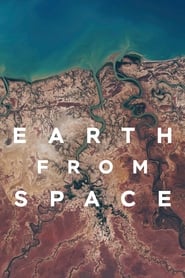
Earth from Space
Stáhnout English titulky
Informace o verzi
Tagy
Náhled titulků v jazyce English
Prvních 200 řádků.
From space,
the view of our planet
is breathtaking.
Satellites orbiting the Earth
can now look down on it
in absolutely extraordinary detail.
Using cameras on the ground,
in the air...
...and in space,
we can tell the story of life on Earth
from a brand-new perspective.
At a time when the Earth's surface is changing faster
than at any point in human history...
...we can see just what impact we're having.
In this episode...
satellites uncover
previously unknown colonies of penguins...
...reveal mysterious ice rings that could put seal pups in danger...
...and make surprising discoveries
in Earth's most remote landscapes.
Behind every image...
...there's a story.
This is our home
as we've never seen it before.
At any given moment,
over a thousand satellites are orbiting the Earth.
Some are capturing images across the planet's surface so detailed...
...that we can now see individual animals from space...
...while simultaneously following them on the ground.
Kenya, East Africa.
The green of a river bank.
Look closely, and grey bodies are just visible.
A family of elephants.
They have a new calf...
...just over a week old.
At around 100 kilos, and growing fast,
she needs to drink some 12 liters of milk a day.
But her mother is struggling to provide it for her.
She hasn't fed properly in weeks.
In fact, the whole herd is in trouble.
And from space, it's clear why.
At this time of year,
the family is usually found ten kilometers north,
in the relative safety of Samburu National Reserve.
But satellite images reveal that all is not well here.
The ground is deep orange.
Barely any signs of water...
...or green spots of vegetation.
Samburu is in the grip of a vicious drought.
Northern Kenya has been struck hard by the planet's changing climate.
This year has seen 25% less rain than the average.
The dry season has been extreme.
Animals are starving.
A desperate search for food
has forced the family
out of the safety of the reserve...
...to a few small patches of green
dangerously close to a busy main road.
Scrubby vegetation provides a little to eat.
But here, the family could be a target for poachers.
On the ground, their situation is desperate.
But with cameras in space,
we can see what the elephants can't.
From a satellite taking an image of the whole Earth every 15 minutes,
we can track weather patterns.
Over East Africa, clouds are building.
Rain is just six days away.
The calf is worn out.
But her mother will not let her rest.
It's not safe to be so close to a busy road.
They need to move on.
But she's too tired.
This is the first rain she's ever experienced...
...and it's hard to get to grips with.
Her mother encourages her to her feet.
She wants her baby out of this dangerous place.
Samburu is transforming.
Elephants, scattered by the drought,
are now returning to the reserve.
And our family is with them.
Overnight, one of the other females has given birth.
The rain means the best start
for a new generation
of this vulnerable species.
And it's not just elephants we can see from space.
Satellite cameras are finding animals across the globe.
The dunes of Namibia, Southern Africa.
Tiny dark spots line the edge of the surf.
Each one is a Cape fur seal...
...in a colony several thousand strong.
Over the East African plains of the Serengeti...
...scientists monitor the size of wildebeest herds
on their annual migration.
From 600 kilometers above Baja, Mexico...
...we can see Grey whales
beneath the water...
...arriving here to give birth.
This new technology is now helping wildlife conservation
in the most inaccessible places.
Antarctica.
A continent so hostile and remote...
...that studying life here is incredibly challenging.
But now satellites allow us to access every square kilometer of its surface.
And this has led to an extraordinary discovery.
Brown patches dotted across the ice.
Seemingly out of place...
...but they are vital clues...
...helping us to find one of our most iconic species.
Emperor penguins.
This colony is full of new life.
Hatched just a month before,
the chicks consume per-digested fish and krill
brought to them by their parents.
But the results of this diet can be messy.
Over 10,000 birds
create a vast amount...
...of poo.
A problem for the colony.
At minus 20, all the water is frozen solid.
With nothing to drink,
penguins eat the snow beneath their feet...
...which is becoming rather unappealing.
They need to find fresh snow.
The youngest chicks,
who aren't yet able to keep themselves warm,
are carried on their parents' feet.
Others should be walking by now.
As each penguin moves to find clean snow...
...the colony slowly works its way across the ice...
...leaving a trail behind them.
Over weeks, the patches spread.
From space, a penguin colony would be difficult to spot
in this vast sea of white.
But the marks they leave behind stand out.
And now that scientists know what to look for,
they are finding more colonies.
So far, 26 new colonies have been discovered...
...doubling the known global population of the species.
A discovery at a crucial time.
It is predicted that the sea ice, on which the penguins breed,
will recede due to climate change.
And as a consequence,
20% of emperor penguins could disappear in the next century.
From satellite,
scientists are now monitoring these colonies
as they face an uncertain future.
The view from space is allowing us to make scientific breakthroughs
in the most remote places on the planet.
In 2017, cameras captured a crack in the Antarctic ice shelf...
450 metres wide...
...and nearly 200 kilometers long.
So inaccessible that the only way to track it
has been from 600 kilometers up.
Images taken over the year showed the crack growing,
until eventually...
...a vast piece of ice broke free.
Four times the size of Greater, London,
it is one of the largest icebergs on record.
In a remote part of Alberta, Canada...
...miles from civilization...
...a strange arced shape...
...in the middle of the forest.
This is the world's largest beaver dam.
Satellite records show that it was built over the last 30 years...
...and it's now almost a kilometer long.
No-one knew that the species was capable of construction
on such a scale.
And in Mozambique, Africa...
...a scientist scanning through satellite images
found a lost world...
...an isolated rainforest, on top of cliffs almost 500 metres high...
...completely untouched and unexplored.
Expeditions are now being launched
in the hope of discovering entirely new species.
But other images are harder to explain.
Lake Baikal, Siberia.
The largest body of fresh water on the planet.
Its surface frozen solid for five months of the year.
But satellite images have revealed something unexpected in the ice.
A huge dark ring.
Broken ice and melt water
in a circle over four kilometers across.
A number of these rings appear almost every year...
...and in different parts of the lake...
...each triggering vast areas of ice to break apart.
A potential disaster...
...for an animal who lives on the ice.
The Baikal seal.
This pup was born in the depths of winter,
spending the first weeks of her life in and around an ice den.
In the spring, the ice will melt.
She has just two months to prepare for life in the water.
Moving around on the frozen surface
helps her to shed her soft baby coat.
With claws like ice picks,
pups haul themselves across the ice...
...bar the occasional slip-up.
She's developing the muscles needed to swim and to hunt.
Each day, she grows stronger.
But if an ice ring appears...
Earth from Space subtitles in other languages
More English subtitles for Earth from Space
- Earth From Space S01 (1080p BRip MKED 23) · 37 downloads · 2020-06-12
- earth from space s01e04 changing planet 1080p bluray x264-ghouls-eng · 37 downloads · 2020-01-12
- earth from space s01e03 colorful planet 1080p bluray x264-ghouls-eng · 36 downloads · 2020-01-12
- earth from space s01e02 patterned planet 1080p bluray x264-ghouls-eng · 39 downloads · 2020-01-12
Komentáře
No comments yet. Be the first to leave one.