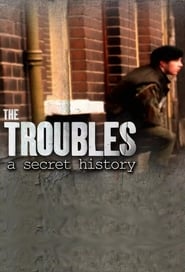
Spotlight on the Troubles: A Secret History
Stáhnout English titulky
Informace o verzi
Tagy
Download English Subtitle Files for Mobile (8)
Náhled titulků v jazyce English
Prvních 200 řádků.
This programme contains scenes which some viewers may find upsetting
The cradle of Northern Ireland's Troubles.
A place where even the name is disputed.
Protestants call it Londonderry.
Catholics call it Derry.
50 years ago it was a battleground between Catholic citizens
and the forces of the state.
After three days of violence,
the British Army was sent in to end the crisis.
Looking at this bridge, to me, it was like yesterday.
Except the background is different.
Well, I don't see it as being like yesterday.
I can remember coming over the bridge.
Dave Moffat and Peter Blythe were the very first soldiers
to enter the city in August 1969.
Thousands more would follow.
Do you know what I'm getting now? I'm getting a picture in my head
and I feel like that ghost that was here before.
Where...
I can feel it.
Can't you see the vehicles going down there in your head?
The army's stay was meant to be short.
That's not how it worked out.
Looking back, it was momentous, really. And we wouldn't...
Who thought it would go on for as long as it did actually go on?
The conflict would run across four decades.
Leaving lasting scars on Ireland and Britain.
On places.
And especially on people.
This is the Great Hall at Stormont,
the seat of government in Northern Ireland.
Just up there, hanging side-by-side, are portraits of two men
who spent most of their lives trying to undermine government here.
Ian Paisley and Martin McGuinness are honoured as the men
who brought warring factions together.
Paisley finished up as First Minister and a Lord.
But at the outbreak of the Troubles he was considered a dangerous
Protestant dissident.
My memory is very clear,
that Paisley had supplied the money that financed the Kilkeel explosion.
McGuinness ended up as Deputy First Minister.
But he started as an Irish Republican gunman and bomber.
That's Martin McGuinness, handling weapons.
A rifle and a revolver.
And he's showing them bullets.
Weapons in the car, weapons hanging out of the car.
This was incredibly common.
Dangerous radicals, to elder statesman.
Their past shaped our present.
This is the story of their times.
This is A Secret History Of The Troubles.
Is that the pub there? That's the pub there, yeah. Really? Wow.
Richard Leppington has walked this street only once before,
more than five decades ago.
The night he saw the murder that marked the very beginnings
of the Troubles.
Jeepers.
The night he almost died.
I'm not real fond of being here.
This is...
This is not good memories.
God knows what would have happened
if we just hadn't have gone out for that drink that night.
In 1966 Northern Ireland was a place that seemed to be at peace.
It was still more than three years before soldiers
would arrive on the streets.
Richard was 16 and worked in a Belfast hotel with his friend,
Peter Ward, who was 18.
Peter and I worked in what was called the cocktail lounge.
He was a good guy. He was a fun-loving guy.
Enjoying life.
Until that day.
One night after work, Richard, Peter, and two colleagues -
all four Catholics - went for a late drink
in a Protestant part of the city.
They didn't imagine they were in any danger.
But gunmen were waiting outside the bar.
We were leaving and going out the side door,
which is a narrow door, so you go one at a time.
I happened to be first.
I actually couldn't tell you who was directly behind me or what.
But the next thing, I heard bangs and flashes
and heard someone yell, "Gun, run!"
So I was pretty fast down the street and then I stopped,
I walked back up again.
I didn't get all the way up, but I could see across the street
a guy lying on the ground kind of with his legs up in the air.
And a guy standing over him.
So I just panicked.
Turned, ran back down.
A lady came out of her house, brought me into her house.
She saved my life.
I'm ashamed to say I don't even know her name.
Don't even know her name.
I'm sure I knew it then.
When did you see Peter again?
That night was the last time I saw Peter alive.
The next time I saw him was in an open casket at his mother's house.
Probably for a few seconds, cos I couldn't look very long at it.
Peter Ward was one of three people killed that month
in a sudden spate of attacks
on Northern Ireland's Catholic minority.
The attacks came from a militant Protestant group
motivated by fears of being overwhelmed by Catholic Ireland.
They called themselves the Ulster Volunteer Force.
The Northern Ireland Prime Minister, Terence O'Neill, acted decisively.
In Belfast the Prime Minister of Northern Ireland announced
the outlawing of the so-called quasi-fascist organisation
the Ulster Volunteer Force.
How safe is it for the Queen to visit Belfast next week?
Days after the UVF killings, Terence O'Neill welcomed the Queen
for what he hoped would be a healing Royal visit.
But historic tensions were coming to the surface.
It was just about three o'clock in the afternoon of the 4th of July
when the Queen's motorcade turned this corner in the city centre.
What happened next was a crime
that was almost unheard of in the United Kingdom.
An attack on the person of the monarch.
A concrete block was thrown onto her car
by a young Catholic building worker.
An angry crowd wanted him lynched.
He was later jailed for four years for treason.
The events of those weeks were a reminder that Northern Ireland
was defined by sectarian division and distrust.
Best expressed by a former Northern Ireland Prime Minister.
The fact is that the Roman Catholic by and large
is out to destroy Ulster and bring it into a united Ireland.
The Protestant is out to maintain Northern Ireland's position
within the United Kingdom.
BOMB BLAST
SHOTS FIRED
Northern Ireland had been born in blood.
When the rest of Ireland broke away from Britain
in the early part of the 20th century,
Belfast had been consumed by sectarian violence
between the majority Protestant population -
mainly British Unionists -
and Catholics who were mainly Irish Nationalists.
The Northern Ireland state that emerged from that conflict
was built on division.
It was designed to have a permanent Unionist majority.
From the first, it was a one-party state.
The Unionist Party always had control.
But by 1966, the Catholic population was growing
and wanting to assert itself.
That year also saw celebrations of the 50th anniversary
of Ireland's Easter Rising rebellion.
A reminder that many had no loyalty to the Northern Ireland state.
More fuel for Protestant fears.
By almost every measure,
Nationalists in Northern Ireland were second-class citizens.
In housing, jobs, and politics.
I fought for 18 years in the army for liberty and freedom.
But simply because I'm a Catholic, I cannot get freedom.
Derry was the most blatant example of how Unionists
kept Nationalists out of power.
The total Unionist vote in Londonderry is 9,000.
And these votes put a total of 12 members in the City Council.
The total Nationalist vote is 14,000.
And these votes put in eight members.
Now, note the curious situation.
Most of the voters in Londonderry are Nationalist,
but the council is controlled by the Unionists.
Terence O'Neill had seen a need for reform.
In his view, the Catholic population could no longer be ignored.
You're feeling in good form? I'm feeling in first-class form,
thank you very much.
More than 50% of the schoolchildren in Northern Ireland,
they are Roman Catholics.
It seems to me that if Northern Ireland's future
is going to be guaranteed in the United Kingdom,
then you must have a more united society in Northern Ireland.
He was wise enough to see that that couldn't go on indefinitely.
So, you know, he thought about ways you could create a better
relationship with the Nationalist part of the community.
As a citizen, I thought his heart was in the right place.
I mean, I think there was a feeling that change was long overdue.
But given that there was always going to be resistance to change,
if you asked yourself,
"Is he the guy who will be able to stand up to that resistance?"
I think a lot of people had their doubts.
The face of that resistance was Ian Paisley.
A charismatic fundamentalist Protestant minister
who preached on the perils of Catholicism, Irish nationalism,
and the policies of Terence O'Neill.
Policies that Paisley believed would open the gates to Irish Republicans.
You're going to hear the marching feet of Protestants on the march!
CHEERING
I and many others at the time underestimated him.
We just thought, this is a big, noisy, booming cleric.
You know, and it's a flash in the pan, you know,
what will it amount to?
Paisley led his own small church,
but his political message found a wider congregation.
Opposition to O'Neill became an evangelical mission
for Paisley's followers.
Like the Reverend Ivan Foster.
My friend Mr Foster must speak to you now.
It's O'Neill the dictator that is breaking up
the view that the world held of Ulster.
Komentáře
No comments yet. Be the first to leave one.