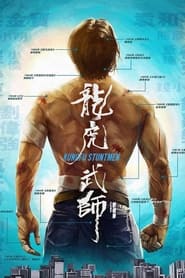
Kung Fu Stuntmen (龍虎武師)
Stáhnout English titulky
Informace o verzi
Tagy
Náhled titulků v jazyce English
Prvních 200 řádků.
"Kungfu stuntmen" is a traditional term from the opera troupe
specifically, the cantonese opera.
The term was also used in film later on.
Here in Hong Kong
we are called "stuntmen."
"Kung fu specialists" are called in mainland China.
Let me emphasized that
we are "action actors"
because we do act in the films
the entire composition of stuntmen's a cinematic industrial demand.
Most martial arts in Hong Kong are Beijing opera and gymnastics.
We tend to introduce qwn troupe fellows
into the business.
Our community is relatively small.
Kung fu stuntman don't fear getting injuries
but scared of talking in front of the camera
our generation is more able to suffer a little, really
it's all hardcore.
Ready, 1,2,3!
Cut!
Grab here
like this.
Bang, bang
wave and block.
Ready, 1,2,3!
For me,
I've known very little about society.
Things such as finance, stock and etc.
I know nothing but film.
At that time
we were trained in profession by opera troupes
who have skill set were needed by film.
Our predecessors moved
from mainland China to Hong Kong.
The film industry was transforming while we entered the field.
People like us fitted in right away.
When China was invaded by Japan,
most of the Peking opera teacher
migrated from north to Hong Kong.
Siu-tien yuen, siu-loi chow, ching-liang kwan, chui chung-hok, han ying-chieh
all the masters from various Peking opera troupes
followed Jim-yuen yu all way down from Shanghai.
One of the well-known pioneers was master siu-tien yuen.
He merged Peking opera expertise of martial arts
into our cantonese style.
Apprentices should practice how to fall down before learning other skills.
It's my training style.
Peking opera performers speak the mandarin
to be frank, only a few people here would appreciate it.
What else can they do?
Nothing but teaching.
Children grew up in poor households like us would choose to learn it.
Simile as that.
A group of apprentices were well trained
such as sammo hung, Jackie chan
yuen tak, yuen wah, etc.
They all became action directors later on.
In Hong Kong,
there were four Peking opera schools back then.
Madame chu-hua fen was one of the instructors.
I started learning Peking opera at age 10.
Stephen tung, Austin wai
mang hoi and John lone
master ti tang as well.
Tang ti was my master.
My fellows were siu-tung ching, kin-kwan poon,
Alan chui and sai-gwan yeung.
And master shing-chi ma.
We grew up in master shing-chi ma's school.
We might be the very first generation.
Basic training lasted for 3 years.
Regardless of the roles: Sheng, Dan,
everyone practiced the same set of basic skills.
Headstands, split kicks and back bend.
So the basic requirements were all alike.
After that, masters would evaluate both our quality
and appearance to decide the best role type,
whether wusheng,
wuchou Or jing.
Master jim—yuen yu trained a group named "seven little fortunes".
In our school, we were called "nine wonder kids".
We had two extra.
Here was the back door of our school.
Back then, the whole class came out
and gathered here around 6am.
We practiced headstand, back bend and swing.
30 minutes is the minimum requirement for headstand.
Some of the senior students
we're even capable to maintain the same pose for 1 hour.
Stephen tung was one of them.
We began to be trained strenuously at age 7.
I can say that
we study very well
most plays can be done very well
the four opera academies, China opera school
China opera academy, spring and Autumn academy
and oriental opera academy
where it all began.
No job after graduation because Peking opera was a dead end
Master yu
staring from next week,
you no longer need to come.
In fact,
my master hated film.
He still committed to Peking opera.
Eventually, he accepted the reality.
He said "you're all going to make movies in the future,"
there's no chance for opera.
As far as we concerned, training was essential.
Whatever master had taught
benefits us till present.
Performing various moves in action films
we're depend on our basis of martial arts skills.
It allows us to grasp the essence easily and achieve what's asked for,
that also helps to build a career in the film industry.
You might find it very odd,
folks were main roles at school couldn't surive,
but the ones who played the walk-ons made it.
I started acting when I was 14.
I've been attracted to it deeply
ever since I became a stuntman.
Finding a mentor for stuntmen is essential.
You won't make it on your own
rookies couldn't make it on their own.
No.19 pak hoi street was where we gathered on workdays.
All stuntmen would meet up here
once we received calls.
Each film asked for
approximately 30 to 40 stuntmen.
When there were 7 or 8 films shooting at once,
the space was filled up with more than 100 to 200 stuntmen.
Heading to Shaw studio by bus.
Here is Shaw studio.
25 to 26 days per month was occupied at lease.
That was amazing.
My career took off ever since some action
action directors had noticed my talent.
When I mastered the back bounce,
I could get roles as double every day.
Back then
I experienced working full time for a month
with no breaks.
Those were the days.
All my fellow brothers were busy.
The daily schedule was filled with 3 groups
day, mid and evening shifts.
We switched roles between stunt and stand-in.
Double each time was paid hkd 150.
I could double for three casts each day.
I spent most of time working in Shaw brothers studio and found out
people called me "shadow queen".
Why?
Because I never had one chance
I onto show my face.
The entry salary for stunts was hkd60 per day.
The general price increased later except mine.
Sammo hung suffered more.
He was too fat
to make a stand-in.
Double Lydia shum was the only opportunity.
We could earn hkd2, 000 to hkd3, 000 monthly on average
when common rate of salary was hk$100.
So I could easily afford a new car less than a month.
It's easy to see 250 cars line up outside of Shaw studio,
it took 1.1 kilometres to reach the end.
Free your imagination and guess how much we were paid.
Kung fu movies were based on the similar concept.
The fight scene lasted close to 10 minutes...
We had no choice.
Battle fights were alike musical scenes in bollywood.
However, repeating caused aesthetic fatigue over time.
So I started to wonder how to develop later on,
then, here was Bruce Lee.
His style was a bit like bushido.
The atmosphere was rendered impressively to highlight the scene.
But the whole fight was finished by a blink of an eye
within only a couple of moves.
Golden harvest film wasn't optimistic about the big boss.
Come on!
After the film was released,
audiences went crazy.
Flurries of applause, we were all shocked.
Instantly, I felt Hong Kong's kung fu films entered into a new era.
He Studied in u. S. And came back to Hong Kong.
His kung fu style was more practical,
different from ours.
We were more deceptive.
We fought like dancers on stage.
Quite dramatic and mechanic.
When Bruce Lee was engaged,
he took charged in action directing.
He criticised and modified the old school.
He demanded all our stuntmen
to meet his requirements.
How to react when your head is hit.
How to react when your belly is attacked.
Totally revolutionised our performing style.
There are two kinds of roles, leading and supporting.
Actors in general played primary roles
and we had to support them in their roles.
Kung Fu Stuntmen subtitles in other languages
More English subtitles for Kung Fu Stuntmen
- Kung Fu Stuntmen 2020 720p BluRay x264 AAC5 1-[YTS MX] · 48 downloads · 2022-03-10
Komentáře
No comments yet. Be the first to leave one.