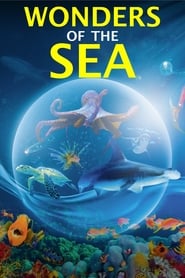
Wonders of the Sea 3D
Stáhnout English titulky
Informace o verzi
Tagy
Náhled titulků v jazyce English
Prvních 200 řádků.
Hello.
Now throughout the years,
I've done so many different kinds of work,
but never this kind.
A narrator of a documentary film.
So why now?
Why this film?
Well, because it is an important film
with an important message
created by a man that I've admired for years...
Jean-Michel Cousteau.
Now, when I first saw the footage,
I have to admit, I was blown away.
So I knew I wanted to be involved in some way.
And that's precisely Jean-Michel's aim,
to get people involved.
Jean-Michel reminds us
that we all need to contribute
to the change that must come,
that the decisions our leaders make
and the choices we individuals make
will determine the future of the ocean
and our own survival on planet Earth.
As governor and now as a private citizen,
I, too, have been fighting for change
and for a clean environment
and to make people aware of this very important issue.
So, I am pleased to lend my voice
to this unique film experience.
Jean-Michel has created a declaration of love
to the living beauty of the ocean.
Because like his father Jacques Cousteau,
Jean-Michel believes that you only protect what you love,
and he's absolutely correct in that.
So let's get started and fall in love
with the "Wonders of the Sea."
Hmm?
He was Cousteau.
Jacques Cousteau.
A pioneer of the ocean.
Back in the 1940s,
when diving gear was clunky and confining,
Cousteau co-invented the aqualung,
allowing divers to dive longer,
deeper, and more freely...
free to discover and document.
He also made great strides
in the art of underwater filming.
Together, these innovations meant that Cousteau's team
could go where no one had gone before,
capture images previously unseen,
and share them with millions around the world.
We are all in debt to the pioneer work of Jacques Cousteau,
and in a sense, modern divers are all his children.
But I was his first.
I am Jean-Michel Cousteau.
I was only seven, skinny, like my dad,
when my mother Simone slid fins on my feet
and my father strapped a scuba tank on my back
and pushed me overboard.
And my life changed forever.
From there on, I, too, was a diver.
I, too, was a Cousteau.
And my children, Céline and Fabien,
without a doubt, they, too, are Cousteaus,
working to raise awareness to affect opinion
through their own expeditions and their own films.
But this time, it was important for me to invite them along,
to combine forces, you might say.
It's actually been years
since we did a project like this together.
It's big and ambitious
and important.
Who could say no?
Ahead, a voyage of over 8,000 miles
to explore some major ocean habitats.
And we start here in Fiji.
I think we're gonna have an opportunity to show...
Marine biologist Holly Lohuis
and cinematographer Gavin McKinney
round out the team
and are practically family as well.
Jean-Michel is really excited about the new technology.
That's a big part of his motivation this time around.
The aim is to capture not only large sea life,
but also the smallest creatures and tiniest movements
and behaviors that even divers have never experienced.
Here, and all around the tropics,
is the pulsating heart of the ocean...
the coral reef.
If we compare the endless waters of an ocean
to the endless sands of a desert,
then the coral reef is its oasis.
When the reef is healthy and thriving,
it is a haven full of life.
But what are coral reefs?
They look like stone,
but they are alive.
They look like plants,
but in fact, they are all animals.
Tiny sea creatures called coral polyps
huddle together in colonies
and form a common limestone skeleton
for protection.
Skeletons build on skeletons,
and over centuries, grow into great rocky structures.
We know of about 800 different species of coral,
and different they are.
Some build rigid limestone castles around themselves,
and some are soft and sway gently
like grass in a breeze.
And yet others, like these sea fans,
remind us of the leaves of some exotic vegetation,
or this curled up basket star.
But they're all animals.
They are, in fact, gentle predators
that move and hunt in their own subtle way,
not only to survive,
but to secure the survival of the ocean.
The variety of form and color of the corals is stunning.
Their motion may seem like the passive swaying
of straw in the breeze, but what you see
is in fact the deliberate reaching,
grabbing, and devouring of a hungry hunter.
We are so easily impressed by the larger species,
the darling dolphins, the scary sharks,
the whales and walruses.
But this time, I also want to capture the tiny wonders,
not only for their beauty,
but for their significance.
Meet the Christmas tree worm.
They are tiny and timid and flamboyant.
The Christmas tree worm,
like so many other sea creatures,
have a name inspired by their particular appearance.
But the Christmas tree worm
is more worm than tree.
For its meals, in unfurls its feathery plumes
and filters plankton from the passing current.
Plankton means "wanderer" of "drifter."
They're small, often microscopic organisms.
But for many of the stationary reef dwellers,
like the coral clam or these feather duster worms,
food that delivers itself is a necessity.
It's so large, it may be hard to spot
in its surroundings here on the sea floor.
Right before me is a giant clam.
The clams we eat for dinner
may each weigh one or two ounces.
But a giant clam can weigh over 500 pounds
and live for a century.
It's impressive that an organism
that can't hunt or gather
and that can't move around at all
manages to attain such proportions.
Two items are on the menu,
the plankton it filters from the currents
and the food produced by algae that lives
within its fleshy interior.
Although it's both male and female,
it can't inseminate itself.
The giant clam discharges both sperm and eggs
into the ocean currents
and never meets its mate.
Survival at its most fundamental level
is dependent on two factors,
eating and not being eaten.
Nature has provided its creatures
with survival strategies
of endless variety and creativity,
often involving unlikely alliances.
A sea anemone looks harmless,
even inviting, as it sits there on that reef.
But when small creatures venture too close,
they're quickly disabled by stinging tentacles
and then captured and consumed.
With the exception of this fish, the clown fish.
Clown fish wear mucus coating
that makes them immune to the venom.
In exchange for a safe haven,
the clown fish guards the anemone
and chases away fish that may try to eat its tentacles.
It's one of many mutual defense alliances
we will find on the reefs.
A similar symbiosis occurs
between another anemone species
and the colorful crustacean of the Atlantic
known as Peterson's shrimp.
This cleaner shrimp is not inherently immune
to the anemone's poison,
but rather works up a tolerance
by rubbing itself against the tentacles
for increasing amounts of time.
This cleaner shrimp sways on the deadly tentacles
as if to taunt anyone passing by
by saying, "My domain, your doom."
As a child, I dreamt of building fantastic underwater cities,
and even studied architecture to realize that dream.
But what can compete with the beauty of the reefs?
Of nature's masterful design
Wonders of the Sea 3D subtitles in other languages
More English subtitles for Wonders of the Sea 3D
- Wonders of the Sea 2017 COMPLETE BLURAY-TAPAS · 30 downloads · 2020-01-18
- Wonders of the Sea 2017 COMPLETE BLURAY-TAPAS · 22 downloads · 2020-01-18
Komentáře
No comments yet. Be the first to leave one.