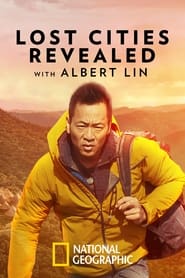
Lost Cities Revealed with Albert Lin
Stáhnout English titulky
Informace o verzi
Tagy
Download English Subtitle Files for Mobile (6)
Náhled titulků v jazyce English
Prvních 178 řádků.
The sun is coming.
The Gods won't stop him.
Your smoke will go with them.
At the dawn
of one of the Americas' greatest civilizations
lies a mystery I've been trying to solve for more than a decade.
Whispers of a mythical city, lost in the jungles of Mexico,
home to the origins of the Maya.
No harm will come to him.
My search for this forgotten city
begins at one of the Maya's most iconic sites, Palenque.
I want to discover where the people
who built Palenque came from,
and maybe shed new light
on the birth of the Maya civilization itself.
One more turn down here?
Oh, there it is.
Wow.
Wow.
The tomb of one of the most important kings
of the entire Maya world.
What are these symbols representing?
It's like a map of the creation of the Maya world.
It represents the origins of Palenque and of the Mayas.
But we don't know exactly where is the place of the origins.
It's a mystery.
Archaeologist Josuhé Lozada,
from the National Institute of Anthropology and History,
is an expert in interpreting Maya symbols,
also called glyphs.
I better start scanning.
My handheld LiDAR scanner uses laser technology to gather data,
allowing us to create a high-definition 3D model
of the glyphs and search for clues
to the location of this lost origin city.
This is the search I've always been waiting for.
The place of the origins.
The beginning.
600 AD.
The Maya civilization is at its peak,
stretching across parts of Central America
and into southern Mexico,
where the regional capital of Palenque
is home to around 20,000 inhabitants.
This was the Maya's golden age,
but I want to explore their origins.
Where did these ancient masters of mathematics,
astronomy and writing come from?
How did the remarkable story of the Maya begin?
Hey, this is Josuhé.
My technology team, Joe and Duncan,
are using advanced 3D software to enhance the LiDAR scans
we made in the tomb,
so that we can examine the glyphs in forensic detail.
We processed your scans inside the tomb.
Amazing.
Wow.
I want to see any symbols that might be describing
this mythical city.
Let's see, let's see.
Ah, this one.
It is a shell with the emblem glyph
of the place of the origins.
It say "mat,"
and "mat" in Maya is cormorant.
A cormorant is like a fishing kind of bird?
Yes.
It's the land of the cormorants.
The Cormorant City.
What else do you see in here?
We can see the split mountain
with many caves.
It's the mountain of the origins.
The sacred hollow mountain
that emerged from the primordial water,
and here is the water.
Like a lake.
Okay.
So, there's a mythical city
somewhere where there's cormorants,
a hollow or split mountain, and water.
Palenque lies on the edge
of Mexico's largest tropical rain forest.
Let's see if we can find anything nearby.
We'll focus on isolating the closest viable locations first.
This looks like mountains down here.
And a lot of water, too.
There is a very important river
that is in the south of Palenque,
the Tulijá river, and it's connected
with the lakes of the Lacandon Jungle.
The lakes of the Lacandon Jungle.
That's where we got to go.
Hey, Joe and Duncan. How are you guys doing back there?
Hey, Albert, yeah, doing good. We're on your six.
We're traveling around 60 miles southeast
from Palenque, searching for the source of the Tulijá River,
believed to be in a remote lake district called Mensabak,
in the heart of the Lacandon Jungle.
Looks like this route follows pretty much
the path of the river, so...
just follow it all the way upstream.
Get as close as we can to its source.
Yeah, sounds good, Albert.
The oldest Maya settlements date
from around 1,000 years before Palenque.
The most important of these, sometimes called origin cities,
were built around sacred natural features
like lakes and mountains.
The ancient Maya would often follow rivers
back to their source, to find them.
This looks promising.
This must be it.
We got here.
Right before dark.
Josuhé believes that the Tulijá River originates
at a series of pools, about a two-mile hike from here,
but through thick jungle wetlands.
So, tomorrow's gonna be a long, tough day.
Time to get some sleep.
Agh!
Lot of spikes. Lot of spikes.
Look at this.
Wow.
That's a cenote.
Wow.
It's beautiful.
During the rainy season, this whole area floods.
Pools, or cenotes, like this one,
become part of a larger system that feeds the Tulijá River.
If the Maya believed that this was the sacred source,
there could be clues in the water.
We got to go inside, right?
Yes, we need to explore.
As we scan the water,
our eyes are drawn to something totally unexpected.
Wow.
Yeah.
Wow, it's right over here.
You see the stones there.
It follows the whole line.
Okay, let's take a look.
Huge hand-carved stone blocks, one on top of the other,
rising 20 feet up from the floor.
It's an artificial cenote.
I think that it's a quarry.
A quarry?
For finding rocks to build structures.
Mm-hmm.
How old do you think this is?
The bigger the blocks, the older they are.
I think they are from the times before Palenque.
Wow.
The beginning of the Maya civilization.
They obtained the rocks to build their pyramids.
So, if these rocks were pulled from this cenote
to build something, that something must be close by.
Yes.
Hauling huge blocks through this terrain
would have been brutal.
So where were they taking them?
From here we go up.
Okay.
It definitely feels like I'm seeing blue
above that line there.
Yes.
Let's send the drone up.
Let's see if we can get a view.
Look at this. Wow.
The lake.
It's just like in that glyph.
Could this be the lake we saw on the glyphs back at Palenque?
Is the origin city we're searching for
hidden somewhere out there?
Joe, Duncan. Do you guys copy?
Copy you, Albert.
The jungle is super dense up here.
Hold your position,
More English subtitles for Lost Cities Revealed with Albert Lin
- Lost Cities Revealed with Albert Lin S01 DSNP WEB-DL DD5 1 H 264-playWEB · 33 downloads · 2024-08-27
Komentáře
No comments yet. Be the first to leave one.