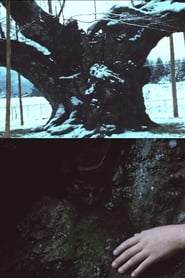
The Cherry Tree with Gray Blossoms (薄墨の桜)
Stáhnout English titulky
Informace o verzi
Tagy
Náhled titulků v jazyce English
Prvních 137 řádků.
April, 1969.
In the upper reaches of the Neo River, Gifu Prefecture, I happened to come across an old cherry tree.
Even after three and a half years passed, I remained determined to make a film about that tree.
And so, on the spring of 1977. the work you are about to see was finally completed.
Sumiko Haneda
The Cherry Tree with Gray Blossoms
The day passes...
the moon waxes and wanes...
time flows...
5 years, 10 years, 50 years...
People know the weight of 50 years.
Some even have a whole century behind them.
The day passes...
the moon waxes and wanes...
time flows...
200 years... 300 years... 500 years...
Such spans of time no one can know.
700 years...
A thousand years...
Everything is drowned in misty shadow...
On the upper reaches of the Neo River, that flows from deep within Gifu's Mino Mountains
there is a lonely cherry tree.
It stands at the foot of the mountain, across the Neo River
that flows near the village.
According to the signpost next to the it...
this tree was planted personally by His Majesty the Keitai Emperor.
When Emperor Keitai was a child, he hid in this Neo Valley...
from persecution by the Emperor Yūryaku.
When he was eighteen years old
he had to go back to the Capital to succeed the throne.
It is said that he planted this tree then
as a token of gratitude for the villagers.
This tree has always been called "The Cherry Tree with Gray Blossoms"
It is said to be at least 1300 or 1400 years old.
That strange shape...
covered in cracks and crevices...
Some wounds become knotty bumps.
The regal trunk rises from the ground spreading its arms wide...
The moss-covered branches no longer give off the look of a plant...
It rather looks a part of the earth itself.
From that earth, young branches grow.
They really look young...
On those young branches, leaves grow thick...
And flowers bloom...
Its age...
1300 years...
or 1400 years...
...no one knows anymore.
Surrounding the cherry tree, there are six farmer's households.
It's been like that a long time, the number of households
neither increasing nor decreasing.
The local healer and priest, Sumiyoshi Heiroku.
His regular job is on the mountain.
Sumiyoshi Ippei, who lives right next door, is his grandson.
He works in a factory with his wife.
Next to him, the household of Sumiyoshi Satoru, Heiroku's distant relative.
Satoru is a labourer.
Across the road is the house of Hatanaka Kannichi.
Kannichi raises pigs.
His wife lives with their son Yoshiki's family.
Yoshiki is a day labourer, so he leaves home very early in the morning.
Kannichi has granchildren, Yoshiki's children.
A little closer to the mountain is Hatanaka Kazumi's house.
He is Kannichi's cousin.
He raises cows near Kannichi's pigsty.
Hatanaka Masaji's house is right under the cherry tree.
He is Kannichi's relative too, Kannichi's houshold is their head house.
Masaji's wife works as a day-labourer and a factory worker.
These six households
were related to Hatanaka and Sumiyoshi families for generations.
Everyday life starts at daybreak.
The first to wake up is Heiroku, the village priest.
He is up at 4.
It's difficult for the light to shine in around the tree,.
since the sun is blocked by the mountains.
And so, every day, it is greeted by a shadowy dawn.
Heiroku does his morning service before breakfast.
The first thing all households do after cooking is to set aside some rice for altar offerings.
At Kannichi's house, aside from making offerings at the Buddhist altar...
the great-grandfather also recites prayers before a talisman from Toyokawa Inari
that is enshrined in the house.
After that, he carries the rice offering to the Goddess of Mercy shrine next to the tree.
The Goddess of Mercy is carved out of the broken branches of the tree.
Every morning Kannichi takes the rice offering to the shrine,
and brings it down it at dusk.
Supervision of the tree is officially the duty of the village Board of Education.
However, everyday care is entrusted to the villagers here.
Even though it is mostly Kannichi who does the work now...
the role belonged to Heiroku's father while he was still alive.
They say that the cherry tree next to the shrine was raised by Heiroku's father...
from the seed of "The Cherry Tree with Grey Blossoms".
This Goddess of Mercy shrine was carved in 1912....
when a strong typhoon shook the tree.
It was concluded after some deliberation that
even if the cherry tree were to fall
it would still live on forever if it were made into a shrine.
When we were children, this cherry tree...
this whole area, it was covered...
with all sorts of trees...
So around that time, and even after
sightseers and carefree people would climb the trees...
some would even lie on them.
It's forbidden now, you can't do anything like that.
So when we were in primary school...
around second or third grade, I think, about sixty years ago...
around that time we marked a perimeter around the tree.
At that time the village headman was a man named Kajiwara Sonosuke.
The whole place really looked pitiful up until then...
so when they did that, and banned climbing on it and such...
I remember they'd scold us if they saw us climbing the tree...
So we didn't do such things anymore...
So as agreed, we cleared the terrain around the tree.
And marked the boundaries...
from somewhere in the middle of that rice field, all the way up to that house.
And also all the way until that rice paddy over there.
This part was clear, so that's where we took all trees and branches we cleared...
We gradually finished the job in this manner.
We brought it back to life.
That's the way it was, and then...
the village headman, he gave the orders and gradually...
a lot of people started coming.
So they limited how many people can come within the boundaries we set.
So people who had some work to do here...
And people like photographers could get near, but that's about it.
About sixty years ago, standing by this cherry tree...
We found bones right here.
At that time we had about 10 labourers, all sorts of people cleaning around here.
So they ended up finding the bones.
The doctor came to take the bones.
He said he was going to take them and verify if they are human or not.
Foxes often brought their prey here, so we thought it might've been that.
Some time later, he said that they were human bones, no mistake.
So here's what we later reasoned must've happened.
Somewhere below this spot, a burial mound was made...
and it just lay here, forgotten by the people.
Was there ever any talk before of this place being a burial mound?
Yes, there was.
More English subtitles for The Cherry Tree with Gray Blossoms
- The Cherry Tree with Gray Blossoms (Usuzumi no sakura / 薄墨の桜) 29 970 FPS · 35 downloads · 2022-07-05
Komentáře
No comments yet. Be the first to leave one.