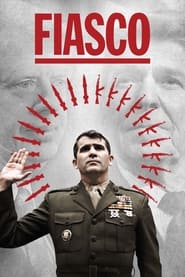
Fiasco
Stáhnout English titulky
Informace o verzi
Tagy
Náhled titulků v jazyce English
Prvních 200 řádků.
A revolution in Nicaragua
brings a new government into power,
and President Reagan believes the Cold War
now has a new front.
When the White House launches a secret campaign
to support an opposition movement known as the Contras,
Lieutenant Colonel Oliver North is tapped to lead the effort.
The Masters golf tourney
in Augusta, Georgia each year
beckons to the greats of the golf world.
The royalty of golf holds sway over the crowded galleries
on their tours around the difficult course.
One of the perks of being president
is that if you feel like playing a few rounds of golf
at one of the most prestigious clubs in the world,
you can just make that happen.
In October of 1983, it was a golfing weekend
for President and Mrs. Reagan.
They were going to the Augusta National Golf Club.
The club was actually closed,
so it was a perfect time for the Reagans to go.
It was good weather,
and...it was supposed to be a very quiet weekend.
Reagan was playing golf on the 16th hole...
And someone drove their pickup truck through the gate.
They actually rammed the chain-link fence.
He took two White House staff as hostages at gunpoint,
held them, and said he wanted to meet with President Reagan.
The hostage taker was named Charles R. Harris,
and it was remarkable that he made it as far as he did.
Remember, there had been an assassination attempt
made on Reagan in 1981.
Heightened security had become the norm.
The Augusta National Golf Club was totally fenced in,
and it was pointed out that security is quite good,
in addition to our Secret Service and everything.
They knocked the gate down. Initially, the truck backed up,
rammed the gate again,
knocked it completely down, and rode over it.
It was suggested by Chief of Staff Don Regan
to just communicate with him,
try to do it by phone and go from there.
But we've got to get our two hostages,
our two staff, freed.
The president called the phone in the pro shop
to see if he could talk to Harris and broker a deal.
Harris didn't believe
that it was actually Reagan on the line.
So he hung up and pulled the phone out of the wall.
Augusta National was sealed off,
and Air Force One prepared for evacuation.
And then, almost as quickly as it started,
the crisis was over.
About 2 1/2 hours later,
after demands for whiskey and food,
the seventh hostage bolted from the room where he was held
and escaped unharmed.
The subject was captured.
Harris would later say
that a combination of his recent job loss,
Reagan's economic policies, and a bottle of tequila
drove him to go to the Augusta National Club that day.
As hostage incidents go,
this one resolved itself pretty easily.
But if it had happened on any other day,
it would have been a much bigger story.
Good afternoon.
The count of American dead in today's terrorist attack
on the U.S. Marine compound in Beirut stands at 135.
In the middle of the night, in Beirut, at the airport,
where we had marines stationed,
a truck drove through a checkpoint
loaded with dynamite, detonated--a suicide attack.
The explosion in Lebanon was the deadliest attack
against U.S. Marines since Iwo Jima.
It was terrible, terrible time for President Reagan.
There are no words
to properly express our outrage
and I think the outrage of all Americans.
In many ways, the ongoing conflict in Lebanon
would define Reagan's second term.
The blood feud in the Mideast continues.
Lebanon is the arena for nearly everybody's battle.
The country is bleeding for nine years.
We have not more--we want the world not to bleed anymore.
It is the key to understanding how Reagan
would become a captive of his own hostage crisis,
just like Jimmy Carter had before him.
Four Lebanese employees of the Associated Press
in Beirut have disappeared.
Once again,
Americans are held hostage in the Middle East.
They are beating the passengers.
They are threatening to kill them now.
The president had campaigned on the idea of American strength.
I don't understand
why 52 Americans have been held hostage
for almost a year now.
What would he do now that tough talk
was suddenly not enough?
To what lengths would he go
to bring his fellow Americans home?
We've never let up, and we never will
in trying to obtain the freedom of all the hostages.
I'm Leon Neyfakh.
This is "Fiasco: the Story of Iran-Contra."
At Beirut, the jet-set arrive in the same way
they do at all the airports in the world.
Despite its small size,
Lebanon has always wielded great influence
in the Arab world.
The capital city of Beirut was its pearl.
I was born and raised in Beirut.
It was a lovely childhood,
growing up in a country that was, um, peaceful.
Lebanon was a very cosmopolitan place.
We spent a lot of time at the beach.
We spent summers in the mountains.
And family life was really what it should be.
And I think, looking back, it's what sustained me
during the many hard years of the war in Lebanon.
It was during the mid-1970s,
after nearly two decades of peace,
that Lebanon erupted in civil war.
Lebanon was struggling to maintain a political order
that had been established in the '50s,
something that was called the Compact,
where ethnic groups, as groups,
agree on a balance of power and assigned roles.
One group is the prime minister.
One group gets the presidency.
One group gets the speaker of the parliament.
And that was the structure that had endured.
But it was under severe attack because of the civil war.
Things had kind of started brewing
in '75 and '74.
And then I went for my master's,
and the country blew up in flames.
It's now a year since Lebanon's social tensions
finally and inevitably exploded into war.
There were days that were normal.
There were lulls in the fighting.
And there were days when it was extremely dangerous.
We always had the radio up to our ear
to listen to the news flashes
on the various Lebanese radio stations,
representing various factions.
What was really changing was the most impoverished,
the least powerful, the Shia, were now being emboldened
and strengthened by the resurgence of Iran
under Khomeini.
And so what we saw was
a further splintering of Lebanese democracy,
more violence, more terrorism,
more intimidation.
The Syrian military had intervened.
The Israelis had invaded.
Everyone who was anyone was involved in Lebanon.
Back in Washington,
Reagan's National Security Council
was keeping a close eye on events in the Middle East.
They relied in part on the global alert system
housed in Oliver North's office, room 392.
The flashboard was where we put up
the latest incidents--
who was working on them and what was happening,
and, you know, what were all the steps
that needed to be taken.
And, you know, was sort of a real-time picture
of global terrorism.
Here, again, it's important to go back
to the year 1979.
The year when revolution took hold in Nicaragua,
Ayatollah Khomeini took power in Iran,
52 American citizens were held hostage in Tehran
for 444 days.
The turbulence of that year
had a ripple effect even after it ended.
This was especially the case in the Muslim world.
Khomeini and Iran saw Lebanon
as a way to buffer itself
against American retribution or punishment.
It was a very convenient and strategic alliance with Iran
that continues to this day.
Before the civil war,
Lebanon had been an ally to the United States.
But the instability of the country
had put that in danger.
Now the Khomeini regime in Iran
was trying to stake out a position in Lebanon.
If Iran succeeded in gaining influence in the region,
it would be a disaster for the U.S.,
an upset in the global balance of power.
Sensing that things were spiraling out of control,
President Reagan sent an emissary to Lebanon
to negotiate a cease-fire.
Ambassador Habib has informed me
that a plan to resolve the West Beirut crisis
has been agreed upon by all the parties involved.
As part of this plan,
More English subtitles for Fiasco
- Fiasco S01E06 XviD-AFG · 25 downloads · 2021-10-26
- Fiasco S01E06 XviD-AFG · 14 downloads · 2021-10-26
- Fiasco S01E05 XviD-AFG · 24 downloads · 2021-10-20
- Fiasco S01E05 XviD-AFG · 17 downloads · 2021-10-20
- Fiasco S01E04 XviD-AFG · 19 downloads · 2021-10-10
- Fiasco S01E04 XviD-AFG · 21 downloads · 2021-10-10
- Fiasco S01E03 XviD-AFG · 16 downloads · 2021-10-10
- Fiasco S01E02 480p x264-mSD · 19 downloads · 2021-10-01
Komentáře
No comments yet. Be the first to leave one.