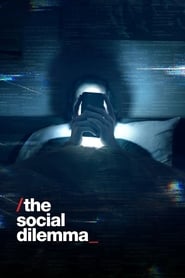
The Social Dilemma
Stáhnout English titulky
Informace o verzi
Tagy
Náhled titulků v jazyce English
Prvních 200 řádků.
Why don't you go ahead? Sit down and see if you can get comfy.
-You good? All right. -Yeah.
- Um... -
Take one, marker.
Wanna start by introducing yourself?
Hello, world. Bailey. Take three.
- You good? -This is the worst part, man.
I don't like this.
I worked at Facebook in 2011 and 2012.
I was one of the really early employees at Instagram.
I worked at, uh, Google, uh, YouTube.
Apple, Google, Twitter, Palm.
I helped start Mozilla Labs and switched over to the Firefox side.
- Are we rolling? Everybody? -
Great.
I worked at Twitter.
My last job there
was the senior vice president of engineering.
- I was the president of Pinterest. -
Before that, um, I was the... the director of monetization
at Facebook for five years.
While at Twitter, I spent a number of years running their developer platform,
and then I became head of consumer product.
I was the coinventor of Google Drive, Gmail Chat,
Facebook Pages, and the Facebook like button.
Yeah. This is... This is why I spent, like, eight months
talking back and forth with lawyers.
This freaks me out.
When I was there,
I always felt like, fundamentally, it was a force for good.
I don't know if I feel that way anymore.
I left Google in June 2017, uh, due to ethical concerns.
And... And not just at Google but within the industry at large.
I'm very concerned.
I'm very concerned.
It's easy today to lose sight of the fact
that these tools actually have created some wonderful things in the world.
They've reunited lost family members. They've found organ donors.
I mean, there were meaningful, systemic changes happening
around the world because of these platforms
that were positive!
I think we were naive about the flip side of that coin.
Yeah, these things, you release them, and they take on a life of their own.
And how they're used is pretty different than how you expected.
Nobody, I deeply believe, ever intended any of these consequences.
There's no one bad guy. No. Absolutely not.
So, then, what's the... what's the problem?
Is there a problem, and what is the problem?
Yeah, it is hard to give a single, succinct...
I'm trying to touch on many different problems.
What is the problem?
Despite facing mounting criticism,
the so-called Big Tech names are getting bigger.
The entire tech industry is under a new level of scrutiny.
And a new study sheds light on the link
between mental health and social media use.
Here to talk about the latest research...
...is going on that gets no coverage at all.
Tens of millions of Americans are hopelessly addicted
to their electronic devices.
It's exacerbated by the fact
that you can literally isolate yourself now
in a bubble, thanks to our technology.
Fake news is becoming more advanced
and threatening societies around the world.
We weren't expecting any of this when we created Twitter over 12 years ago.
White House officials say they have no reason to believe
the Russian cyberattacks will stop.
YouTube is being forced to concentrate on cleansing the site.
TikTok, if you talk to any tween out there...
...there's no chance they'll delete this thing...
Hey, Isla, can you get the table ready, please?
There's a question about whether social media
is making your child depressed.
Isla, can you set the table, please?
These cosmetic procedures are becoming so popular with teens,
plastic surgeons have coined a new syndrome for it,
"Snapchat dysmorphia," with young patients wanting surgery
so they can look more like they do in filtered selfies.
Still don't see why you let her have that thing.
What was I supposed to do?
I mean, every other kid in her class had one.
She's only 11.
Cass, no one's forcing you to get one.
You can stay disconnected as long as you want.
Hey, I'm connected without a cell phone, okay? I'm on the Internet right now.
Also, that isn't even actual connection. It's just a load of sh--
Surveillance capitalism has come to shape
our politics and culture in ways many people don't perceive.
ISIS inspired followers online,
and now white supremacists are doing the same.
Recently in India,
Internet lynch mobs have killed a dozen people, including these five...
It's not just fake news; it's fake news with consequences.
How do you handle an epidemic in the age of fake news?
Can you get the coronavirus by eating Chinese food?
We have gone from the information age into the disinformation age.
Our democracy is under assault.
What I said was, "I think the tools
that have been created today are starting
to erode the social fabric of how society works."
- -
Fine.
Aza does welcoming remarks. We play the video.
And then, "Ladies and gentlemen, Tristan Harris."
-Right. - Great.
So, I come up, and...
basically say, "Thank you all for coming." Um...
So, today, I wanna talk about a new agenda for technology.
And why we wanna do that is because if you ask people,
"What's wrong in the tech industry right now?"
there's a cacophony of grievances and scandals,
and "They stole our data." And there's tech addiction.
And there's fake news. And there's polarization
and some elections that are getting hacked.
But is there something that is beneath all these problems
that's causing all these things to happen at once?
-Does this feel good? -Very good. Yeah.
Um...
I'm just trying to... Like, I want people to see...
Like, there's a problem happening in the tech industry,
and it doesn't have a name,
and it has to do with one source, like, one...
When you look around you, it feels like the world is going crazy.
You have to ask yourself, like, "Is this normal?
Or have we all fallen under some kind of spell?"
I wish more people could understand how this works
because it shouldn't be something that only the tech industry knows.
It should be something that everybody knows.
Bye.
Here you go, sir.
- Hello! - Hi.
-Tristan. Nice to meet you. - It's Tris- tan, right?
-Yes. -Awesome. Cool.
Tristan Harris is a former design ethicist for Google
and has been called the closest thing Silicon Valley has to a conscience.
He's asking tech
to bring what he calls "ethical design" to its products.
It's rare for a tech insider to be so blunt,
but Tristan Harris believes someone needs to be.
When I was at Google,
I was on the Gmail team, and I just started getting burnt out
'cause we'd had so many conversations about...
you know, what the inbox should look like and what color it should be, and...
And I, you know, felt personally addicted to e-mail,
and I found it fascinating
there was no one at Gmail working on making it less addictive.
And I was like, "Is anybody else thinking about this?
I haven't heard anybody talk about this."
-And I was feeling this frustration... -
...with the tech industry, overall,
that we'd kind of, like, lost our way.
- -
You know, I really struggled to try and figure out
how, from the inside, we could change it.
And that was when I decided to make a presentation,
kind of a call to arms.
Every day, I went home and I worked on it for a couple hours every single night.
It basically just said, you know,
never before in history have 50 designers--
20- to 35-year-old white guys in California--
made decisions that would have an impact on two billion people.
Two billion people will have thoughts that they didn't intend to have
because a designer at Google said, "This is how notifications work
on that screen that you wake up to in the morning."
And we have a moral responsibility, as Google, for solving this problem.
And I sent this presentation
to about 15, 20 of my closest colleagues at Google,
and I was very nervous about it. I wasn't sure how it was gonna land.
When I went to work the next day,
most of the laptops had the presentation open.
Later that day, there was, like, 400 simultaneous viewers,
so it just kept growing and growing.
I got e-mails from all around the company. I mean, people in every department saying,
"I totally agree." "I see this affecting my kids."
"I see this affecting the people around me."
"We have to do something about this."
It felt like I was sort of launching a revolution or something like that.
Later, I found out Larry Page had been notified about this presentation
-in three separate meetings that day. -
And so, it created this kind of cultural moment
-that Google needed to take seriously. -
- And then... nothing. -
Everyone in 2006...
including all of us at Facebook,
just had total admiration for Google and what Google had built,
which was this incredibly useful service
that did, far as we could tell, lots of goodness for the world,
and they built this parallel money machine.
We had such envy for that, and it seemed so elegant to us...
and so perfect.
Facebook had been around for about two years,
um, and I was hired to come in and figure out
what the business model was gonna be for the company.
I was the director of monetization. The point was, like,
"You're the person who's gonna figure out how this thing monetizes."
And there were a lot of people who did a lot of the work,
but I was clearly one of the people who was pointing towards...
"Well, we have to make money, A...
and I think this advertising model is probably the most elegant way.
The Social Dilemma subtitles in other languages
More English subtitles for The Social Dilemma
- The Social Dilemma 2020 WEBRip Netflix · 184 downloads · 2022-05-28
- The Social Dilemma KingDong · 86 downloads · 2022-02-06
- The Social Dilemma 2020 720p WEBRip x264-Mkvking com · 123 downloads · 2020-09-20
- The Social Dilemma 2020 720p NF WEBRip 800MB x264-GalaxyRG · 154 downloads · 2020-09-17
- The Social Dilemma 2020 1080p WEBRip x265-RARBG English SDH · 155 downloads · 2020-09-14
- The Social Dilemma 2020 WEBRip x264-ION10 · 108 downloads · 2020-09-09
- The Social Dilemma 2020 WEBRip x264-ION10 · 132 downloads · 2020-09-09
Komentáře
No comments yet. Be the first to leave one.