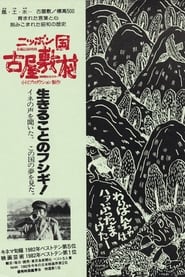
Furuyashiki: A Japanese Village (ニッポン国 古屋敷村)
Stáhnout English titulky
Informace o verzi
Tagy
Náhled titulků v jazyce English
Prvních 200 řádků.
Long ago, in a village in the valley...
It was long ago...
My grandmother told me.
100... 200 years ago...
I don't know exactly.
They said life in the mountains...
Was easy because there were no taxes.
No taxes up there.
Grandma liked it.
So she married a man from the mountains.
Taxes were high at her village in the valley.
A bottle of saké per window. It was too much.
But in the mountains...
There were no taxes.
No taxes at all.
That was why she married a man from the mountains.
She believed life was easier up here.
But up here red pepper isn't red.
"People can't live where pepper isn't red."
They used to say that.
Her parents were worried.
But she came to live up here anyway.
That's how people came to gather here.
More and more people came.
It got warmer.
Maybe because they cut down the trees.
Red pepper got red, and it became easier to live.
That's all. The end.
Produced by OGAWA PRODUCTIONS
The camera is facing to the west.
We're looking to the west.
The south is to the left.
We can see the ridges.
Beyond them is Miyagi Prefecture.
To the right, the north...
Those ridges lead to Mt. Zao.
We're moving between the mountains.
This is Furuyashiki.
About 400 to 500 meters above sea level.
We've filmed in this village...
For over a year now.
A Japanese Village - Furuyashikimura -
Temperatures during May and June, 1980.
This shows the maximum and minimum temperature range.
At the end of May...
And in June...
The weather was good.
The temperatures were high.
To the end of June...
The good weather lasted.
The rainy season started on June 8th.
So they reported. The temperature dropped.
It rained a lot, but the temperature went up again.
Sunny days.
Two rainy days.
Sunny days again.
26.9°C, here.
28.8°C. Very high.
28.5°C.
Up to 32 degrees!
In May, it was already summer.
A month after the rice was planted...
The temperature was two degrees higher than normal,
typically a boon for these cold mountain farms. However...
The weather changed...
Around June 26th.
The temperature fell rapidly.
Both maximum and minimum temperatures.
The rainy season started around that day?
In this village, it started around the 26th.
The rainy season lasted through July.
July 18. It was cold.
The minimum: 11.4°C.
The maximum was low as well.
It rose a little around this day.
The rainy season was over.
The weather improved.
Around this day.
The 20th.
Through the 26th.
We had a row of sunny days.
Only a week.
Then it rained again.
Day after day.
- The rainy season wasn't over. - Indeed.
The weather stayed chilly.
Then it got better only here.
Three sunny days.
This was the time...
From the 8th through the 15th.
A week of fine weather.
Summer returned.
Then a sharp drop.
Maximum: 16.5°C.
Minimum: 15°C.
Like the rainy season.
The bad weather lasted.
Summer didn't stay.
I agree.
No real summer.
In 1980, there was no real summer.
In Furuyashiki, the average temperature
was three degrees cooler than usual.
2:00P.M., August 26th. Temperature: 16°C.
It was a cool summer in 1980.
In the lower valley...
After August 25th...
The rice ears turned yellow.
The villagers said that...
The rice ears in Furuyashiki were still green.
The heads were straight.
Furuyashiki is only 250m higher than the valley.
But the difference was great. No flowering yet.
Asking to Juzo Inoue
Did the cool summers bring much crop failure?
Every five years.
They always did a lot of damage.
How was the past year?
Mr. Inoue used to work in the mountains...
Making charcoal.
Then he got drafted.
After he returned from Siberia...
He raised rice and burned charcoal.
There were a lot of people then.
Back then the rice was bad - the farming methods too.
No chemical fertilizers.
We were short of rice.
Never had enough.
So we bought rice from the lower valley.
You couldn't support yourselves?
Only three families could.
How many families were there?
Eighteen before the war.
From eighteen to three?
And only three of them had enough rice.
And the other fifteen?
The others had to buy. Some had no paddies at all.
The paddies here couldn't support them.
About the direction of the wind...
Where does it come from in the summer?
In the summer, on a sunny day...
It comes from over there.
From the west.
On a sunny day.
When the weather is good.
The wind comes up the valley.
On a day like this?
It's cloudy.
No west wind... no wind at all.
The mountaintop is covered with clouds.
That's a sign of rain.
Like a mist.
During a cool summer it comes from...
Days like this, it comes from the south.
When it's cool like this, it rambles in from the border mountains.
The mist covers the ridges.
Then it comes down. It's cold.
And the wind blowing, too.
It's very cold.
Around here, we call it the White South.
The White South?
In 1934, the White South caused terrible damage.
It was cold even in the summer.
The mist rises from beyond the ridges.
Then it comes down this way.
The White South - cold air coming from the south.
August 31th
2:30 P.M.
It's blooming.
So late!
How about here?
The buds aren't out yet.
Straight heads.
Some are blooming here!
The flowering began at 2:00.
It seems so.
It's at the height of flowering.
Still flowering at this hour? It's already past 2:30.
August 31, 2:00 P.M.
Such late flowering is most unusual.
We've never seen it before.
Usually, rice blooms in early August...
In the morning on a sunny day.
We were very surprised.
They're blooming all around here.
Look at this one.
It's at the peak of its flowering.
The blooms are still open.
Not closed yet.
They'll close after three o'clock.
Very late flowering!
It's 3:00.
In the evening... Look!
The mist.
It's begun to come down.
They call it the White South.
It rises to cover the ridges.
The temperature drops.
It brings the cold air.
That's why, it's quite...
Komentáře
No comments yet. Be the first to leave one.