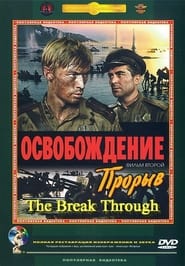
Liberation: The Break Through (Освобождение 2: Прорыв)
Stáhnout English titulky
Informace o verzi
Tagy
Download English Subtitle Files for Mobile (5)
Náhled titulků v jazyce English
Prvních 200 řádků.
ETERNAL GLORY TO THE FALLEN IN THE BATTLES OF THE GREAT PATRIOTIC WAR
MOSFILM
TEHERAN November 30, 1943.
Gentlemen.
I have some good news for Marshal Stalin.
Today, the Joint Chiefs of Staff,
with the participation of the British Prime Minister and the US President,
have decided to open a second front in the north of France
in May 1944.
I'm satisfied with that decision.
In my turn,
I'd like to inform Mr. Roosevelt and Mr. Churchill
that by the beginning of landing operations in France
the Russians will prepare a massive blow against the Germans.
To our victory!
ANKARA December 15, 1943.
Mister Ambassador, these are the protocols of the Teheran conference.
Her Majesty's Prime Minister asked me to tell you
that you may need this information
in connection with the talks on Turkey's entering the war.
The President Inonu is already thinking about it.
The Prime Minister atso asked me to tell you
that you should't really hurry up President Inonu.
If I understood the Prime Minister correctly,
we shall need the million-strong, Turkish Army
when the Russians will be approaching the Barlkans.
Let's have dinner together.
Elyas, I'll be back in about 2 hours.
BERLIN. Reich Chancellery. January 6, 1944.
Where did you get these documents?
The valet of the British ambassador in Ankara is our agent.
He's von Papen's agent. I don't trust von Papen.
In the materials of the Teheran Conference, there's the date
of the Anglo-American troops landing in the north of France.
That is the opening of a second front.
You don't know Churchill.
He's an old master of dismformation.
These documents were thrust on you deliberately.
My Fuhrer, my information is different.
Your trustfulness has cost me very dearly.
We all but lost Italy.
You overlooked the plot against the Duce.
I don't believe these false documents.
Churchill will never dare land in Normandy!
LIBERATION
The great battle at Kursk proved to be
one of the greatest battles of World War II.
Here, in the summer of 1943,
the tank hordes of Fascist Germany had been routed.
From here, the German army, which had enslaved Europe
had begun its retreat.
Our troops
mounted a wide offensive in the right-bank Ukraine
and were moving towards the state border of the USSR.
Film Three.
DIRECTION OF THE MAIN BLOW
Screenplay by Yuri BONDAREV
Oskar KURGANOV Yuri OZEROV.
Directed by Yuri OZEROV.
Directofof Photography Igor SLABNEVICH.
Production Designer Aleksandr MYAGKOV.
Music b Yu. LEVITIN.
English Subtitles by Tatiana Kameneva.
Chief Military Consultant Army General S. SHTEMENKO.
Cast.
Tsvetayev - N. OLYALIN Zoya - L. GOLUBKINA.
Orlov - B. ZAIDENBERG.
Zhukov - Mikhail ULYANOV Rokossovsky - Vladlen DAVYDOV.
Vassilevsky - Ye. BURENKOV Antonov - V. STRZHELCHIK.
Konev - Yu. LEGKOV Vatutin - S. KHARCHENKO.
Chernyakhovsky - Ye. KOLCHINSKY.
Meretskov - V. KOSTENKO Bagramyan - V. KAREN.
Shtemenko - K. PROTASOV Batov - V. ZAMANSKY.
Panov - N. RYBNIKOV
Stalin - Bukhuti ZAKARIADZE.
Rbosevelt - S. JASKIEVICZ Churchill - Yu. DUROV
Hitler - Fritz DIEZ Himmler - E. TIDE.
Goebbels - H. GIEZE Keitel - G-M. HENNEBERG.
Kluge - H. HASSE Model - P. STURM.
Fromm - H. SCHELTZKE Remer - H. KUHN.
Stauffenberg - Alfred STRUWE Olbricht - W. ORTMANN.
Haeften - E. STECHER Bek - W. WIELAND.
Witzleben - O. DIERICHS.
Partisans: Father - Ye. SHUTOV Son - V. VAKHLIN.
Pilots: Jacque - L. PRYGUNOV Zaitsev - V. RAZUMOVSKY.
Participating in Polish scenes:
W. GLINSKI, M. NOWAKOWSKI, T. SCHMIDT
Pilots of the French "Normandy-Niemen" Regiment:
A. BARTOLLI, J-P. HEGEGEN, В. RAFFALI, A. SENTONNET
British Ambassador - B. WHITE Narrator - A. KARAPETYAN.
Creative Association VREMYA.
First Ukrainian Front February 29, 1944.
Commander of the 1st Ukranian Front Arm Ganeeai Vatutin.
What is the Polish for 'butter'?
Butter, Comrade General.
And 'meat'?
Meat.
And 'bread'?
Bread, Comrade General.
See? Such a close language. No need to learn it.
And what will be 'life' in Polish?
Zycie.
Zycie?
A little different, though.
But actually, it's the same.
Turn around. The Germans!
Fire back!
Nikolai Fyodorovich.
Bad timing.
Didn't get a chance to start it.
Who will be commanding the front?
I've taken on command, Nikolai Fyodorovich.
Good luck to you.
Get well soon.
We'll meet in Poland yet.
- Zycie. - What?
He keeps repeating that word, Comrade Marshal.
Zycie...
means 'life' in Polish.
On March 4, 1944
the troops of the 1st Ukrainian Front under the command of Marshal Zhukov,
the 2nd Ukrainian Front under the command of Marshal Konev
and the 3rd Ukrainian Front
under the command of Army General Malinovsky
had gone over to offensive actions.
In the course of the winter campaign of 1943-1944,
the Red Army has won a battle for the Dnieper and right-bank Ukraine,
shattered strong defensive fortification near Leningrad
and in the Crimea,
overrun the enemy on the water lines of the South Bug, Dniestr, Prut,
and is continuing the offensive in the conditions of springtime flooding.
However, our operational-strategy position, though advantageous,
remains very critical.
The German resistant is increasing.
Our troops are tired,
and they need a serious reinforcement in strength and materiel.
It's time-to go over to defensive actions.
We have gathened here, Comrade Zhukov,
to talk about offensive,
and not the deffensive actions.
I'm talking about the defease as a forced measure, Comrade Stalin.
This will allow us to better prepare are for the offensive.
We understand that, Comrade Zhukov,
but today we must define
the direction of the main blow of the summer campaign.
Let's listen to what the front commanders have to say.
Let's begin with the north.
Comrade Bagramyan.
We propose to strike a blow in the Baltic
and cut off the Army Group North from the territory of Germany.
To this end, the 1st Baltic Front
should attack alone the Western Dvina
on the direction Polotsk - Dvinsk and come out to Riga.
What does the General Staff to say to this?
The General Staff believes that in the Baltic we can't achieve suddenness
while preparing a massive offensive.
In that sector of the front, the enemy
the well-deveoped railway and highway network.
At the same time, the terrain is unfavorable for our tanks -
too many lakes and marshes.
It's a serious consideration.
For the tank armies' action on the direction of the main blow,
we need wide expanses.
But Germans think the same way, Camrade Stalin.
What do you mean?
I mean the German military doctrine.
It's more expedient to use the tank armies in flat country.
That's what they expect from us.
And what do you propose?
I propose to strike the main blow where we're not expected.
In the boggy and wooded localities of Byelorussia.
It was Suvorov who once said "Where deer cannot ass,
the Russian soldier will."
It's not the Devil's Bridge for you.
This is a modern-day war.
But the modern-day war means suddenness, Comrade Stalin.
Moreover, the General Staff supports the idea of a blow in Byelorussia.
Go to Byelorussia.
Study the situation on the spot...
Comrade Zhukov.
Yes, Comrade Stalin.
Come on! Forward! Come on!
Put me through to the regiment commander. Now!
Comrade Captain, your wounded are behind the road.
- Well? What? - The regiment commander's on the line.
I can't take the height!
One more attack like this, and I'll lose all my men.
I know the order.
What?
What did he say?
I can't repeat it in front of women.
Your wounded are behind the road. Can't you hear me?
Give me two men, and I'll carry the wounded out.
You want to die gallantly, don't you, Zoya?
Every man counts here.
- Comrade Captain! - We'll carry them out at night.
I demand that the wounded be carried out immediately!
Go away, medical instructor!
Comrade Captain!
- What is it? - Look.
Liberation: The Break Through subtitles in other languages
Komentáře
No comments yet. Be the first to leave one.