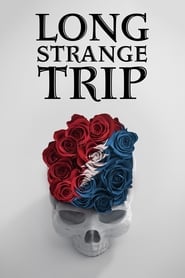
Long Strange Trip
Stáhnout English titulky
Informace o verzi
Tagy
Download English Subtitle Files for Mobile (6)
Náhled titulků v jazyce English
Prvních 200 řádků.
[birds chirping, insects buzzing]
**
Grateful Dead: * Y'know death don't
* Have no mercy
* In this land
* Death don't, wow
* Have no mercy
* In this land
* in this land
* Come to your house
* You know he don't
* Take long
* Whaah
* You look in bed this morning *
* Children find that your
* Family's gone
* I said death don't
* Ohh
* Have no mercy
* No mercy
* In this land
I love dead.
Hate living.
Jerry Garcia: I used to draw pictures
of the Frankenstein monster,
over and over, you know,
endlessly in different positions.
I think part of it had to do
with the thing of being afraid the first time I saw it,
the thing of having it have that power of fear over me.
He's one of the strangest tales ever told.
He deals with the two great mysteries of creation:
life and death.
My mother, I think, must have taken me to see it--
Abbott and Costello Meet Frankenstein--
in 1948 I guess that was.
I was 6 years old.
My father had died the previous year, in '47,
so that also made it kind of a heavy time
in my life emotionally,
and it was another big reason
for my clamping on to it, kind of--
that power of fear.
I think there was some desire on my part to embrace that,
to not let that control me that way.
That whole business evoked something,
something very strong.
And it hit me in that-- in that archetypal center.
You know, vaboom, you know. Dong, you know.
That was my first sense of
there are things in this world that are really weird.
I don't think I knew that before I saw that movie,
that there are things that are really weird,
and there are people who are concerned with them.
That became important to me,
and I guess I thought to myself on some level,
I think I want to be concerned with things that are weird.
I think that seems like fun.
**
* Saint Stephen with a rose
* In and out of the garden he goes *
* Country garden in the wind and the rain *
* Wherever he goes, the people all complain *
Man: It's a real challenge,
if you're not already a Deadhead,
to love the Grateful Dead
because there's so much distraction.
* Stephen prospered in his time *
But if you ignore the rabid fans
and ignore the entire lack
of all the expected elements of American entertainment,
then you will find...
there's a richness that fills your soul.
The Grateful Dead explored freedom.
And they were the cutting edge
of a phenomenal re-examination
of American values.
For me, the Grateful Dead
is the most American of all bands
because each musician that started that band
came from a completely different place musically,
and they somehow managed to make it work.
You got a bluegrass banjo player,
you got a blues harmonica player,
you got a folky guitarist...
R&B drummer...
you got a avant-garde classical composer
picking up the bass...
and not long after that, a marching band drummer.
And, oh, by the way,
a genius lyricist
who created, in his lyrics,
a nonliteral hyper-Americana.
And you take all these streams...
and you dissolve egos with acid...
and you stir vigorously.
That's Grateful Dead music.
A 1, 2, 3, 4.
I spent most of my adult life
as the biographer to the Grateful Dead.
How this happened was,
in 1971, the Grateful Dead put out an album.
On the back of it, it said...
They set up a post office box in San Rafael.
Then I had just written this book about Kerouac.
So I sent a copy of the book to Jerry,
and it changed my life.
Kerouac was Jerry's great hero.
Reading On The Road
was absolutely an essential part of his growing up.
Garcia: He really means something to me.
That's-- That thing of the typewriter rolls, you know?
I mean, that-- that's so much like my way of thinking,
- you know what I mean? - McNally: Yeah. Yeah.
Just, like, put it out there, man.
Like a record, you know?
That's what you want a record to be, you know?
No starts or stops, none of that shit.
That seamless stuff, you know,
that just, it works. For me, that stuff works.
Other people it doesn't work for, but for me it works.
Woman: I had never encountered a mind like that.
And that's really what was compelling to me--
was the way his mind worked, you know?
That's why I went for it then,
and then, 30 later, again,
and probably why I'm sitting here now.
I read On The Road at age 14
before I started high school.
The beatnik world,
it was so much a part of who I was
and everywhere I went.
Man: Well, there was a bookstore.
Brigid Meier: It was in Menlo Park.
At a coffee bar called Kepler's.
And in that bookstore
one was liable to run across all kinds of other people
who were 18, 19 years old
hanging out reading On The Road
or The Dharma Bums.
- Meier: Allen Ginsberg. - Trist: Ferlinghetti.
- Kenneth Patchen. - Howl.
- All the poetry. - Eastern mysticism.
- Buddhism. - Left-wing politics.
All of that. It was all going down.
I would call them
post-beatnik proto-hippie kinds of people
looking for something meaningful in life.
We were the weirdoes, the freaks.
That was my tribe.
And there, at Kepler's,
the first person I think I saw was Garcia.
There's this beatnik guy with a guitar.
He was a folk singer at that point.
I think he was only 18.
And Robert Hunter, who was also part of that group.
While they did not write songs together
until some years later,
I had this sense that there was
a true partnership forming there.
Is it cued up? I don't--
We met sometime in March.
So that's 1961,
and then my birthday's the end of May.
It's Jerry and Bob, boys.
Jerry and Bob sang, played.
Hey, I have an announcement.
Barbara's father would like to know
if anyone wants any more food.
- Woman: Oh, God. -
- * I was born about 10,000 years ago * - Years ago.
* There ain't nothing in this world *
- * That I don't know - I don't know.
* I saw Peter, Paul, and Moses *
* Playing ring around the roses *
* And I'll whoop the guy that says it isn't so *
T'ain't so, Mister. Now you listen to this.
We were all finding inspiration with each other
in discovering that we had something
of a family of a group.
* And that's about the niftiest thing *
* That man has ever done
Hunter had an interesting distinction
amongst all his crew
in that he had a car, a very ancient car.
Meier: The four of us--
Bob and Alan and Jerry and I--
became like a team.
They'd pick me up after school.
We would go on road trips.
And there was this feeling.
We were feeling something that came from the beatniks.
You know, this wonderful, wonderful sense of connection.
And I can remember Hunter reciting Dylan Thomas:
"And death shall have no dominion..."
Remember we were all a generation
that had come to age under the threat of the bomb.
Not very conducive
to seeing a meaningful life going forward.
Garcia: It was about possibilities,
Long Strange Trip subtitles in other languages
More English subtitles for Long Strange Trip
- Long Strange Trip 2017 Bluray · 89 downloads · 2021-02-04
Komentáře
No comments yet. Be the first to leave one.