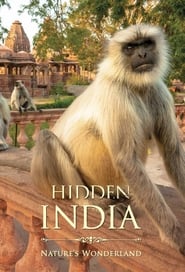
Hidden India
Stáhnout English titulky
Informace o verzi
Tagy
Náhled titulků v jazyce English
Prvních 174 řádků.
India is a land of over one billion people.
An ancient world...
...it is forging a bright future.
it may look like there's little room for wildlife.
But away from the hustle and bustle...
...there are exotic kingdoms of rock and ice...
...dense jungles...
great deserts...
...and mighty rivers.
All bursting with life.
Here nature has been woven into people's lives.
Wilderness holds strong.
And the wild spirit of India thrives.
This...
...is hidden India.
Winter in the remote Himalayas
Hardy markhor goats are able to make a living by being nimble on these vertical slopes.
The male's enormous curling horns equip them for fights with other males.
Now is the time of the rut where they must fight for territory and a harem of females.
It's a precarious place to fight.
A wrong footing can lead to a fatal fall,
and that's not all there is to worry about.
A snow leopard.
The stealthiest of mountain predators.
They are able to stalk the markhor or from above.
A female and kid looks like this leopards best bet for a meal.
The markhor out at agile...
...but the snow leopard is in her element.
Faced with a choice of getting caught or making the leave,
the markhor's gamble with the uncertainty of the river the loan.
Today the leopard has lost her chase.
But her persistence eventually pays off.
There is good reason for her resolve: she does not just have herself to feed.
At the den a yearling cub too inexperienced to hunt on its own weight.
She has brought her kill to share.
The cub could stay with its mother for almost another full year.
It takes time to learn the ropes in the landscape this tough.
This is life in India's mountains.
Extreme conditions breed tough survivors.
But they also shelter a spectacular variety of life at all levels.
From hidden valleys to snow-capped peaks.
Their influence extends far and wide...
...fostering the unique array of life that thrives throughout the subcontinent.
Nowhere is this more evident than India's other great mountains :
the Western Ghats, a hidden gem far to the south.
Often overshadowed by the mighty Himalayas but no less spectacular in their way.
The wildlife that call these hills home do not have to face the extremes of the Himalayas.
The lush rainforests here have bred endless variety.
The quiet of a mountain glen is broken by a ghostly sound of huge wings.
This is the great pied hornbill.
They are huge birds, the heaviest of all Asian hornbills...
...with wingspans of up to 2 meters.
They are called that gardeners of the forest...
...living off abundant fruiting plants and dispersing their seeds throughout the hills.
This male begins his morning routine.
He visits this tree again and again for one very important reason.
His mate is sealed within, she is incubating their clutch of two eggs.
To protect their future family the pair worked together...
...to close the entrance of this hollow with their sticky dung.
The opening is too small for most predators to get in...
...and ensures no other hornbill will take this valuable asset.
She will remain here for four months...
...completely dependent on his deliveries of food.
This is an actor devotion carried out throughout the spring.
The male's bring mainly fruit but they also seek out small insects than other flying creatures...
...like bats a rare feast.
Once the eggs hatch, the mother will break out
and the chicks will reseal themselves in for a further few weeks.
But for now the expectant fathers continue to garden these lush mountain forests.
the Western Ghats are much older than the Himalayas.
They are also much smaller, they reached just 2700 meters above sea level.
Although this mountain range takes up barely six percent of the land mass of India ...
...it is home to almost a third of all native species.
For one good reason: rain.
Lots of rain.
The Ghats literally means steps.
They rise sharply from the coastal plains and are the first place to catch the monsoon rains as they arrive from the southern seas.
Up to eight meters of rain can drench these hills over the monsoon season.
The persistent downpours and the heat of the southerly location...
...creates the perfect conditions for rain forests rich in wildlife.
One group of animals in particular thrives in such wet humid conditions.
More than half of all the amphibian species in India live on these green slopes.
And over three-quarters of those are found nowhere else in the world.
Some are easy to spot, the common Indian toad in breeding colors.
Others are far more secretive.
A male purple frog.
One of the strangest sights of the natural world.
Scientists believe it is a rare survivor of a lineage that dates back 130 million years...
...to the time of the dinosaurs.
For 50 weeks a year, he has lived in hidden burrows beneath the ground.
His oddly pointed nose his perfectly shaped to push through soil.
But his mouth is tiny so he is restricted to feeding on termites and other subterranean bugs.
Now with the coming of the rains He emerges for just two weeks to mate.
With such a short time above ground...
...the purple frog remained hidden from scientists until 2003.
These forests are so rich that there is life here yet to be discovered.
A more visible resident that lives only in these hills is the lion-tailed macaque.
Although science has named them for the small tuft on the end of their tail...
...there should probably be called what the locals have always called them The lion maned macaque.
The rainforests that coats these slopes is an ideal home for picky eaters.
Unlike many monkey species these macaques cannot digest tough leaves.
So they need a rich forest full of fruit insects and other high-quality foods.
Like jackfruit, the largest tree fruit in the world.
They're distend herbal cheek pouches allow them to literally stuff their faces...
...saving the leftovers for later.
These rare lion-tailed macaques are unique to the Western Ghats...
...and are utterly dependent on this rainforest home.
But people are also drawn to these mountains.
They have come for one main reason: the moist hills of the Western Ghats are perfect for growing tea.
India is one of the largest producers of tea in the world...
...it yields more than a million tons of it a year.
Much of which is grown here in the southern hills.
But people here have a neighbor one that could potentially cause big problems.
The name of this part of the Western Ghats is Annamali which means elephant hills.
For centuries the forests here have been home to India's largest land mammal.
It is still home to the largest population of elephants anywhere in India around 10,000.
They have enjoyed the safety of remote mountain landscapes.
The herds crisscross the slopes traveling between feeding sites...
...along paths they have used for centuries.
So what is an elephant to do when their forest has been replaced with plantations?
Keep to the paths they've always used and pass right through them.
This is a unique sight.
Elephants in tea.
Elephants don't eat the plant because it is too bitter.
But difficulties arise when the elephant's encounter people unexpectedly.
A startled elephant can charge with devastating effects.
But in India there is a willingness to work with wildlife.
The scientists at the Nature Conservation Foundation are responsible for an ingenious solution:
an elephant warning system.
Using the mobile phone network, one text can reach 3,000 subscribers in an instant.
And lit beacons alert people to elephants passing through.
In the past three years the number of incidents has been cut in half.
This project is proof of how modern India is trying to live in harmony with its natural world.
Thanks to the passion of the people here this place can continue to carry the name elephant hills.
As night falls on the forests of the Western Ghats...
...a secretive creature awakes.
The slender loris a distant cousin to the monkey.
They move so quietly through the treetops that most people will never see one.
But low-light cameras reveal their hidden lives.
Their long slender arms have a far reach for moving through the trees.
Elongated fingers have a vice-like grip that helps them navigate the branches
They get additional grip by rubbing their hands and feet in their own urine.
Keeping their skin sticky for better traction while climbing.
Enormous eyes pick up on the tiniest traces of ambient light.
So that darkness is no impediment to hunting.
This grasshopper stood no chance.
These small primates are specialist insect hunters.
Silently stalking then striking out to snatch their prey.
A praying mantis puts up a fight.
But not for long.
The slender loris spends its life almost entirely in the canopy.
When the sun rises, it disappears to sleep out the day.
The peaks and valleys of the Western Ghats conceal another wildlife icon.
An animal attributed with almost supernatural powers.
In Indian culture, the tiger is revered as the guardian of the forests.
He creates the rains...
...regenerates life...
...and brings fertility.
No other animal has quite so much attributed to it.
The Western Ghats are home to over 570 tigers the largest number of tigers in India.
At the end of the monsoon, the numbers are swollen by a few honorary tigers.
At the foot of the mountains, the harvest festival Onam celebrates the time of plenty.
Central to the festivities are the men of the Puli Kali the tiger dance.
Only a handful of artists can paint the dancers with such skill.
And as for those bellies they take a great deal of dedication to develop.
The dance invites a mythical King back from the underworld...
...to show him how happy his people are during this time of plenty.
No one is quite sure how to dance started.
It is said that over 200 years ago...
...a Maharaja wanted a dance to celebrate the spirit of the world.
There's a choice of animal under tiger.
Away from the Western Ghats, India levels out.
Thousands of kilometres of rolling plateau...
...lie between these and India's other great mountain range.
Hidden India subtitles in other languages
More English subtitles for Hidden India
- BBC Earthdden India E03 Land Of Rivers 2016 DOCU 1080p BluRay x264-iLLUSiON-eng · 31 downloads · 2020-02-20
- BBC Earthdden India E01 Lands Of Change 2016 DOCU 1080p BluRay x264-iLLUSiON-eng · 35 downloads · 2020-02-20
- BBC Hidden India · 6 downloads · 2020-02-15
Komentáře
No comments yet. Be the first to leave one.