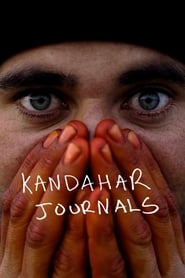
Kandahar Journals
Stáhnout English titulky
Informace o verzi
Tagy
Náhled titulků v jazyce English
Prvních 175 řádků.
September 23rd, 2010.
Another day in Kandahar.
I must focus now.
Think of the frame.
Think of each side of the rectangle.
Focus on the frame.
Stay calm under fire.
Focus your mind.
Acknowledge the danger
and work.
Everything happens so fast.
I must control my mind.
Relax and get the shot.
Don't let the situation control me.
I must control what is in my frame.
I must look beyond the literal,
stay calm.
Think of the rectangle.
I must reach out for inspiration.
Composure under fire.
Do not let the speed of the situation overtake you.
Repeat,
rectangle, composition.
Get back to basics.
I photographed the war in Kandahar, Afghanistan,
from to 2006 to 2010
Afghan, American, and Canadian troops
were locked in a bitter struggle for control of Kandahar.
Most of the fighting took place west of Kandahar City
in the districts of Zhari, Panjwayi, and Arghandab.
What follows are excerpts from the journals I've written
and the visual diary I kept.
Seven-three, Charlie.
IED blast.
Five meters wide, five meters long.
July 13th, '09.
Senjaray, Kandahar.
I'm now leaving the exhaustion of war.
I'm here for a small hit on an insurgents' weapons cache
with the Canadian police mentor team.
Every patrol and drive up the highway is stressful.
I cringe as I wait for the boom of an IED or landmine.
I'm not afraid of gunfire.
I'm terrified of losing my legs.
After five years of working in Kandahar,
I'm not sure any of my work connects to anyone.
How can I possibly convey the reality of war
through words and pictures?
Thanks.
300 meters.
Over the years,
I covered multiple patrols and combat operations
with Afghan, American, and Canadian soldiers.
Most of the fighting happened in
rural agricultural districts west of Kandahar City.
When you fly in from the air,
it looks so beautiful.
It looks mesmerizing.
It's like seeing the romantic history
of what Kandahar grew from.
When you hit the ground,
it feels like you're on the moon.
There are craters,
mine fields,
bombed-out buildings.
You can feel the tension.
Kandahar is the seat of Taliban power.
There's a Pashtun proverb that says,
"If you control Kandahar,
you control Afghanistan."
August 17th, 2010.
This land seems to be a place nobody wants,
yet everyone looks to control.
The uncontrollable land,
stabbing upward to the sky,
the ravaged earth,
scorched by nature itself.
So I have some pretty phenomenal memories
of working in Kandahar,
especially Kandahar City.
This is Khan, one of my many fixers.
He's my local colleague/guide/translator/journalist.
This is me in his car, traveling around Kandahar City.
This is me in the soccer stadium in Kandahar.
You know, this stadium used to be used for
public executions by the Taliban.
This is an absolutely amazing place in Kandahar City.
This is the Idgah.
This is a massive outdoor mosque,
right beside Kandahar University.
This is me, and Khan, and another friend.
But I think what I'll never forget about Kandahar City
is this suicide bombing I covered in 2006.
There was this dead body.
It was most likely the facilitator who was
working with the suicide bomber.
He was probably killed by accident
when the suicide bomber's vest went off.
And then there's the bomber.
I think what really struck me
was not just what I was seeing,
but the smell.
The smell burned itself into my mind for days.
His body parts continue to haunt me to this day.
But it has also created a new me,
a more sensitive human being.
After the suicide bombing,
I realized just how difficult some things are to photograph.
What I was seeing in the news back home
and what the reality on the ground was
were two different things.
I wanted to go back to attempt to explain
what was going on in Kandahar.
- Is that good, having the radio in the background?
I like it.
It sounds like,
"Bring in the hueys!"
It's like there's a war goin' on.
It's almost like there's an actual war going on here.
That's the best part, almost.
- Okay, so tell me a little about Zhari District.
Ugh.
What do you want to know about, exactly?
Whatever you want to tell me.
Everything.
Zhari District's a very complicated place.
Uh,
the people here, I think, want to do well,
but the Taliban influence is pretty strong.
So, a lot of times we'll go in, we'll talk to people.
And you know they probably want to tell you more,
but the fact that there's probably a brother, or a cousin,
or a friend who's really with the insurgency
usually stops them from
saying anything that might get them in trouble.
The weirdest thing here is that,
is that there's no front lines.
There's no friendly areas,
or even necessarily enemy areas.
'Cause there's places you go into
that people will speculate and say,
"This is a guaranteed contact.
For sure, we're going to get hit."
And then there's nothing.
Yeah.
- You go out and, I mean, out of 100 patrols,
you might get, like, 10 of them that might be contacts.
And out of that 100, you might get 10 good ones
where you get down and sit and talk to people.
Sometimes you're just walking around
and you don't get anything at all.
You've got no choice except to
gear yourself up for the eventuality of the contact.
And you've got to be prepared for the eventuality that
you're just going to sit and talk to somebody all day long.
That's it.
You've got to go to both extremes all the time.
So it means you can't mentally prepare yourself
ahead of time
for one or the other.
- Kandahar is a complicated place to explain.
Okay, so
very basically speaking,
that's, ooh.
I drew outside the fucking lines.
Damn it!
Okay, geography/Afghanistan lesson.
Take three.
This is Afghanistan.
Afghanistan.
Okay, take five.
Afghanistan/Kandahar geography lesson.
This is Kandahar Province.
This is Helmand Province.
This is Kandahar City.
Komentáře
No comments yet. Be the first to leave one.