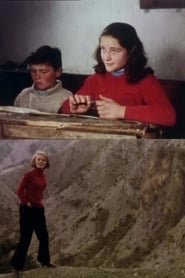
Terres noires
Download English undertekster
Forhåndsvisning af English undertekster
De første 176 linjer.
Les Films du Carrosse presents
Black Earth
24.551 GTC
Camera: Alavoine Assistants: Juros and Bataillon
Text: Françoise Vatel Image: Bernard Davidson
Direction: Luc Moullet
Black earth is found in the four corners of France.
Brittany, Massif central, Alps, Corsica, Pyrenees, Provence.
Cars pass by, but they wouldn't venture there.
Unlike the blacklands in Texas or the tchernoziom in Russia,
this black earth is uncultivated, but it is inhabited.
This village, Le Poil, has only one link with civilisation left:
the post box, an hour below, where Léon Guichard is going.
He is the postman, mayor, warden, and horse-dealer in Majastres,
and in his satchel he carries all the food of the region.
Here is the only spring, which provides 1 liter per hour to a decrepit town.
Saint-Cyrice, with only one inhabitant.
Sauveur Arthaud, the former mayor,
had dead people vote and falsified the census,
to embezzle funds.
The new mayor lives in the only usable room of the town hall,
the only building still standing.
Here's the bar at the Point Sublime Hotel, at the Verdon Gorge.
You may have visited this admirable site,
but did you know that 2km above the torrent,
you can take a narrow path to a rotten town of six souls?
Taloire, which the prefect did not want to get rid of,
because departmental funding depends on the number of towns.
Buildings without roofs are exempt from tax,
so when people left town, they took the tiles off.
A ruin from the earthquake of 1951,
even the church hardly got any compensation.
It's true that it had no use anyway.
In this land of religious refugees,
the separation of Church and State in 1905 drove away the priests,
the only ones capable of holding people to the land.
Secularism and the proximity of the plain spurred on migrations.
Nowadays, the young people have to go to boarding schools in the city,
because the school was closed in 52,
the same year they spent 300,000 francs to renovate it.
The locals marked their time of departure on the table.
The last year, there were only three students:
5, 9 and 14 years old.
You can imagine how well that would work.
It's shocking to observe such living conditions...
in 1962 in metropolitan France,
and yet Taloire is only one example among many.
Life is infinitely more difficult in the village...
where we are going: Mantet, Pyrénées-Orientales.
From the station, it's over a four hour walk.
Soon, the cliff road narrows,
only 15cm wide here,
where the camera tripod fell into the abyss.
But we have to travel back...
In the Middle Ages, nobody lived in the plain,
menaced as it was by flooding and invasion.
Far away on the mountain, there were paths and villages,
but these wild gorges were the only way towards Mantet,
faster and less risky than the high mountains.
After 89, as the path through the gorge couldn't be widened,
they had to open a wider route through this pass,
although most of the traffic went through the valleys.
That's why they started work on the Gorges Road,
with their blasts of dynamite and their millions.
But in 1935, on the 5th tunnel, the money ran out.
20 years later, this cheaper road was broken through the mountain,
although it also remains dangerous and unfinished.
The only-too-brief economic crisis of 1955...
opened a window for its construction.
They hired the unemployed, like during the crash of 29,
to work on building the road.
Unfortunately, the stock market recovered quite quickly.
Thus, the road has become uneven and damaged,
with gullies every three meters.
Then, an abrupt stop at this garage-shack.
Hunters there pile their dogs into the car.
Next comes a small, unjeepable path,
which the wife of the mayor, Mrs. Vidal, has to go up,
at least until the next economic crisis...
rain or shine.
It was minus 3.
The cameras and cameramen were shaking.
An hour's march up to the pass, at 1765 meters altitude...
68 with the snow in winter.
This time of year,
you die before the doctor gets there.
He takes 7000 francs for the 60km journey.
The doctor from Vernet-les-Bains, less far away, refuses to come.
300 meters below, Mantet. The village is isolated on every side.
Here, the Gorges; there, Spain.
Many political refugees from both Spain and France,
like General Delâtre in 1942,
have crossed and continue to cross here,
at this border that is too remote to be monitored,
formerly made famous by the bootleggers of Mantet.
50 inhabitants, 1500 meters high,
no road, no electricity, no shops,
Mantet is an inextricable jumble of large houses on high.
Outside, the manure is the only exterior sign of wealth.
It serves as a main square and a street.
You have to follow it from one house to another.
Otherwise, you can lose your way in the dangerous maze of weeds,
which conceal the holes in the roofs of abandoned cellars.
Old bread ovens stick out of every house.
This mailbox, has not been opened in 10 years.
Here, is the end of the telephone cable.
Stones along the walls and on top of the tiles,
support the roofs with varying success.
It's surprising to suddenly spot a sign of life,
in this town that nevertheless contains more than 10 inhabited houses.
These insurance ads seem quite ironic,
as behind them, the wary frontier workers barricade their doors.
Inside, it was too dark to film.
The light from the butane gas did little for these rabbit huts,
which are not far from the old-fashioned splendor of the Château d'Aubiry,
with their sinister memory.
Only 20km from the luxurious tourist stop Vernet-les-Bains,
with its casino and its thermal baths,
the animals are also kept under lock and key,
or packed into pens.
Not many domestic animals, nor poultry or rabbits.
It's mainly livestock, sheep.
There are three lambs, 69 ewes,
197 goats, 591 sheep.
This Mantetian is carrying hay to his cows,
because grass is rich enough for bovines.
It would be naive to assume that because Spain is so close,
you could compare Mantet to Las Hurdes, which is less fertile,
but now has a standard of living that is higher than in Mantet.
These nice big Swiss bastards don't much care for getting around on foot,
so their owner has to stay in the countryside all winter.
The only ones left are three old women in black,
because the 25 Mantetians only have sheep,
and go with them to the plain after Christmas.
No laughter, no celebrations, no distractions at all here,
right in the heart of the Roussilon, with its exuberant folklore.
As the 15-year-old son of the mayor just left Mantet for good,
this man is now the youngest person in the village.
He's 40.
Life in Mantet only knows one event, apart from plane crashes,
the arrival of the mailman, twice per week.
With his truck, he brings provisions up to the garage.
It is replaced by a helicopter in winter,
when 5-meter snowdrifts block the pass.
This way of life has made the locals reserved, fearful and untrusting.
As long as there is no road, and no students in the school,
the ruins of which you see here,
there will be no hope for Mantet.
This was what we were told by Mr. Fillols,
who runs the phone booth, in the back of his cabinet on the right.
He was the only Mantetian who let us to film.
I would like to thank him for this.
Within 10 years, he said, Mantet will disappear from the map forever.
Even today, it is hardly visible.
Even more impoverished is Mariaud, in the Basses-Alpes.
But it still has all its inhabitants.
Go up the central valley, turn left, and there's Mariaud.
You can reach it via the neighboring valley, like Mantet,
and by its poor road, whose terminus is here,
if the bus can make it that far.
After the bridge, the black earth greets us.
Here they call it "roubines,"
and year after year, it encroaches on the small makeshift path.
The poor road mender always has a lot on his plate.
After a half hour, the path is lost in the roubines.
You move forward as you can, and suddenly, when you least expect it,
Mariaud appears behind this small pass.
Mariaud may seem close, but the donkey carrying our bags
will have to go back down, because the hardest part is yet to come.
In Provençal, "Mariaud" means:
"crumbling mountain that is practically impossible for a human to climb."
During the Occupation, no German risked climbing...
all the way to this hotbed of resistance.
After the lookout at Galèbre, it's the terrible final ascent.
Here is the main street. At 1500 meters altitude,
Mariaud has only 4 houses and 28 inhabitants, all related.
Kommentarer
No comments yet. Be the first to leave one.