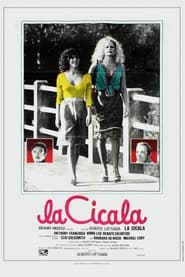
The Cricket (La cicala)
Download English undertekster
Udgivelsesinfo
Tags
Download English Subtitle Files for Mobile (13)
Forhåndsvisning af English undertekster
De første 200 linjer.
September 1st 1939, German troops thrust deep
into Poland to win a swift and absolute victory.
Barely 20 years earlier, their forefathers had also been
on the march, but back into their
homeland as a defeated army.
In November 1918, after four years of World War One,
Germany's Emperor, Kaiser Wilhelm II,
had been forced to abdicate.
His armies were being ground down by a remorseless
offensive by British, French and US troops.
His people faced starvation.
But already a dangerous myth was taking root.
The German generals and troops claimed that they
hadn't been defeated in battle,
but betrayed by their own cowardly politicians.
Even so, at 11 in the morning on November 11th 1918,
the 11th hour of the 11th day of the
11th month, World War One came to an end.
The following month, President Woodrow Wilson
of the United States arrived in Europe
promising to create a new world order.
He persuaded the world's leaders
to sign up to a new League of Nations.
At the Treaty of Versailles, they agreed that from now on
disputes between countries would be resolved
not by fighting, but by debate in the League.
The peoples of Europe were set free.
And Germany's ally, the Austro Hungarian
empire, was dismembered.
Out of it, new nations were created.
Austria, Poland, Hungary, Czechoslovakia,
Yugoslavia, Latvia, Lithuania and Estonia.
Germany itself was greatly reduced in size.
But this process contained a time bomb.
Not everyone celebrated the birth
of countries like Czechoslovakia.
Several of them contained substantial German minorities.
One day the desire to reunite the
German peoples would come to haunt Europe.
The war torn German people also had
one final indignity inflicted on them.
They were forced to pay a massive 6.6 billion Pounds
in reparations to France and Britain,
something they could ill afford.
And when he returned to America,
Wilson's new World order immediately fell apart.
The U.S. Congress decided it could not
risk being sucked into another war in Europe.
It refused to join his League and
the U.S. withdrew into isolationism.
Germany was now a very different nation.
It was still Europe's biggest country
but its militaristic monarchy had gone.
It had become a democracy.
But its government, the so called Weimar Republic,
was soon struck by a series of hammer blows.
Street battles erupted between extreme right wing
nationalists and Communists trying start a revolution.
Then in 1923, the country was devastated by hyper inflation,
which reached hundreds of per cent a month.
Ordinary people's savings were wiped out.
This was fertile ground for a new breed of
rabble rousing right wing politicians.
Among them Adolf Hitler.
Hitler had been born in Austria.
He had fought bravely as a soldier
in World War One and been awarded the Iron Cross.
On returning to Germany he settled in Munich,
and his fiery oratory soon enabled him to seize
control of the small National Socialist or Nazi Party.
In October 1923, Hitler and his henchmen attempted an
armed coup against the Weimar government.
It failed, and he was sentenced to nine months.
In prison he wrote a book, Mein Kampf,
"My Struggle", in which he blamed
Germany's ills on the Jews
and demanded that it rebuild its strength
and seek new territories in the east.
On his release, he set about building the Nazis
into a proper, disciplined political party.
From now on, he would use the democratic
system to achieve power.
But for the next five years, Weimar Germany prospered.
Support for extremist parties, left and right, dwindled.
Then suddenly, Hitler's opportunity arrived.
In October 1929, the US stock market crashed.
Billions of dollars were lost and an
economic depression swept across the world.
Unemployment in Germany soared to over six million.
Only extremist politicians seemed to offer a solution.
Politicians like Hitler.
By 1931, his Nazis were a true mass movement.
And they had their own brownshirted thugs,
the SA stormtroops who numbered almost three million.
In the 1932 elections, the Nazis became the
largest party in Germany's parliament, the Reichstag.
But Hitler refused to join a coalition,
leaving parliament paralysed.
To break the impasse, President Hindenburg made
him Chancellor in January 1933, head of the government.
Within a month, the Reichstag burned down.
Hitler accused the communists and demanded emergency powers.
He then used them to ban all other political parties.
In August 1934 President Hindenburg died.
Hitler declared himself President.
He was now absolute leader, the Fuehrer, of Germany.
At first there was little sign of what was to come.
For the next three years the Fuehrer
concentrated on rebuilding Germany's economy.
He spent millions on public works, including the 5,000 mile
autobahn system, to soak up the unemployed.
But, in secret Hitler was also spending
lavishly on a huge rearmament programme.
Under the Versailles Treaty, the German army
had been limited to 100,000 men.
The country was forbidden to have
an air force, tanks or submarines.
This small army was trebled in size.
Then in 1935, Hitler came out into the open.
He unveiled a brand new air force, the Luftwaffe.
It had 2,500 planes, far more than Britain or France.
Unemployment plunged, and the Nazis
became enormously popular.
Now emboldened, the Fuehrer made
his first expansionist move.
In 1935, he reoccupied the Saarland district
on the French border, after it voted to return
from League of Nations' to German rule.
A year later he sent German troops into the Rhineland,
part of Germany which had been demilitarized at Versailles.
At the time, many felt that Hitler was only
claiming back what was rightfully Germany's.
Neither Britain nor France objected.
When Berlin hosted the 1936 Olympic games,
the Nazis were seen by many as
firm but fair, a government which
was restoring the nation's pride,
and which didn't threaten anyone.
Of course there were signs.
The 1935 Nuremberg Laws, forbade Jews to marry true
Aryan Germans and deprived them of their citizenship.
But when the first threats came to world peace,
they didn't come from Hitler at all,
but from somewhere else entirely.
Japan at the start of the 20th century
was already a military power.
It had defeated Russia in a war in 1905 and it
had fought alongside the Allies in World War One.
After the war, Japan was an acknowledged world power,
and it signed up to the League of Nations.
But politically, it was a mess of contradictions.
Nominally a democracy, the feudal
tradition was still strong.
Most Japanese revered their Emperor as a living god,
and regarded him as their true leader.
And the country faced major economic problems,
its population was exploding.
And it had no natural resources
to fuel its rapidly expanding industries.
Its leaders needed solutions and
they saw them in Chinese Manchuria.
Manchuria was a land of rich grain fields,
with plenty of coal and minerals.
It was a perfect target.
Japanese troops were already stationed there.
Other possible targets were the colonies ruled by the
European powers, Burma, Malaya, and Hong Kong, controlled
by Britain; Indo China, ruled by
France; and the Dutch East Indies.
But at this stage Japan had to be cautious.
It didn't want to rouse the other great power
in the Pacific, the United States.
For all its anti imperialist slogans,
the U.S. actually ran an unofficial empire
in the Pacific.
The Philippines, Guam and several
islands were under its direct rule.
It undoubtedly had the strength to take on Japan,
but since the end of World War One,
it had had other distractions.
This was America's jazz age.
Throughout the 1920s, the nation concentrated
on exploiting its vast resources.
There was an economic boom that seemed without end.
Fortunes were made both in industry and the stock markets.
America seemed lost to the increasing pursuit of pleasure.
With distractions like these, Japan's growing
pains in the Pacific seemed very far away.
America had slashed its army after World War One,
and agreed a naval reduction treaty
with Britain, France and Japan.
This, in effect, handed naval superiority
in the Pacific to the Japanese.
And then came the Great Depression.
As the economic devastation spread,
a quarter of the population lost their jobs.
Tens of thousands were made homeless,
living in Shanty towns.
Whereas before it had been distracted by pleasure,
now America was distracted by pain.
The Cricket subtitles in other languages
More English subtitles for The Cricket
- World War II in Colour S01 MULTi 1080p NF WEB-DL DD+2 0 H 264-ROLLiT · 25 downloads · 2023-05-08
- World War II In HD Colour S01 720p BluRay x264-iFH · 44 downloads · 2018-10-29
- 1 The Gathering Storm English · 47 downloads · 2015-06-24
Kommentarer
No comments yet. Be the first to leave one.