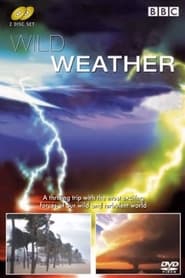
Wild Weather
Download English undertekster
Udgivelsesinfo
Tags
Forhåndsvisning af English undertekster
De første 200 linjer.
The weather is the last truly wild thing on Earth.
We can't predict it and we can't control it.
I'm Donal Maclntyre, and I'm going to journey around the world
to seek out the wildest weather there is.
In this series, I'm going to experience the fastest winds on Earth.
136 miles an hour.
The awesome cycle of water around the planet.
I've been for... I can't talk!
I'm going to take a ride into the cold heart of winter.
An adventure, I agree, but it gives you a once-in-a-lifetime view
of the top of the wo-o-o-rld!
I'll experience the dark side of summer.
There's 1.5 million volts hitting my finger right now.
I'm going to get blasted...
roasted...
soaked and frozen
because I want to understand how weather works,
the awesome forces that drive it...
and how it affects us all.
I'll meet those who survived the worst it gets
and try to understand why the weather is changing...
and what that means for the future.
It's going to be the ride of a lifetime.
This is... "Wild Weather"!
Our Earth is vast - 24,500 miles around -
but all our weather takes place within this thin blue streak.
And it's through that thin blue streak that I'm about to go,
to the very top of the weather.
Donal hi.
Are you ready for this?
Even in a jet, it takes a day to circle the earth,
but I can fly through the weather in just a few minutes if I go straight up.
D316 Bravo. Pilot Two cleared for take-off.
Right around here, about a mile or so up, is where the rain clouds start.
This is where it all comes from.
For the next few miles, all those billions of gallons float in the clouds
waiting to turn into rain.
But thankfully they don't go on for ever.
So if you want a bit of sunshine, all you do is this.
For every mile we climb, the air cools by 17 degrees Celsius.
From here, at about five miles, you can look down on a thunderstorm,
look into the eye of a hurricane,
or even hitch a ride with the jet stream, the fastest wind on Earth.
And this is it - six and a half miles up.
The weather stops here.
Up this high, the air stops cooling
and remains a constant minus 50 degrees Celsius.
All the moisture in the air has dried out.
This freezing layer of dry air is called the tropopause.
It acts as a lid, trapping all our weather below.
Way above, you enter the stratosphere, an almost completely weather-free zone.
And beyond it, space.
It's amazing to think that below me is every kind of weather imaginable.
We'll start the series by taking a journey with the winds.
In the next hour, I'm going to experience everything
from a breeze to the fury of a tornado.
In just a few heart-stopping moments,
I'm going to be back down there to see how it all begins.
Take it away, Barry!
Wooh!
Having shot to the top of the weather, I thought I'd take the easy way down.
Below me is the equator and the start of my journey with wind.
And this... is where it all begins.
This is where the wind is actually born.
It's hot - damned hot.
And what's really strange is there's no wind.
And that's because this... is the doldrums.
So how is it that there are no winds where the winds are born?
The doldrums are basically a narrow strip of complete calm,
five to ten degrees either side of the equator.
The intense energy of the sun heats the air,
which rises in huge columns,
sucking in powerful surface winds from north and south.
The only movement of air is up,
so the areas underneath remain calm and windless.
This rising air is the first movement of a massive global wind cycle
which will take it right across the world.
To follow the start of the wind's journey, follow this.
Down here at sea level, my leaf drifts lazily
until it is lifted up by the rising warm air.
Way above, a huge pattern emerges.
The world's winds are locked into an endless cycle.
If you could see it, it would look something like this.
Warm air rises from the equator and hits the tropopause.
It then slides north and south before sinking back down to Earth
and returning to the equator as the winds we feel on land or sea.
This process then repeats itself
in a further two enormous wind cycles both north and south.
These six wind cells constantly try to balance the temperature
between the freezing poles and the sweltering equator.
Think of it as the earth's air conditioning system.
If it didn't exist, the poles would be 25 degrees colder
and the equator would be 14 degrees hotter.
And all this from a place of dead calm.
In the days of sail, being adrift in the doldrums was every sailor's nightmare.
Water on board was limited.
When that was gone, so were your chances of survival.
Stuck here alone with just my book
is how countless sailors must have found themselves.
We came across a calm so endless that we saw no end in it - except death.
That's how one sailor remembered it.
Nowadays, it's hard to imagine the torture of waiting for the wind sailors endured.
But of course, if you survived long enough, the winds would come again.
That's because the doldrums follow the seasons.
As summertime moves from the northern to the southern hemisphere,
the areas of intense heat that create the doldrums moves south,
dragging them with it.
Then the winds created by that huge global system eventually return.
I can feel that breeze now. Let's get outta here!
Every wind on Earth begins its cycle here.
To see what they can do, I'm off to experience all I can of this invisible force,
from the fury of a tornado to the terrifying gales of the Pacific Ocean;
from the icy blasts of an Arctic morning
and the cooling breeze of a summer day.
To get an idea of what to expect, I have to go underground.
Wind is measured by the force it exerts on an object.
Today, that object is going to be me.
This place can produce wind speeds in excess of 200 miles an hour.
It's funnel-shaped, so the wind speed increases as the air gets squeezed.
Up there, where I will stand, the wind is seven times faster than down here.
So it's a great place to feel the full force of it.
The speed of wind is measured using the Beaufort scale.
This is Force 2- about six to ten miles an hour.
It feels like the gentle breeze of a summer's day.
But at 25 to 30 miles per hour,
things are picking up.
This is Force 6,
a strong breeze where big trees sway
and you have to fight your umbrellas.
At 40 miles an hour - Force 8- it's getting tough to stand up.
A few miles an hour more and there'll be slight damage to your house.
Tree branches are already breaking.
But once you hit Force 9,
things are getting really stormy.
50 miles an hour, a good gale,
trees and power lines down, houses damaged.
But I'm still standing, as you can see.
It's taking my full weight.
In a wind tunnel, it might look like fun,
but in nature, winds of this speed are deadly,
and we call them hurricanes.
The people of Dade County, Florida, know about living through a hurricane.
In 1992, Hurricane Andrew changed their lives for ever.
A devastation, a tragedy like this coming into an area
just shakes up people's lives for years and years to come.
The nightmare began on Friday August 14.
Like all hurricanes, Andrew began life off the coast of Africa
in the warm waters of the tropical Atlantic.
Hot humid air rose up to create several thunderstorms
around an area of low pressure.
Because of the earth's rotation,
the storms rushed into the low pressure area in an anti-clockwise direction,
like water down a plughole.
This spun them all into one enormous system
which was driven across the ocean by powerful winds.
4,000 miles away in the United States,
the swirling mass of thunderstorms had already been spotted.
They'd not yet formed a hurricane, but they were seen as a potential killer
and were being closely monitored by hurricane experts.
One of them, Stanley Goldenberg, had flown through many hurricanes,
but this time his experience was going to be very different.
I was asked to fly Hurricane Andrew
and would have loved to go and fly
but I said, "My wife's expecting, no. " We didn't dream what would happen.
Andrew continued to build.
Like all tropical storms, it was fuelled by heat.
Warm water vapour in the cloud is attracted to minute particles like salt or pollen,
causing the water vapour to condense.
This process, changing from a gas to a liquid, releases heat
and in a storm the size of Andrew, the result is vast billowing updraughts
which suck in more moisture from the sea's surface,
creating more rain and heat, driving the wind speed higher and higher.
By Thursday morning, as the energy within the storm grew,
the wind speeds accelerated to over 75 miles per hour.
Andrew was now officially a hurricane.
On Friday, the hurricane watchers saw Andrew weaken
and turn away from Florida.
We thought it would move out to sea.
The Miami Herald said, 'Andrew moves out to sea. " Don't we wishl
By Saturday morning, Andrew was gaining strength.
The eye of the hurricane hit the Bahamas
with wind speeds of up to 122 miles per hour.
Florida lay just ten hours ahead.
Andrew was now 100 miles across.
The outer edges were already lashing the Florida coast.
Having spent years studying hurricanes from the safety of his desk,
a bizarre twist of fate
meant Stanley, his family and new baby were about to become victims of Andrew.
This is our house calmly waiting for Hurricane Andrew.
Trapped at home, he hoped the eye of the hurricane would pass to the north.
I was in denial. "This isn't happening. "
I was dealing with a new baby and with a hurricanel
If you can see, it's the beginnings of Andrew.
This is just one little squall.
We have much more to go.
Sunday 23rd August.
We're going to weather it out.
- "Hi, Daniell" - "Hil"
Boy, did you hear that?
I don't know if a video will pick up anything out there, but it's coming.
Wild Weather subtitles in other languages
More English subtitles for Wild Weather
- 4of4 Heat DivX5 02-AC3 www mvgroup org ENG · 19 downloads · 2007-08-26
- 3of4 Cold DivX5 02-AC3 www mvgroup org ENG · 16 downloads · 2007-08-26
- 2of4 Wet DivX5 02-AC3 www mvgroup org ENG · 20 downloads · 2007-08-26
- -=complete=- DivX5 02-AC3 www mvgroup org ENG · 20 downloads · 2007-08-26
- All 4 episodes synced with the netuser rips · 23 downloads · 2005-05-18
Kommentarer
No comments yet. Be the first to leave one.