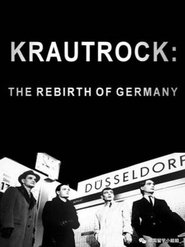
Krautrock : The Rebirth of Germany
Download English undertekster
Udgivelsesinfo
Tags
Forhåndsvisning af English undertekster
De første 200 linjer.
This programme contains some strong language. Germany, 1945. Year zero.
Everything from cities to culture lies in ruins.
It was time to rebuild.
This is the story of a generation of musicians
born into post-war rubble
who would forge a new musical identity for Germany.
Between 1968 and 1977,
bands like Neu!, Can, Faust and Kraftwerk
would look beyond western rock and roll to create some of the most original
and uncompromising music ever heard.
They shared one common goal -
a forward-looking desire to transcend Germany's past.
But that didn't stop the music press in war-obsessed Britain
from labelling them Krautrock.
Meine Damen und Herren, ladies and gentlemen,
willkommen to the sound of Krautrock.
This programme contains some strong language.
In the last '60s, this was what German pop music looked like.
# Dondelo
# Wir sind verliebt, wir sind froh, sag mir,
# was kann denn schoener sein, Dondelo
# Wir tauschen nichts dafur ein... #
It was known as Schlager.
Inoffensive, lightweight pop.
A world away from what was happening on the streets of West Germany.
"All Along The Watchtower"
1968.
The year of a global youthful revolution.
And West Berlin was no exception.
# There must be some kind of way outta here
# Said the joker to the thief... #
Like their brothers in the US and the UK,
these kids were sick of "The Man",
but in Germany, the establishment had more to answer for.
# Businessmen, they drink my wine... #
Following the German surrender in 1945,
the country had been divvied up by the victors.
In West Germany, the programme of foreign aid
had kickstarted the Wirtschaftswunder,
an economic miracle that saw the country prosper
in the '50s and '60s.
But the people running this shiny new Germany
were the very same people who had been in power during the war.
Nowhere was this more so than in Bavaria,
the Alpine heart of southern Germany,
an area with strong historical ties to National Socialism.
Hitler had chosen to start his revolution in Munich
and when not waging Blitzkrieg,
the Fuhrer could be found relaxing high up in the Bavarian mountains.
For Amon Duul,
a group of commune-dwelling musicians from Munich,
the past seemed all too present in 1968.
After the war, you couldn't just, erm...
erase all people or get rid of all people,
especially judges, teaches,
if they were Nazis, they had to take them,
because you can't just kick 'em out and have no teachers at all.
It was all still there,
but it wasn't as loud any more.
Nobody dared to say Hitler or something like that.
The word "Jew" was...
it wasn't there in German language.
Our parents didn't really talk about Hitler, you see,
and about the Jews and what this was all about.
They were just in true silence.
Nobody would really talk about it.
If I asked my father,
he would never say, "I was a Nazi."
If you go to Dachau, which is 30km away from here,
talk to the people there.
"We didn't know anything about it."
In those days, there were bloody Nazis around, all over the place.
There was rebellion against them.
We had these big revolutionary things in the '60s.
All Munich was on the street fighting against police,
against politics, against all of that.
We didn't have guns or the tools to chase them away,
but we could make music
and we could draw audience, we could draw people
with the same understanding, the same desires.
Amon Duul would seek to make acid-drenched apocolyptic music
that soundtracked their vision of a brave new world.
Of course we didn't want to make English music or American music,
and we didn't want to make German Schlager music
so we had to come up with something new.
The only thing we could hold on is classical music or the folk.
Everything else was from...
England or America.
We wanted to be international.
We tried very hard not to be Anglophonic
and not to be German.
So, space is one solution.
THEY VOCALISE TO ACCOMPANYING MUSIC
When you hear Phallus Dei
I wasn't really singing, I was into...
a voice-like an instrument, you see.
Or doing crazy stuff.
Some people get very angry about it.
Like my dad did too. He said, "Well, it's not music!"
THEY HUM AND WAIL
Amon Duul's commune was the locum of radical left-wing politics and music in Munich.
Among those who followed Amon Duul were the founders
of the Baader-Meinhof gang,
Andreas Baader, Gudrun Ensslin
and Ulrike Meinhof.
They thought Amon Duul weren't going far enough.
One day, Andreas and Ulrike started...
they're not really listening to us and they're not doing the right thing.
We actually have to make something drastic,
like...burn something down
or blast something.
They burnt down this warehouse
and got busted of course
and went to jail.
When they got out of jail and they were released,
they thought, "Let's go to our mates, Amon Duul."
Once out of prison, Baader and Meinhof
would orchestrate a killing spree
that made them Germany's most wanted terrorists.
We were on tour and came back home to Herrsching...
I went into my room.
And there was Ensslin and Baader.
And upstairs was Meinhof in Chris's room.
And I said, "What the fuck are you doing here?
"You go out immediately. Immediately."
It was heavy. I didn't like it at all.
It wasn't just the worlds of radical politics and music
that collided in the late '60s.
One of the cameramen capturing this experimental Amon Duul
performance was a certain Wim Wenders.
Wenders was part of radical generation of directors
reinventing German cinema.
The most political of these directors
was Rainer Werner Fassbinder
seen here making a cameo in Die Niklashauser Fahrt,
a film that also featured Amon Duul.
But the most famous young director to emerge was from Munich.
Werner Herzog would make films exploring the extremes
of the human condition.
The soundtracks to his films were written by Popol Vuh,
a Munich-based band with close ties to Amon Duul.
They were led by the late talismanic Florian Fricke.
Let me see. Was heisst denn Menschenswuerde?
Das ist es. Dignity!
In those days, he also had the first work
for Aguirre with Klaus Kinski and Werner Herzog.
The reason why they could get together so good,
Werner and Florian,
they had been friends.
They know each other from the schooldays and, you know.
Aguirre, Zorn Gottes,
I give you the fact why it sounds so tremendous.
And...the choral... that sounds like the voices.
There is a machine that came from Vienna
that was just by accident, they found it.
It was really helpful.
It has nothing to do with metronome.
It has nothing to do with playing on the click.
We just... Our heart, our emotion was the timing, you know.
Beautiful.
Of course, the real German music, it was the electronic music.
At a time when most of the West was rocking out to guitar gods,
something very different was brewing in Germany.
Electronic music was virgin.
Neither tainted by the past nor an Anglo-American import.
In 1968, it was being nurtured in Berlin,
a city like no other.
First of all, you have to remember
that Berlin was kind of an isolated place.
So, you couldn't compare Berlin to any other city in the world.
There was a huge wall around it.
In the old days of West Berlin, this was the end of the world.
On the other side was Siberia. Or at least East Germany.
What looks now like a very quiet and peaceful place
was the border.
And...was closely guarded.
In case you wonder on which side of the old border you are,
these hostel ships are named Eastern Comfort
and Western Comfort.
It was a community which had to control more or less
themself.
So, culture and underground whatever you want to call it
was kind of a very, very specific melting pot.
That was the signature of the city at the end of the '60s.
The key underground venue in Berlin was the Zodiak Free Arts Lab
founded in 1967.
It was a magnet for musicians
who wanted to experiment.
Ah, haven't been here in a long time.
This is what's left.
A normal cafe.
This was quite different 40 years ago.
In the evenings, they opened the door.
And we rehearsed on certain way
but it was also a concept,
because the audience was there.
This was kind of a...
kind of a centre...of all music, the Zodiak Club.
The owner, they said more or less that...
"Do what you like here, you can leave even your instruments.
Kommentarer
No comments yet. Be the first to leave one.