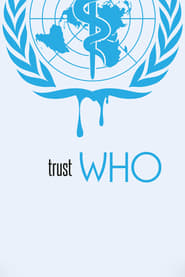
trustWHO
Download English undertekster
Udgivelsesinfo
Tags
Forhåndsvisning af English undertekster
De første 200 linjer.
(faint sound of children playing)
How many of you, put, have family
or close friends with cancer or have experienced cancer.
Put up your hands.
What about diabetes?
How about infertility?
Family or close friends.
Now I want those of you who put your hand up at least once
to put it up again,
for any of those questions, and look around you.
today every third person develops cancer.
Who will it be?
Because if we want to protect Americans from
Ebola here at home, we have to end it over there.
H1N1, SARS, MERS
Universal health coverage is the single most powerful concept
that public health has to offer. We will not let the people down.
But after Fukushima, I think, you can
see that everyone knows that there's
a kind of official and high level cover
up and the WHO is involved in it.
The WHO's been criticised for reacting too slowly to the
outbreak, do you think any of that criticism is fair?
They don't have the money, they
don't have the capacity, they don't
have the leadership, they don't
have the courage to say 'let's go'.
I'm a filmmaker, I have a daughter, it is important
to me that she finds the world in good condition.
That is why I'm travelling to the WHO headquarters in Geneva.
The American journalist Robert Parsons lives here.
For 20 years now he's been writing about the WHO.
Until a few years ago, every Monday, the
opening day of the World Health Assembly
there was a sumptuous reception at the
WHO given by the Director General
that was the great centrepiece where
everybody met and talked. It was a
very good situation for pulling everybody
together in an informal setting.
Now, more than ever, that sort of thing
has been replaced by a private reception.
And they are organised by industry.
I'm particularly pleased to have two ministers of health.
And the industry spends a lot of money, for them
it's just part of the cost of doing business.
It's a way of making direct contact
with the people who back in their home
countries are making decisions to formulate
and implement public health policy.
It's extraordinarily expensive, you
can imagine it, if you have 1,000
people and you give 100 francs a person
it's 100,000 francs right there at least,
just to feed people who are already over-fed.
There's no limit on the champagne or the
wine and it's always very good wine.
Straight through if you can.
No you can't.
What a promising start.
But originally it must have been about more.
The suffering of millions of human beings
in scores of countries will be alleviated
and many, many thousands of lives will be saved.
WHO has positively changed everything.
Smallpox was completely eradicated which was the
first time ever that a disease was wiped out.
The world saves each year 1000 million dollars
on vaccines and care of the sick alone.
According to Robert Parsons, the WHO is
infiltrated by the industry from the very start.
Here.
This one's in English.
This is in the San Francisco examiner.
Anyway, WHO was not happy with my coverage
because it made them look less than good.
Ever since the 1950s, studies have
shown that smoking damages health.
But for decades the WHO does little
to oppose the tobacco industry.
How often does your job call you out
of bed in the middle of the night.
Well if you were a doctor it would be often
and generally there isn't much time to spare.
Coffee doctor?
Oh fine!
Have a Camel with your coffee
Thanks.
You know, this night work's kind of rough isn't it.
That's right,
but a Camel's always a pleasure.
The majority of politicians take no action
against tobacco advertising for decades.
Nothing is done to check the profits of the tobacco industry
until charges are brought against
it by its victims and the USA.
As late as 1994, heads of the tobacco industry
testified before the American congress.
Do you believe that nicotine is not addictive?
I believe that nicotine is not addictive.
I believe that nicotine is not addictive.
I believe that nicotine is not addictive.
The real issue is: Should cigarettes be outlawed.
Gradually the tobacco companies are obliged
to publish their internal documents.
These general requests are getting very broad.
No that's not broad at all Mr. Campbell.
Will you provide that information to the committee?
We're extremely concerned about competitive activity...
Yes or no Mr. Campbell?
I will do my best, yes.
Their strategies to combat the WHO are made public.
One example is the Boca Raton action plan from the year 1988.
Senior figures at Philip Morris met in Florida and drew up a
number of sophisticated strategies
to limit the power of the WHO.
The first and most important aim.
This organisation has extraordinary
influence on government and consumers
and we must find a way to diffuse this.
The WHO gets under pressure.
The evidence show that tobacco companies had
operated for many years with the deliberate purpose
of subverting the efforts of WHO to control tobacco.
One of these institutes is lead by
the American lawyer Paul Dietrich.
Philip Morris finances it with $240,000 a year.
At the same time Dietrich is a consultant
for the WHO regional office in America.
When his double role becomes known,
Dietrich moves into the finance industry.
And we bought back our own bonds, that
money never went back into the economy!
He won't agree to talk to me.
And the WHO report on the strategies of the tobacco
industry, 6 other consultants are mentioned.
The British toxicologist Frank Sullivan
for instance, claims that passive smoking
doesn't harm your health. His study on the
subject is financed by Philip Morris.
Hello, Frank Sullivan.
Hello Mr Sullivan,
oh (awkward laughter)
Good to hear you.
I tell you why I'm calling you.
I came across the tobacco scandal at
WHO and there your name is mentioned.
My name?!
yes.
Oh I didn't know that.
Were you a WHO consultant?
Yes I'm an (awkward stutter)
Yeah, I am
I, I, I'm a consultant for WHO, and I also used
to be a consultant in the tobacco industry.
There was a great long form you had to fill
in every time I went to a meeting at WHO.
But did you declare in those forms
that you also consulted tobacco industry?
Yes, yes, yes.
And it was no problem for WHO?
No, no, no because (laughing) it wasn't a big issue.
From when till when were where you a WHO consultant.
Oh, I don't know when.
Did you stop after the tobacco scandal or not?
No, no, no.
In the year 2000, Sullivan's collaboration with the tobacco
industry becomes public, but he
still continues to advise the WHO.
I meet with two department leaders combating
tobacco under the auspices of the WHO.
We have a zero tolerance approach as I
said the Director General says, the
tobacco industry is our number 1 enemy
and we wear that badge very proudly.
Is Frank Sullivan still a WHO consultant.
Absolutely not I mean...
They can't because the names of all those
persons are well known through the documents.
But did Frank Sullivan consult to
WHO in for example 2002 let's say?
Not that I'm aware of as well too, and again the
policies that are in place now is that all consultants
no matter whether they're working in
tobacco control or infectious diseases
or anywhere in the organisation, have
to sign a declaration of interest.
But this means a lot of trust.
Don't you think they should be reviewed?
Trust I think that you should trust
until such a day you lack trust.
You cannot just start by already being suspicious
about people and their capacity to do things.
That's good.
Thank you so much.
We are not alone during the conversation,
three WHO staff are watching us and
the press spokesman conducts the person
I'm interviewing with silent gestures.
I would like to know about conflict
trustWHO subtitles in other languages
Kommentarer
No comments yet. Be the first to leave one.