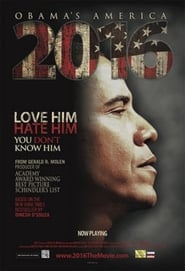
2016: Obama's America
Download English undertekster
Forhåndsvisning af English undertekster
De første 200 linjer.
My journey to America can be traced back
to the independence of India,
the land of my fathers.
Barack Obama's journey can be traced back
to the independence of Kenya, the land of his fathers.
It's been a long time coming,
but tonight, at this defining moment,
change has come to America.
An African-American
has broken the barrier as old as the republic.
A seismic shift in American politics.
People want to be able to tell their grandchildren
that they voted for Barack Obama.
How many chances like that come along in history?
He was a wave.
I just got this sense that nothing was going to stop it.
To those Americans
whose support I have yet to earn,
I may not have won your vote tonight,
but I hear your voice
and I will be your president, too.
The poor are getting poorer. The rich are getting richer.
The politicians, they grab everything.
It's us who are to blame because we are the ones who choose them.
We are all shaped by our pasts.
And we carry elements of the past into the future.
But nothing can threaten the future
quite as much as the debts of the past.
When I was a kid,
I would sit on the floor of my house in Mumbai
and I would read about the great nations,
the great empires.
The Roman Empire, the Ottoman Empire,
the British Empire...
they all came and they all went.
But I always thought there was one exception to that rule,
and that's the United States of America,
which is a different kind of empire
if it's an empire at all.
It's an empire of ideals.
In 1978, I achieved one of my dreams
by coming to America to go to Dartmouth College.
I signed up for a group called
the International Students' Association.
I liked the fact that this group had Mexican food,
Chinese food, Indian food.
These white students, very often, like, ponytailed guys,
would show up and they'd be, like, sampling the food.
"Oh, Dinesh, man, really interesting to meet you.
You know, what a name. You know, 'Nesh."
And then they'd be like, "India, man,
what a fascinating place, man.
I've always kind of wanted to go,
but, you know, never made it and stuff."
And I, you know, genuinely would say to them
something like, "Well, what it is about India
that's so fascinating to you?"
"You know, it's mind-blowing. It's just so liberating."
And I would say, "Man, what are you talking about?
What do you mean by 'liberating'?
Are you talking about, like, dowry,
arranged marriage, the caste system... what?"
I sometimes wonder what my life would have been like
if I had never come to America,
if I had stayed in India.
I would have probably lived my whole life
in a one-mile radius of where I was born.
My destiny would, to a large degree,
have been given to me.
So in America, my destiny isn't given to me,
it's constructed by me.
And if I look at my life as a writer,
a thinker, a speaker,
these are possibilities
that would have been closed to me in India.
My education at Dartmouth would have been incomplete
without a rebel group called "The Dartmouth Review."
This was a group of renegade conservatives
who started the newspaper
mainly for the purpose of causing trouble.
You know, someone once said to me, "You people
at 'The Dartmouth Review' are sophomoric."
And we would then say, "Well, yeah, but we're sophomores."
One of the things I really love about America
is that this is a place where we can discuss
and debate the big issues.
I had an interesting debate at Stanford University
in front of 2,500 people in Memorial Auditorium
against Jesse Jackson.
And the topic was "Is America a racist society?"
In the debate I said, "Reverend Jackson, look,
racism is a reality.
And in a big country,
I'm quite convinced we can find examples of it.
But show me a racism today that is strong enough
that it will prevent me or you
or my daughter or your children
from achieving the American dream.
Where's that kind of racism? Show it to me."
And he gives an amazing answer.
He says, "I can't show it to you, Dinesh,
but that's not because the racism isn't there...
it's because it's gone underground.
The racism used to be overt.
It is now covert.
And so this subtle, invisible racism
is even worse than the old type of racism,
because the old type of racism was at least on the surface.
You could deal with it."
"Here you are, Reverend Jackson,
and you are the same color as me.
If we both put our hands up
and someone took a photograph of only our hands,
they could not tell the difference.
And yet we see the same America...
it's like watching an accident
and we both give a totally different description.
And it occurred to me I'm an immigrant
and you are the leader of an indigenous minority group.
An immigrant is coming from another country.
And so, by that comparative standard,
America looked fabulous.
You're comparing America to its own highest ideals.
America is falling short.
But don't you realize that in criticizing America
for falling short of that standard,
you're actually kind of conceding America's moral superiority?"
I was part of the Reagan generation, and a lot of young guys...
and a bunch of us from Dartmouth... all came to Washington
to be part of the Reagan thing.
I worked for a magazine, "Policy Review,"
for a couple of years when the White House said,
"We'd like to offer you a job."
And I said, "Wow, I'm incredibly honored,
but I don't think I can do it because I'm not a US citizen."
And these three or four guys looked at each other,
and one of them said, "Well," he said,
"what we're concerned about is are you a Reaganite."
Four weeks later, I was working in the White House.
I became fascinated by Reagan
because he was such an unlikely guy.
He didn't seem even like that serious of a guy.
This guy was nevertheless
running against the huge idea
of the 20th century... collectivism,
which from Reagan's point of view
was an expanding welfare state at home
and a Soviet Empire growing abroad.
And I think Reagan, if you understand him,
in one shot, was trying to block both.
I saw Reagan transform the country firsthand.
In 1980, the US was in a tough spot...
a horrible economy, unrest in the Middle East,
a lot of the similar issues we face today.
The question was could we find
another transformational leader to solve these issues?
Yes, we can! Yes, we can!
Yes, we can! Yes, we can!
Yes, we can! Yes, we can!
People voted for Obama on the basis
of what they hoped he would do.
Just like the rest of the country,
I was intrigued by Obama.
When I look at American presidents,
most of them in their life are totally remote from me,
no similarities.
George Bush, Bill Clinton...
totally different life story than mine.
Obama... I get it.
We were both born in the same year,
which is 1961.
We both went to an Ivy League school...
in his case Columbia, later Harvard;
in my case Dartmouth.
We got our bachelor's degree.
We graduated the same year... '83.
We were married in the same year... 1992.
We both have a kind of mixed-race background.
There is not a black America
and a white America and Latino America and Asian America,
there's the United States of America.
Like most Americans, I was introduced to Obama
through his 2004 speech at the Democratic Convention.
The pundits...
the pundits like to slice and dice our country
into red states and blue states...
red states for Republicans, blue states for Democrats...
And if you listen to that speech,
that's a speech that would have drawn applause
at a Republican Convention.
...federal agents poking around...
The country rejected two known politicians,
betting on the young senator from Illinois.
This is something we had done once before
during a desperate time.
Other presidents, when they came to office,
were known figures,
even if their rise was unexpected.
Now, Obama came out of nowhere.
No one really knew him.
2016: Obama's America subtitles in other languages
More English subtitles for 2016: Obama's America
- 2016 Obamas America 2012 720p WEB-DL DD5 1 H264-FGT · 16 downloads · 2020-10-27
- 2016 Obama's America WEBRip XViD UNiQUE · 14 downloads · 2015-10-30
- 2016 Obama's America (2012) · 12 downloads · 2012-10-18
Kommentarer
No comments yet. Be the first to leave one.