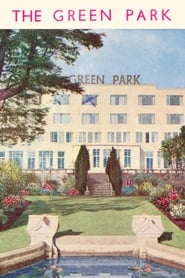
The Green Park
Download English undertekster
Forhåndsvisning af English undertekster
De første 200 linjer.
Bournemouth, a fashionable
and beautiful resort on the south coast of England.
Because of its mild climate, Bournemouth is popular
throughout the area.
On the east cliff overlooking the sea,
lies the Green Park Hotel,
the greatest name in Jewish hotels.
Absolute comfort, superb service,
international kosher cuisine, and every bedroom
with private bathroom and shower.
Book now for Rosh Hashanah, Yom Kippur,
Sukkot, Hanukkah, Purim, Pesach, Shavuot--
Those were the days my friends.
We thought they'd never end.
Wonderful people, wonderful job,
and the creme de la creme came to the Green Park.
- Different class, absolutely different.
- I was there 25 years and it was the best years
of my life.
I'm 77 now.
I will go back tomorrow morning.
- The Green Park Hotel in Bournemouth
opened its doors in 1943.
For 40 years, it plied its trade as
the leading kosher hotel in the United Kingdom,
catering to the vibrant Anglo-Jewish community,
with the finest hospitality of the time.
But the Green Park, as with many Jewish social spaces,
also served a deeper purpose.
In 2015, the global population of Jews
reached pre-Holocaust levels.
This incredible feat has been achieved,
not by conquest or conversion, but by
passing on Jewish traditions,
practicing the Jewish faith,
and introducing Jewish sons and daughters.
Like a stick of seaside rock, you can
break into Jewish culture at any point
and find the same words written there.
Tradition, religion, family, food.
These were the values at the heart of the Green Park.
The Jewish history of the United Kingdom
can be divided into three distinct eras.
The first era of Anglo-Judaism did not end well.
The small Jewish community which had built up
since 1066 was expelled from England in 1290.
It was not until 1655, over 350 years later,
that Oliver Cromwell issued an edict
allowing Jews back into the United Kingdom.
This time things went better.
The Anglo-Jewish community became a key part
of English life, from inventing the techniques of boxing,
to financing the British Empire, to running it.
The third era of Anglo-Judaism did not begin
until the late 19th century.
Antisemitism reached a new height
with a series of violent pogroms in Poland,
Russia and Lithuania.
The Yiddish-speaking Ashkenazi Jews of these communities
sought refuge elsewhere, traveling west to France,
America, and England.
The UK Jewish community increased from
just under 50,000 to over 200,000.
They arrived in England as strangers,
with little money, and less English.
This new wave of Jewish immigration
settled largely in the East End of London,
with further communities in Manchester,
Leeds, and Glasgow.
They took up lesser trades than they'd been used to,
becoming bakers, tailors, and traders.
But they had the energy of an immigrant population,
overcoming antisemitism, educating their children,
and improving their lot.
The second generation of this community
was coming of age in the mid 1930s,
when the world changed.
No enemy the Jews ever faced was greater
than that which arose in Germany.
Adolf Hitler and the Nazi party
rode a wave of antisemitism to power
and took the world towards the unthinkable,
a Second World War.
Separated from their European cousins,
the Jews of Britain were determined
to help the Allied war effort,
working on the home front, and joining
the armed forces in their thousands.
War brought Britain together like never before.
Throughout the Battle of Britain and the Blitz,
people of different classes, genders,
and ethnic backgrounds were thrown together
to keep Britain strong.
Women worked in factories.
The rich were on the same rations as everyone else,
and many inner city Jewish children
were evacuated to the countryside for safety.
War and the war effort dominated English society.
But they weren't the whole story.
"Keep calm and carry on" was the mantra.
Children went to school and commerce continued.
The young family man, Mr. Marriott, was unable
to join the army because of his terrible eyesight.
He had continued running his boarding house
in Torquay, when he was presented with
an unlikely opportunity.
An Art Deco hotel suddenly became available.
My husband came to me and said do I mind
if he goes to Bournemouth.
I said, "To Bournemouth?
"What for?"
He said, "Well I've just seen an advert
of a 60-bedroom, 60-bathroom hotel up for sale.
Looking to grow his business,
but unable to afford this grand location,
he turned to his clients and his friends.
He had a word with them and said,
"Would you like to come to Bournemouth
"and finance me for the hotel?
'Cause I can't afford it myself."
And they became (mumbles).
They financed him and they said, "Don't worry about it.
"You'll pay us back when you can."
- And with a handshake, he bought the hotel,
and it was the best thing he ever did.
- Ruby Marriott and his wife, Sarah Richman,
were both from families that had arrived in England
three decades previously.
Fleeing from Warsaw and eastern Poland,
both families settled in London's East End.
The Racjmans changed their name to Richman
and worked as tailors,
while the Mariovich family became Marriott,
and sold furs to the English upper classes.
Following their marriage, Ruby and Sarah took over
the Marriott family's kosher boarding house.
This was a springboard into the ambitious Green Park.
The Green Park Hotel was a bet on Britain's future.
But even in the midst of the war,
there were still customers,
although of an unexpected kind.
Around half a million Jews served in the American
and Canadian forces and in 1944 many of them
were in the United Kingdom, preparing for
the push into Europe.
- A letter came which was put on the notice board.
All Jewish serviceman they invited
for Seder night at the Green Park.
It was a vast diversity of servicemen,
who were Englishmen, Canadians, Americans,
the naval men from the ships in the harbor.
When we got this invitation for the Seder night,
I went there and 40 or 50 men at two long tables,
and I was there with Michael Peters and two
of the Richman girls, little table for four.
A little bit obvious, but (chuckles) we had
a very nice meal.
And of course it was a full Seder night
with all the trimmings.
- In 1944, there was a banquet at the hotel.
Oh yes.
Just before Passover.
We had to cancel all the bookings,
but we also had all the food in for that period
and we said, "What can we do?"
We said to the Rabbi, "Can you help us?"
He said, "Yes."
He said, "There's lots and lots of American
"soldiers here who need to be looked after.
"Will you take them?"
We said, "Yes."
I think we had something about 180 American soldiers
came and spent Passover with us.
They needed the help and we needed to
use this food we had, it was there.
Bournemouth was great to have fun in,
because we had the Canadians there, the Americans here,
the Australians here, and the English here, you see.
We had quite a lot of fun. (laughs)
I'm not supposed to be saying that.
Oh, we had to be very careful there,
and very, very careful.
I came from a strict family in that kind of way.
So no, you behaved.
You just went for the fun.
The chocolate rations and the stockings
or anything else they were prepared to give you.
You just accepted it, it was great.
- We did hear from them, those that got back home.
And some of them we never saw again.
- This is your victory.
Victory of the cause of freedom.
- Commander of the regiment had the whole unit
lined up on the square and he said,
"Gentlemen, the war is over.
"I want you to go out and celebrate.
"But remember, celebrate like gentlemen."
Dear Mother, I will be
returning on the 4:30 train from Dover.
Please don't bother to meet me at the station.
Kommentarer
No comments yet. Be the first to leave one.