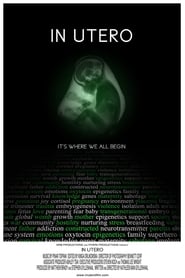
In Utero
Download English undertekster
Udgivelsesinfo
Tags
Forhåndsvisning af English undertekster
De første 200 linjer.
A large, handmade pepperoni pizza for five bucks.
This year' fashion week has shown us
some bold new trends for the upcoming season.
She started out as a hot, new designer...
It was initially reported that
57 people were killed in Iraq today.
The bi discussion of the summit was
climate change, despite opposition...
I heard that children were taken out, bloody.
I am very scared I'm worried about my daughter,
I'm worried about my...
The military space race is not over.
There's no doubt in my mind that...
...killer was on several mind-altering medications.
...don't want any more adrenaline junkies...
...tragic death of a 5-year-old girl...
...cutting edge research...
We've been very good
at making enormous strides in technology.
It makes us look advanced.
But I think where we fall down
is that we haven't gone nearly as far in our internal world.
I don't know that we've really come too much farther
than people did thousands of years ago.
Most of us don't know why we're doing what we're doing most of the time.
Especially when it comes to the really important decisions in our lives.
This is largely a society in denial.
We have been stuck I think, for a very long time
in the ways we've done things, and everybody sees it now.
I don't think people can really look around the world
or the Earth and say, "It's all great."
Well, how about now, we start to look inside ourselves?
How about we take the ideas that fueled
this kind of development and look inside?
Why wouldn't we go back to the womb?
Why do we want to start anywhere else really, but there?
It's where we all start.
In Western culture,
we have no idea about prenatal life.
Life begins with birth, not before.
But other cultures
have an understanding or an intuition
what prenatal life may mean for the becoming child.
They believe the pregnant woman
should be cautious and not excited,
no burdens and so on.
The time before birth is your living time.
One hundred years ago,
babies were put into, you know, strange clothes,
they could not move,
they were embalmed like mummies,
and their heart rate beat was slower,
they would eat less, they would develop less.
Up to the '50s and even the '60s in Europe,
babies were operated on without anesthesia.
"Babies don't experience and don't feel,"
that was the general opinion, that they forget everything.
And so, you can let them cry and they forget it.
Doctors would do horrible, horrible, horrible operations.
And they told their parents
that the reason that they are not using an anesthetic
is because the anesthetic would damage the child.
But in fact they damaged the children themselves
through this traumatic experience.
The reason I did not become an obstetrician
is because I hated the way obstetricians were treating women.
They were yelling at them.
"Push! Push! Push! What's the matter with you?"
You know, "Push!"
And we were taught that babies can't remember anything
before the age of two.
In this last century,
the attitude is changing dramatically.
We can identify
with a child, with a baby.
Ultrasound is magic.
How could you see a baby in the womb during pregnancy?
The nature of what w do is really thinking about
development as it starts before birth.
And we're really pushing back that timeframe
to say that there are factors environmentally
that happen, um, prenatally
and so their environment is their mother's.
Human beings are affected by the environment,
as soon as they have an environment.
And that means as soon as we're implanted in the womb.
So, from that moment on, until we die...
Uh, we are creatures
who are interacting with,
shaping, and being shaped by, the environment.
Our whole stor is about "little number five"
and how his mother is preparing for him.
She knows that he will have nothing to grow on
except the food that she eats for him.
She really is eating for two people,
herself and "little number five."
Fifty years ago,
we have the research to brain development,
we have the epidemiological research
and we have the direct observation, uh, via ultrasound
and film and so on.
The epidemiological research
is coming from a man, uh, whose name is Barker.
Some of the early observations by Barker
were in England and Wales,
that geographically, there were different areas
that had high neonatal mortality risk
as well as high cardiovascular mortality risk.
There were further investigations,
which ultimately linked low birth weight
to an increased risk of cardiovascular mortality.
And when you think about low birth weight,
the main driver is the nutritional environment in utero.
That was 2 or 30 years ago,
and there was an explosion of research.
Some of this came out of studies, for example,
with what's called "The Dutch Famine."
From November, 1944 to April, 1945,
the Nazis constrained the amount of food
going into the Netherlands.
And so the government reduced the rations
from 1,800 calories a day to 900 calories a day.
There were about 5,000 women
who were pregnant during this period.
And what happened was
people followed up in adulthood,
to look at what kind of problems they were having.
Fetuses who were in this period of famine
in the first trimester
had a whole host of problems when they got to be my age.
They will be more likely to develop
the so-called metabolic syndrome,
which consists of diabetes,
high blood pressure and heart problems.
And these are obvious examples
of how the environment already in utero
can affect the life of the adult.
The factor that we least appreciate, however, is that
in addition to these self-evident physical factors
is the emotional state of the mother.
About how many months pregnant would you say she is, Doctor?
About seven months.
Have you someone to help you with the housework?
My sister comes in once in a while,
but it's hard for her to get away.
In our life,
the first, big person is the mother.
Mother is giving life, giving birth.
And if the mother is feeling well,
the baby feels he is living in a good world.
If the mother has stress,
he feels the world is stressful.
Stress decreases the immune response.
Everybody knows that.
If you don't sleep enough, if you work too hard,
your stress level increases,
and your immune system goes down the toilet.
When that happens while you're in utero,
it really affects your immune system
for the rest of your life.
Human beings are affected in their development
by early experiences, including, in the uterus.
They are affected by the emotional environment
in which they're conceived and carried and birthed,
and then reared in.
The broad outlines of that knowledge
has been really well established.
But we're not practicing it as a society,
we're not recognizing it.
Prenatal life is so unknown to us
and yet so important to who we are as people.
You will see it unconsciously expressed in many ways.
You will see it in movies,
you will see it in fairytales, you will see it in novels,
you will see it in mythology, in folklore.
You name it, you will see it there.
In older times,
fairy tales were told to the young people
to help them to confront the old anxieties
from birth and from helplessness.
It's the fight with the mighty parent figures.
Maybe a witch, maybe a cruel father figure.
And in modern times, we have films.
They follow the frame of the fairy tales.
In the uterine world, you are swimming,
and there is the film, The Little Mermaid
Hurry home, princess.
We wouldn't want to miss
old Daddy's celebration, now, would we?
The crisis begins
when she falls in love
and feels weak
and loses her voice...
And then the film goes back
and shows the background. Keep singing!
There, this is a fixation, anxiety fixation
by a big, cruel, dominating mother.
And the story of the film is the fight and overcoming,
being stronger than this mother,
and it is a fight of life and death.
Kommentarer
No comments yet. Be the first to leave one.