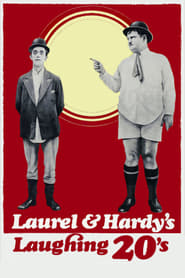
Laurel and Hardy's Laughing 20's
Download English undertekster
Udgivelsesinfo
Tags
Forhåndsvisning af English undertekster
De første 141 linjer.
- Through a cardboard door out of the past
steps a beaming moon faced 23 year old comedian
named Oliver Norvell Hardy.
Oliver announces he's to be married
in this comedy called Fatty's Fatal Fun.
Made two world wars ago in 1915 when life and the movies
were both much simpler.
Babe Hardy, as he was then known,
made a striking figure in his striped pants
and cutaway coat.
And even plausible, though plump, lover.
But he was an obscure comedian in those days.
One of the unknown hundreds who dashed madly about
in the deluge of minor comedies
that flooded the silent screen.
Fame, stardom and an immortal partnership with Stan Laurel
lay some 12 long years and uncountable pratfalls,
pins in the pants and pies in the face ahead.
Young Stan Laurel looked like
this at the beginning of the decade,
which silent comedy at its height
was to make the laughing 20's.
Stan played a brash patent medicine salesman
in Kill or Cure, one of his early Hal Roach comedies.
Laurel, skilled at pantomime,
was polished at the best of schools,
Fred Karno's English Music Mall Company,
where he understudied the star Charlie Chaplin.
Behind that bush mustache lurks Oliver Hardy.
By the mid 20's Hardy had joined the Hal Roach organization
where he continued to play supporting roles
despite a mad studio search
for badly needed new comedy stars.
Vivien Oakland begins to succumb to the musical charms
of her new border, Milton the Mad Maestro.
In this 1926 blend of slapstick and French bedroom farce
husband Glenn Tryon completes the triangle
as Oliver fiddles while Vivien burns.
Six months later Laurel and Hardy were both to appear
in a Hal Roach comedy called 45 minutes from Hollywood,
but never in the same scene together.
Stan is almost unrecognizable behind that big black mustache
as an innocent hotel guest harassed
by a pair of battling intruders.
Hardy clad in a sheet is the house detective
struggling to break up the fight by breaking down the door.
By the following year, 1927, Laurel and Hardy
had been cast together several times
and were beginning to pair up purely by accident.
In films like Sugar Daddies can be seen
the gradual evolution
of one of the greatest of comedy teams.
But four years in the names Laurel
and Hardy blazed from the screen.
Costars at last in Putting Pants on Philip.
The first film billed to the talents of Stanley and Oliver.
The plot was supremely simple.
Uncle Ollie had just met nephew Stan at the boat.
Stan is visiting from Scotland
and the attention attracted by his kilts
mightily embarrasses natty Hardy,
one of the 10 best dressed men in upper Sandusky.
"Walk behind me," says Oliver, "far behind."
Uncle Ollie pleads
with the rapidly growing crowd to disperse.
With Hardy in the role of a sport
and Laurel as of all unthinkable things a lady chaser,
Putting Pants on Philip differs
from the later Laurel and Hardy films
for Stan and Oliver had yet to invent
the fumbling derby hatted characters
that were to make them world famous.
Years later when his career had ended
Stan Laurel was to name this his favorite comedy.
Laurel and Hardy were old pros
who in hundreds of pictures
had thoroughly learned the exacting job
of being silent screen comedians.
Laurel was in addition a comedy innovator
and many of Stan and Oliver's best gags
were to originate with him.
They worked without pretension and for the moment.
Little dreaming that their comedy would continue
to delight audiences more than 20 years after
the camera stopped grinding
and the glee lights flickered out.
Oliver dashed toward a building
which residents of the Los Angeles area
have doubtless already recognized as the Culver City Hotel.
Like so many Hal Roach comedies
Philip was shot with an eye to economy
just a block or two from the studio itself.
What's all the excitement about, wonders Hardy.
The director of this first Laurel and Hardy starring comedy
was Clyde Bruckman, a master of the sight gag
who was also to direct Harold Lloyd.
The cameraman was George Stevens,
famous today as the producer director of Shane, Giant
and The Greatest Story Ever Told.
"Hold it," says Uncle Oli, "let me show you how."
"Just an old Scottish custom," says Stanley.
"Just an old American custom," says Oliver.
A swank dinner party is afoot at the J. Medberry Frumps',
a newly rich couple just learning
to dog paddle in the social swim.
At the door a new butler and waiter
fresh from their triumphs assistant deck swabs
at Dougan's Bean Wagon.
In the few months between Putting Pants on Philip
and this comedy, called From Soup to Nuts,
Laurel and Hardy had found their derbies
and the characters they were to play
for the rest of their movie lives.
"I have fallen down," admits Oliver.
The harassed hostess is Anita Garvin,
one of the Hal Roach studio's harem of girls
who could remain appealing
through every slapstick indignity.
"I have fallen down again," Oliver confesses.
This tribute to the cake bakers' art
was directed by E. Livingston Kennedy,
better known as comedian Edgar Kennedy,
master of the slow burn.
Host Frump, played by Tiny Sandford grabs for a towel,
only it's not a towel, it's Stanley's shirt.
In this moment of crises Stanley takes command.
"Over here, double quick," says Anita.
"Did you gong Madame?" asks the efficient Oliver.
Anita orders, "please have the salad served, undressed."
Fastidious Hardy dishes up the soup
while greens man Laurel's in the kitchen
preparing the salad.
Chip and Dale you made the chairs too high.
Alert to every order Stan serves the salad undressed.
Says Stanley to the host, "they wanted it served undressed
"and that's the way they're gonna get it."
In 1927 Jimmy Finlayson, Laurel and Hardy,
and Charley Chase, Hal Roach's top stars
in their only appearance together
improvised comedy on the spot
as carefree inmates of the happy asylum.
Laurel and Hardy's Laughing 20's subtitles in other languages
Kommentarer
No comments yet. Be the first to leave one.