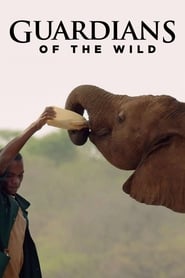
Guardians of the Wild
Download English Untertitel
Release Info
Tags
Download English Subtitle Files for Mobile (4)
English Untertitel-Vorschau
Die ersten 196 Zeilen.
This is Musolole,
a four-year-old male African elephant.
And this is Zambezi, he's about the same age.
Zambezi and Musolole aren't related,
but they've become brothers.
They're orphans,
each rescued when just a few months old,
and cared for by some very dedicated keepers.
Life at this elephant nurseryhas been good.
But there's a problem,
they've grown up.
It's time to move up to big school.
So they're embarking on the biggest adventure of their lives.
It's going to be challenging,
a long journey across Zambia...
to a new facility deep in the bush.
And when they get there
they'll be confronted by some much bigger elephants.
Leaving home has never been so tough.
This is Lilayi Elephant Nursery.
Home to four orphans, who are enjoying a walk in the bush.
Musolole is the oldest.
He's self-assured and the dominant leader.
Zambezi is single-minded and independent.
He likes to do things his own way.
Nkala is a year and a half younger
and relies on the older two for comfort and reassurance.
Muchichili is the baby of the herd.
The two biggest elephants,
dominant Musolole and single-minded Zambezi,
have outgrown the orphanage nursery.
Now, Zambezi and Musolole have really reached an age
where they need to start becoming more independent,
and the focus of our program is to release these elephants back into the wild,
so we want to ensure that they're out in the wild as early as possible.
These two orphans had a very tough start to life.
Zambezi was just one month old
when he was found alone and exhausted in a swimming pool
in a safari camp on the Lower Zambezi.
No-one knows what happened to Zambezi's mother or his herd.
Musolole's story is very different...
Musolole's rescue wasa very traumatic one.
He was found in Sioma Ngwezi National Park,
which is on the west side of Zambia near Namibia,
and when the wildlife police officers had heard gunshot
inside the national park they responded.
When they entered the park, they actually came across Musolole
at five months old with his mother, who had been shot dead,
and the poachers were still on her body hacking out her tusks.
As soon as those poacherssaw the officers, theyopened up fire straightaway
and tragically, Officer Sitali Musololewas killed.
And when we arrived we found some very, very traumatised wildlife police officers
who were mourning the loss of their friend
and had very much become attached to the baby elephant,
and felt that their friend's spirit could live on through him.
Thanks to the dedication of the elephant keepers,
Musolole and Zambezi are now healthy four-year-olds,
each with their own character.
While Zambezi likes to rile his playmate,
Musolole knows when to put him in his place.
Big, boisterous and increasingly unruly,
they need to leave the orphanage.
On a practical level they're making problems around the nursery.
They will pull down structures,
they've already started to pull the roof off of the building,
and here in Lusaka we're actually in a small enclosed game park,
which is probably not big enough for a fully grown elephant anyway.
The ultimate goal for all the rescued elephants is release back to the wild.
But it has to be done in stages.
It's time for Zambezi and Musolole to start the next phase.
They're going to elephant high school.
The Lilayi Elephant Orphanage is situated in a small game park
very close to the city of Lusaka,
the capital of Zambia in Southern Africa.
Three-hundred and twenty kilometres to the west lies "elephant heaven",
the vast Kafue National Park,
the second-largest park in Africa.
Its wide open spaces,
expansive bush and plentiful water
make it the perfect place for elephants to roam free.
In the heart of the park lies Camp Phoenix,
the project's release facility,
where some older orphanedelephants are already adaptingto a life in the wild.
Here, the orphans start being weaned off milk
and spend more and more time out in the bush.
It's the next step towards freedom.
This is where Musolole and Zambezi need to be.
An elephant's childhood is just as long as our own.
In the wild, elephants need this time to learn how to survive.
And, just like us, they learnhow to behave with others oftheir own kind.
Back at the Lilayi orphanage,
the elephants have human surrogate mothers.
The elephant keepers have tended to their every need,
and give them a milk bottle every three hours, night and day.
But Musolole and Zambezi, the two oldest,
haven't had an older elephant to look up to
since they were just a few months old.
That's about to change.
If they don't knowhow to behave withthe bigger elephants at Kafue,
they could get into real trouble.
It's going to take some adjustment.
But Rachel has more immediate concerns.
So tomorrow we're planning to move Musolole and Zambezi out to a release facility
and we are very aware that even in doing so
it will be a very traumatic experience for them.
Erm, they will be loaded into a truck and driven for up to 15 hours,
so it's not going to be, you know, a comfortable day for them.
But at least their "mums" will be going with them.
Aaron has been an adoptive mother to free-spirited Zambezi
since the elephant was just a month old.
Getting single-minded Zambezi, and herd-leader Musolole,
into a vehicle will be tomorrow's first challenge,
so they're about to get a trial run.
The transport truck has just arrived,
and the keepers want it to beas welcoming as possible.
If you lead the elephants inside
you have to be able to jump out through that hatch,
in case it gets too busy to get back.
Can you do that? Show me.
I need to see that you're both able to do it before I let you do it!
Have to jump.
You have to be able to jump up.
Paul was very nimble, well done!
That was good. OK. You passed the test!
The elephants know it's time for their bottles of milk,
they've spotted the keepers up on the ridge.
Each elephant has its own bottle.
The plan is to only allow them to drink once inside the truck.
The elephants don't understand this new rule.
There's only room for one at a time...
And even confident Musolole is very suspicious of the dark metal box.
So this is the first time they've gotten to see the transport vehicle.
We've loaded it with browse,
the guys are holding milk bottles to encourage the elephants to go inside,
just to get them used to it so that we know
that they will go inside before we try tomorrow morning.
Success so far...
Not so much!
Erm, no-one's actually been fully inside,
but I'm pretty hopeful that given some patience
and some time and some more food then they will go inside.
In the wild, African elephants are used to wide open spaces.
They're typically on the movefor 18 hours a day.
Small confined spaces are very alien to these huge nomads.
It's perhaps no wonder that the orphans are wary of entering a metal box.
But there may be another reason for their reluctance.
All the elephants except the youngest, Muchichili,
have in fact seen this truck once before,
and maybe the memory is not a good one.
Two years ago, there were five elephants at Lilayi
and they all visited this very same vehicle.
But the next day,
as far as Musolole and Zambezi were concerned, the two oldest elephants vanished.
Those two, Maramba and Kavala, were trailblazers,
the first elephants to be relocated from Lilayi to Kafue National Park.
An elephant never forgets.
Musolole and Zambezi know this truck was the precursor
to their friends' disappearance from Lilayi.
Elvis attempts to lure in Muchichili, the youngest,
who wasn't here two years ago.
But dominant Musolole is getting frustrated.
He's the strongest of the eles, and their leader,
but that doesn't mean he's not cautious.
He wants that bottle
but he just can't shake the fear.
All the elephants take a turn...
But none of them will enter the crate.
Eventually, it's the smallest elephant
who proves to have the greatest courage.
Or is it just that Muchichiliis the most motivated by food?
Did Muchichili go inside? MAN: Mmm-hmm.
Oh, Muchichili's inside. RACHEL: Yay!
No-one else follows Muchichili's lead.
It doesn't bode well for tomorrow.
The big day has arrived.
This will be onlythe second time that elephantshave been moved from Lilayi,
and Rachel is concerned.
The difference we have is that last time
the elephants went in on the trial run first time, no worries
and yesterday these elephants wouldn't go in,
so I'm just a bit anxious about how they're going to go in.
But I think the success will be more with the bottles at this point,
so people inside with the bottles.
And then I think, what I noticed yesterday,
which is important, is to encourage the elephants,
to talk to them, to reassure them.
You know, to touch them, you put your hands on them,
they're used to you doing that.
You remember, that you're the mum.
For any mum it's a big day
when your babies finally leave home.
The elephants just want their morning bottle.
They didn't get their night feeds, either.
The keepers want them hungry for the task ahead.
The two youngsters,
Nkala and Muchichili are kept in their stables, unaware of the big changes ahead.
Guardians of the Wild subtitles in other languages
More English subtitles for Guardians of the Wild
- The Wind Guardians 2018 WEB-DL · 212 downloads · 2019-01-17
Kommentare
No comments yet. Be the first to leave one.