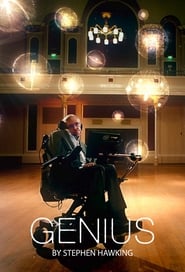
Genius by Stephen Hawking
Download English Untertitel
Release Info
Tags
English Untertitel-Vorschau
Die ersten 200 Zeilen.
We all have questions.
Big questions.
Am I here for a reason?
It's part of what it means to be a human.
Do I control my own destiny?
My name is Stephen Hawking and I believe that
anyone can answer big questions for themselves.
That's awesome.
So, with the help of some ordinary people...
Oh! And a team of experts...
In a flash came to him the notion that
there might be a single wall.
We are going on the ultimate voyage.
It's a complete head trip.
A quest to answer the greatest
mysteries of the universe.
I'm not ready to make that leap.
It's so messed up.
Using the power of the human mind.
It's a very exciting moment.
Yes.
Because anyone can think like a genius.
"Genius by Stephen Hawking"
was made possible in part by
contributions to your pbs station from viewers like you.
Thank you.
Why are we here?
Have you ever wondered why we are here?
I think most people have.
If we could answer it, maybe we could
all get along with each other a little better,
which would be good.
Some believe in a higher being who created us for a purpose.
Others say that life is just a random chain of events
with no real meaning.
But I believe there is another way to answer the question.
If we look at the facts, we can work it out for ourselves.
So, I've asked 3 ordinary people
to come on a journey.
A series of puzzles and challenges awaits them.
They'll be given equipment and instructions to help.
Can they solve the mysteries and try to answer
this fascinating question?
Why am I here?
I really can't tell you.
Am I an accident? Are we all an accident?
Ah, I don't think we are.
Is there a reason we're here?
That would almost presuppose somebody putting us here.
I am here, but that's all I know.
To start this journey, I want my volunteers
to make a basic realization.
So, I have brought them to this ancient English castle.
When it was built nearly 600 years ago,
the word "science" was almost unknown.
People thought the universe was magically controlled
by all-powerful beings.
But magic is not always the best way to explain things,
which is what I want them to grasp at this special dinner.
Wow.
It's so weird.
Pretty spooky.
Romantic and haunting at the same time.
- What? - Spinning plates.
Oh, my goodness.
It was spooky. It was great.
So cool.
It's magical.
Perhaps the room is full of poltergeists.
How are they levitating?
No idea.
Slightly scary.
If you had done this some hundreds of years ago,
you would have been hung.
And, you know, the first thing that crossed my mind is,
"where are the strings?"
What is the purpose of that blowing?
It could be magic.
Could be magic. Maybe it is.
I'm... I'm not a believer.
Of course, I don't believe in magic either.
But I do believe in human curiosity.
Mine's not spinning, yours are.
Yeah.
Wonder why that is.
Our desire to understand has allowed us
to achieve great things
and finding out how things work is fun.
Ha ha!
In my mind, looking at the plates floating,
it was about, "how are they floating?"
And more importantly, "why are they floating?"
Bon appetit.
Thank you.
- Cheers, guys. - Cheers.
I wanted to see if there was really anything
underneath it that might have been hidden,
that could possibly be spinning it,
but there didn't seem to be.
And so that's when I figured it had to be
some kind of, you know, technology.
She's taken it all apart.
Guys.
Nice.
Gonna kick you out.
It's clearly a magnet. Magnets.
Is there somebody under there?
No, there's nobody under there.
Electromagnet.
It's a hexagon.
They found out the secret of
Magnets.
The force that the two magnets exert against each other
causes the plates to hover in the air above the table.
But what do levitating plates have to do with
our central question... Why are we here?
Once the plates have fallen,
the idea of magic soon kind of disappears.
It comes back to it's just a trick.
So, once you might have been hung,
but now it's just magnets.
That's pretty cool.
It just shows the progression of humanity
from not understanding to completely understanding
how to do something like that
and not having it be magical any more.
It was about the journey from
the magical to the practical with science.
Now they are starting to unlock the mystery.
The universe is not controlled by magic
but by a set of rules that we call the laws of nature.
To find out how we discovered these laws,
we're going to meet one of my heroes.
He lived in a little English village over 300 years ago.
When it comes to human knowledge of nature,
the period between roughly 1500 and 1700
gets remembered as the scientific revolution
because it brings in a number of fundamental changes in outlook
that remain indispensable to what we call science.
For many people, the outstanding figure of
the scientific revolution, the culminating figure
is Isaac Newton.
And for getting a grip on just what it is Newton achieved,
we could do no better than to be standing right here in front of
the very apple tree from which fell the apple
that gave Newton the idea of the law of universal gravitation,
or so the story goes.
It's 1666.
He was sitting under the apple tree
and he watched an apple fall to the ground.
And in a flash came to him the notion that there might be
a single law, which governs not just
the pull of the earth on an apple
but the pull of the earth on the moon.
A single law, a law of attraction
between all of the particles across the cosmos.
That was the law of universal gravitation.
By the age of just 25,
Isaac Newton single-handedly changed
the way we see the world.
Magic was no longer needed to explain how the universe worked
or why we might be here.
Instead, the laws of nature
could be explained using reason...
And written down in a book.
Here we have Isaac Newton's masterwork,
his "Principia Mathematica,"
the mathematical principles of natural philosophy,
published in 1687 in Latin.
This is where Newton set down his 3 laws of motion
and the law of universal gravitation
and set them to work to account for the system of the heavens:
The tides, comets, and other natural phenomena.
In this extraordinary book, Newton explained
how the universe works in a way that
no one had been able to before.
His work ushered in the modern age of reason,
underpinned by science.
Newton becomes the first scientific celebrity;
he is revered as a hero of the enlightenment.
This book becomes the background and the platform on which
natural science in all its variety
grows up in the 18th century.
Thanks to geniuses like Newton,
science gradually begins to explain the world.
And even, I think, why we are here.
I've got the magic touch then. Oh.
My volunteers have taken their first step
to making that realization for themselves.
Being in this amazing setting really helped me,
I think, get in the mindset of people, for example,
of the middle ages and how they would have perceived something
as being completely magical.
That's really cool.
I totally think we can use the laws of science
to understand the universe and therefore deduce
why we might be here.
We have seen that the universe is governed by laws,
but how does that help us work out why we are here?
Now I want my volunteers to understand
Genius by Stephen Hawking subtitles in other languages
More English subtitles for Genius by Stephen Hawking
- Genius by Stephen Hawking S01 DSNP WEB-DL DDP5 1 H264 · 48 downloads · 2024-08-20
- genius by stephen hawking part6 where are we 480p hdtv x264 rmteam track3 eng · 23 downloads · 2016-06-09
- PBS Genius By Stephen Hawking 5of6 What Are We 720p HDTV x264 AAC MVGroup org eng · 25 downloads · 2016-06-09
- PBS Genius By Stephen Hawking 4of6 Where Did the Universe Come From 720p HDTV x264 AAC MVGroup org eng · 29 downloads · 2016-06-09
- Genius by Stephen Hawking S01E01 720p 720p mHD DailyFliX HEVC · 41 downloads · 2016-05-19
- Genius by Stephen Hawking S01E02 720p 720p mHD DailyFliX HEVC · 31 downloads · 2016-05-19
Kommentare
No comments yet. Be the first to leave one.