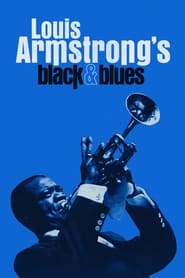
Louis Armstrong's Black & Blues
Download English Untertitel
Release Info
Tags
English Untertitel-Vorschau
Die ersten 199 Zeilen.
I think it's time now to sweeten the air
with a little entertainment.
But not on the principle of escapism, but on the principle of affirmation.
And there's scarcely a more affirmative artist in
the musical world than my old friend whom I'm going to bring out now,
on the theory that music hath charms to soothe the savage breast.
And because he is,
past all question, one of the greatest influences
in American music
and the greatest influence in jazz of all time.
It's my great pleasure to bring you my great friend,
Louis Armstrong.
The whole world embraced Louis Armstrong.
He was bringing a gift, the gift of a presentness
and a naturalness and a depth of insight.
And the ability to act on those insights in the moment.
And it was in a difficult form like music.
And that type of electric virtuosity has not been seen before or since.
Without him,
many things that happen today in jazz would not be possible.
And I think that Mr Armstrong has not gotten a good deal
of the credit that's due to him.
He has been the number one man in his department.
He is really the ambassador of the whole thing,
so there will never be another one like this.
Well, he was a very, very deep person.
He was very much aware of world activities,
what was happening everywhere.
We would have our discussions at home.
He had been asked by many reporters in interviews
what did he think about a certain particular thing.
And Louis would say, "Well, man, you know, I'm just a musician."
He never would come out publicly
because his theory was that "what I say carries a lot of weight".
And he says, "And I just won't do it." But at home, he had his opinions.
American people, they the most grandest people on Earth.
And I'm from America, well, quite naturally,
I don't have no fucking flag
other than a Black flag.
Thank you, folks.
Thank you.
My father would say, "You have to check Pops out."
I was going, "Man, I don't want Pops."
In New Orleans, too, where so much what we call
"Uncle Tomming" goes on.
Playing Dixie, shuffling.
In my time, I hated that with an unbelievable passion.
When I was growing up, there was no way for me to even express
the type of anger and hatred I had toward that type of behaviour.
So, I could not appreciate Armstrong.
But when I left New Orleans, and I was in New York at that time,
my father sent me a tape.
He said, "Man, why don't you learn one of these Pops solos?"
So I put it on and I started to work on it.
Man, I could not play this solo at all.
Just the endurance of Louis Armstrong.
He never stopped playing. He was always up around high B's.
And when we got to the final chorus, I called my father.
I said, "Man, I didn't understand about Pops."
He just started laughing. He said, "That's right".
Louis loved his home in Queens.
Some people said that it wasn't palatial enough.
And he didn't wanna move anywhere else.
When tape came on the scene, Louis became enamoured of that.
And he used it most of all for conversations.
He had friends come to the house, and he would tape it.
Louis had a lot of, sort of, what I would describe as archival materials.
I mean, tapes and things like that.
He had his own study. It was taboo to everyone.
That was his. He'd close that door and nobody bothered him.
He had his tapes and everything of his was in there.
I've heard a lot of reel-to-reels of Pops just talking.
Everyday life recordings.
His humanity comes through.
I got tapes on my wall in my den.
For 40 years, Lucille had one of them Tandbergs
put up there with two tapes together.
That really knocked me out because we couldn't afford no den
in them early days.
No, we've gotta sleep in that room.
- Now you got a den. - Now I got a den.
I got all of my tapes around the walls and just pick out what I wanna hear.
He was the busiest person, taking care of things when he was home.
It was his relaxation.
He would sit up in his study for hours and hours,
indexing his tapes.
And he has a hobby of cutting out pictures,
you know, and paste them up on the ceiling in his den, all over the walls.
I've got scrapbooks that Louis had
that were made up when he first played the Palladium back in '32.
Most of the pictures and the newspaper write-ups have gone yellow.
People asked all the time,
"Why is he recording these tapes?
Why is he writing down all of his thoughts?"
And all this kind of stuff.
He knew that one day they were gonna write about him in the history books.
And so he wanted to make sure all sides of him... good, bad, ugly...
were gonna be captured and preserved by himself.
Not by anybody else.
Hello, folks. This is old Louis "Satchmo" Armstrong.
I just finished this concert here and
I feel good 'cause I had a nice supper of Wiener schnitzels.
Glad to see you around and dig the concerts.
We've been playing every night around the neighbourhood cities.
So, later. Goodbye.
Louis Armstrong is the prime minister of the world of jazz.
He and his trumpet are at the summit.
His European concerts have broken all records.
Satchmo is one of our more valuable items for export.
His recordings are hot on both sides of the iron curtain.
Satchmo, you always draw an audience, don't you?
Yeah, man. That shows you there's cats in all walks of life.
He broke so many barriers.
He would be the first Black performer to open up a club,
a ballroom, a radio station.
He was the first Black movie performer to have his name above the title.
Don't you ever get tired?
Well, daddy, I'm just a little beat from my youth.
You had quite a session here tonight.
Yeah, we just start playing it the same as we did in the tailgates in New Orleans.
It's the same music.
And it's universal, daddy.
"Just saying 'Hello, folks'
over a microphone sounds simple and innocent, doesn't it?
But I remember when it wasn't so simple.
Back in 1931, I was invited to play in my hometown,
New Orleans, at a fancy nightclub, the Suburban Gardens."
You spent a lot of time in New Orleans, in the South, looking for signs.
You see a restroom that said, "White Gentlemen."
This always was a put-down.
So, you saw that flashing in your face all the time.
The only way Louis would agree to go to New Orleans
was on his own private train.
Which meant that we could have our private car, our cooks,
chefs, porters and things like that.
In New Orleans, we're, quite naturally,
the first band on the radio down there…
Fleischmann's Yeast presents
another great half hour of entertainment,
featuring music by Louis Armstrong and his orchestra.
And you never heard of no spade playing on no radio
in those days. Just starting.
The night we opened, there's all the white boys
that I was raised with, you know.
Sitting up there, sharp.
They done got rich. Maybe their fathers done left 'em the...
the produce places and different things
that when we was kids we used to hang around.
And after school, we'd go out in the lots and play cowboys and Indians
with old broken slates and things like that.
You know what I mean? We...
We was the Indians, of course.
And at that time, there was no mixing of the races at all.
The only way our people could hear the band
was to come out and sit along the levee and hear...
and hear the music from the... from a distance.
They had 50,000 Negroes on the levee to hear my music.
See, and I had been away about nine or ten years
and I done got northern-fied.
I done forgot about a whole lot of that foolishness down there, you know?
The night we're opening, and I'm charming,
and there's... place pack and jam.
But this night, they done brought this man up to... "It's a big deal, now.
You bring on Louis Armstrong.
He's a New Orleans boy and blah, blah, blah."
But a second before this cat had to go to that mic
and bring me on, he walked away.
Say, "I just can't introduce that nigger. Can't do it."
They got me and told me what he says. I said, "Well, don't worry about it".
You know? I said, "Give me that card, boys."
And I walked to that mic. And when I went into…
Man, you thought the walls was coming in.
And this announcer's standing there.
He said, "I didn't know this would happen in the South in New Orleans.
Never happened before."
So, they fired him and everything, and I took over myself.
It was particularly galling for him to go home
after being lionised the way he was around the world
and see the same type of prejudice.
His feelings were perpetually hurt by the nation
and the injustice that he knew when he was a boy.
Pops grew up very hard.
It's been said, Pops,
that you were brought up in abject poverty.
You didn't have money when you were a kid, though.
We always had money. I could shoot craps, sold newspapers,
and I always hustled on the...
with the quartet and a little guitar, just sit and go busking.
And I always had a pocket full of money.
You know, in 1915, you had five dollars, you had a whole lot of money.
And I didn't ever have to beg nobody for nothing all my life.
Always a kid that had some get-up about him.
I was born in James Alley, they called it.
It's back of town. That's the real New Orleans.
We have a photo of your mama I wanna show everybody.
- Yeah. That's my mother there, Mayann. - How did she discipline you?
What did she do when you did something wrong?
She had to whip the hell out of us both.
And, man, she hit me like a man.
Louis Armstrong's Black & Blues subtitles in other languages
Kommentare
No comments yet. Be the first to leave one.