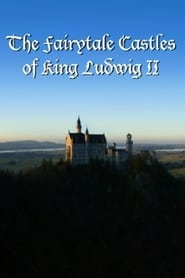
The Fairytale Castles of King Ludwig II
Download English Untertitel
Release Info
Tags
English Untertitel-Vorschau
Die ersten 200 Zeilen.
Bavaria.
The soul of Germany.
Its romance, its culture, its sense of history...
..even its food and drink, define the image of the nation.
And much of it is down to the legacy of one man.
Ludwig II of Bavaria is a legendary figure.
The handsome boy-king, loved by his people,
betrayed by his ministers and found dead in mysterious circumstances.
A monarch obsessed by beauty
and heroic legend...
..who sacrificed everything for his art.
Even today, his castles and palaces are the most fantastical
examples of Romantic architecture anywhere in the world.
Nowhere have history, illusion, artifice
and reality combined to create such visually powerful buildings.
And all of them are windows into the soul
of their extraordinary creator...
..Ludwig II, the dream king.
Our story begins here, in the mountains of Southern Bavaria.
Hohenschwangau Castle sits high above Lake Alpsee.
It was here that the young Prince Ludwig grew up.
An enchanted landscape,
providing the perfect backdrop for a flourish of Gothic fantasy.
For Ludwig, a shy child with a vivid imagination,
the castle represented a wonderful refuge,
escape from the conventions and bustle
of court life in Munich.
It, and this wonderful landscape, captivated his imagination,
ignited an obsession for the past and, in many ways,
defined his life and the fate of his kingdom.
Ludwig's father, Maximilian, had built the castle in the 1830s,
on the site of a medieval ruin.
He spent much of the year here with his Prussian-born wife, Marie,
and his two young sons, Ludwig and Otto.
Ludwig was a dreamy child.
He loved stories and art, dressing up and make-believe.
For most children, this is an obsession
that begins and ends at the dressing-up box.
But for Ludwig, it was his whole world.
Ludwig's father decorated the walls of the castle
with scenes of ancient chivalry and combat.
It was a very particular vision of German legend.
Maximilian called this his Hall Of Heroes.
These are scenes that Ludwig grew up with,
highly romanticised images of medieval life -
knights, castles, chivalry.
Every room in this castle fed his imagination.
You can see here, the seeds of his later obsessions.
But romantic though they are, the paintings at Hohenschwangau
carried an important political message.
In the mid-19th century, there was no single German nation,
just a group of princely states and dukedoms.
Two of the largest were Prussia and Bavaria.
Though independent, these states had a shared culture and language
and there was a growing mood among their people for unification.
But which princely state would determine
the nature of the new Germany?
The castle curator understands the message of Hohenschwangau
better than most.
It's a hymn to Bavaria's artistic dominance.
Bavaria was really the cultural heart of Germany,
so Maximilian saw it this way, the Bavarians saw it this way.
They had their history over centuries.
And that's why Maximilian wanted to show his history,
the history of Bavaria, of his family.
He wanted to have kind of picture book, a history picture book.
He was very interested to teach his people here.
So the paintings tell historical stories about Bavaria,
about the family, about its great history as rulers in this area.
Also, there are myths and legends.
After centuries, where all these myths were forgotten,
they were collecting them again.
Well, that's the Brothers Grimm, of course,
who are involved in this creation of this interior scheme.
And the Brothers Grimm and some others were very involved,
they were searching for the myths of the old Germans,
they were collecting these sagas and fairy tales,
so this was a renaissance of German identity.
One room more than any other would captivate the young Ludwig.
This is the Hall Of The Swan Knight. It tells the story of Lohengrin.
Now, according to legend, Lohengrin, a Grail knight, left his family,
shown in this painting here,
and stepped into a small craft pulled by a single white swan
and then was taken away to save a damsel in distress.
For Ludwig's father, the greatest heroes of the past
were the Knights Of Schwangau,
literally translating as the Knights Of The Swan.
The swan appears again and again throughout the castle
and, as a symbol of the idyllic hero,
was the creature that Ludwig came to identify with strongly.
He began to imagine that when he grew up, he would be the Swan King,
the Lohengrin character of legend made monarch.
The scale and imagery of Hohenschwangau is extraordinary.
But it would be nothing compared to the heights
to which the adult Ludwig would go.
On March 10, 1864, Ludwig became King of Bavaria.
He was crowned at the Royal Palace
in the heart of the Bavarian capital, Munich.
He was just 18 years old, a shy young man
and not greatly interested in affairs of state.
He was much more interested in the things that happened
in the magnificent building
just a stone's throw from the royal residence.
It was a place where he could lose himself
in the stories and legends he adored.
Munich's theatre and opera house was, to Ludwig,
a spectacular place of magic and escapism.
Here he saw that heroic architecture could be evoked
through operatic stage sets.
Artifice would be the means to conjure up
the power of German myth and legend as the epic scale demanded.
The man who would take opera
to new Romantic heights in the 19th century was Richard Wagner.
And Ludwig had been following the great composer even as a boy.
On February 2, 1861, three years before he became king,
Ludwig attended a performance here in the Munich State Theatre
of Wagner's Lohengrin.
Now, at that point, Ludwig was 15 years old
and familiar with Wagner's writing about art and politics,
but his experience that night, in this theatre,
transformed admiration
into something akin to religious devotion.
One of Ludwig's first actions on becoming king
was to invite Wagner to dinner.
Wagner was 50 years old. Ludwig was 18.
It was an extraordinary relationship -
the gauche boy-king and the operatic revolutionary.
But they shared a love of excess and a world built on a heroic scale
and, of course, an obsession with Germanic legend.
For Ludwig, Wagner's operas are magical experiences, revelations,
they transported him into worlds of beauty, myth, legend and romance.
Soon, he started to command his own private performances,
so that he could hear the music in solitude,
but eventually not even that was enough.
He built his own Wagnerian stage sets.
Neuschwanstein, Ludwig's remarkable attempt to realise
the operas of Richard Wagner in masonry and mortar.
In a commanding position, high above a ravine,
this was to be the castle of Lohengrin, the Swan Knight,
and a powerful statement of Ludwig's position -
a king with a mythological status,
part of the pantheon of strong Germanic kings of legend.
It's an extraordinary Romanesque and Gothic vision
of a medieval knight's castle.
The image is taken straight from German legend.
The impression is of a fairy-tale castle,
perched on top of an impossible mountain.
Neuschwanstein is a stunning feat of engineering.
Work began in 1869 and continued for almost two decades,
at times employing between 200 and 300 workers per day.
It drew artists, craftsmen and artisans from much of Europe.
The result is pure architectural theatre.
This courtyard is based on Wagner's instructions
for a stage set for his opera, Lohengrin.
Ludwig took his architectural inspiration primarily,
and certainly for this castle,
from Wagner rather than from architectural precedent.
And when he needed detailed drawings,
he turned not to an architect, but to a set designer.
Christian Jank had worked with Wagner at the Court Theatre
on an early performance of Lohengrin.
From the start, Jank's drawings show an heroic vision.
Ludwig's fantasy, Wagner's fiction
and a heavy helping of Romantic Gothic.
In Ludwig's mind would be the Singers' Hall
that brought legend and reality together,
a medieval style feasting room
in which Wagner's operas could be sung...
..and a monument to the knights and kings of Germanic myth.
This could hardly be more theatrical.
This is like a backdrop on a stage at one end of the Singers' Hall.
Amazing. It shows the enchanted forest
surrounding the hiding place of the Holy Grail.
The legend of the Grail was
one of Ludwig's greatest inspirations in the castle.
It had everything - chivalric knights, religious significance
and untold power.
The Singers' Hall is Ludwig at his most heroic and optimistic.
But in private, there are parts of the castle
that don't quite fit this conventional Teutonic vision.
This is Ludwig's bedroom. Very ecclesiastical, richly monastic.
In front of me, his bed, which is amazing really.
It's like a Gothic shrine and a tremendously rich carved canopy.
A shrine or a tomb. Amazing really.
As Ludwig lay there,
he was presided over by a portrait of the Virgin Mary.
On the walls are scenes from the story that was very much
part of Germanic myth, the story, the legend
of Tristan and Isolde,
a strange story really for his bedroom
because it speaks of forbidden earthly love,
brought on by enchantment, a story that ends in tragic death,
but through death, there is redemption.
Ludwig never married
and his sexuality has long been the subject of speculation.
Throughout his life, he formed close bonds with numerous young men,
from actors to courtiers.
It seems almost certain that Ludwig was homosexual.
Seen in this light, the room begins to make sense.
As a devout Catholic monarch,
Kommentare
No comments yet. Be the first to leave one.