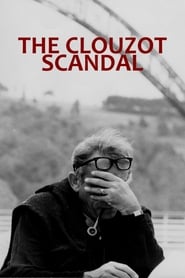
The Clouzot Scandal (Le Scandale Clouzot)
Download English Untertitel
Release Info
Tags
English Untertitel-Vorschau
Die ersten 200 Zeilen.
Mystery, murder...
jealousy, vice...
The venomous power of Henri-Georges Clouzot's films still grips us today.
It was me I meant to kill!
Me, not him!
Mario!
Mario says, "Screw you!"
The Wages of Fear...
Quai des Orfevres...
Diabolique...
Clouzot was a master of suspense
who spun human neuroses into riveting entertainment.
A media darling, he reigned at film festivals worldwide.
Cannes, Berlin, and Venice
awarded him their highest honors.
Yet the filmmaker remains a mystery.
With his wife's death and his involvement in WWII...
a dark legend gathers around him.
He's been called diabolical, uncontrollable.
But was he really?
Who is the real Henri-Georges Clouzot?
THE CLOUZOT SCANDAL
Clouzot was born in Niort in 1907...
the eldest of three boys.
Even as a child, drama fascinated my brother.
He loved drama and fear.
He'd constantly scare me and make me cry.
CLOUZOT'S BROTHER
He'd think, "It's working. My audience is crying."
You said he wrote his first play at five years old?
That's right. He dictated a puppet show...
in which Punch laces his wife's bread with thumbtacks.
That's the sort of ideas he had at five.
Young Clouzot never witnessed a murder,
but he lived through his parents' divorce
after the bankruptcy of the family bookstore.
"You and Dad never really got along,"
he wrote to his mother later.
"If you'd lived together a few years before marrying,
I probably wouldn't exist -
a great loss for the dramatic arts."
Deeply affected by his father's decline
and the depression of his mother, who turns to him for affection,
Clouzot has no choice but to try to make it on his own.
Attracted to the bright lights of the capital,
he's quickly drawn to show business.
He makes a name for himself as a music-hall lyricist
and then a screenwriter.
BARGEKEEPER'S DAUGHTER A SMASH HIT
In writing he finally finds an outlet for his anxiety.
In his 20s he had such terrible nightmares
that he made himself stay awake.
FRIEND AND ASSOCIATE
He became a terrible insomniac. He couldn't sleep without pills.
So he went to see a psychoanalyst.
"Please help me. I can't take any more."
After five minutes, the psychoanalyst said...
"Continuing psychoanalysis is too risky for you.
If I rid you of all these things that haunt you,
I'll take away your imagination too."
So I thanked him and left.
- Are you ill? - They killed him! I'm sure of it!
Mr. Durand, the faceless killer. THE MURDERER LIVES AT NUMBER 21
Four murders in one month, all in the neighborhood.
So they say!
I think the journalists make it up to sell more papers.
His first feature, The Murderer Lives at Number 21,
already reveals a master of the genre...
with its striking images and snappy dialogue.
Clouzot's sure hand is impressive.
But this fear of the world comes from firsthand experience,
what he lived in the flesh.
An interesting period in Clouzot's life FILMMAKER
was when he was very ill
with pleurisy.
He was bedridden for four years - a long time for a young man.
He said it left "a taste of death" in his mouth.
Leysin Sanatorium.
October 17, 1934.
Clouzot is 26.
"I've been in the sanatorium since yesterday.
A flurry of invisible flakes fills my clear lung
and hinders my breathing."
I thought I was dying.
"How can I have peace of mind when I might not survive the week?
In a few hours I'll be 27,
though I can't even be sure I'll live that long.
My life isn't in immediate danger,
but there's never any guarantee.
The environment of uncertainty mirrors our deep, inner uncertainty."
THE LAST ONE OF THE SIX
You see that in his films.
His films are haunted...
by the fear of death,
by dark forces.
This period is also important,
because for those who've been sick
or who've been around the sick,
it's a terrifying experience
to realize your own body
is beyond your control.
I think an important theme in Clouzot's work
is the loss of bodily control.
In his staging and framing you sense a desire for control,
yet he often shows characters spiraling out of control.
His first film takes place
not in a sanatorium but in a boarding house
where a group of people live as shut-ins.
That's where the murderer lives, at number 21.
It's a basic crime thriller about finding a murderer.
But behind the comic characters and seemingly lighthearted tone...
Clouzot presents an outside world haunted by predators.
A sense of menace fills the air, because out there...
someone's killing people.
There are times when the pressure
of external events is such
that individual moral concerns
are forced to take a back seat
to those thrust upon us by the real world.
My first brush with the world of terror was the world itself.
It's certainly provided plenty recently!
The Murderer Lives at Number 21
was shot in 1942 during the German Occupation.
To the violence of war and economic and political subjugation,
Nazi Germany sought to add cultural domination.
When the Germans arrived in France,
they wanted to show the world they weren't barbarians. WRITER
To this end they got
the film industry running again
and reopened publishing houses and theaters.
The occupying forces created Continental Films
and named as its director a long-standing Nazi,
producer Alfred Greven.
Greven wooed film stars by claiming
he didn't want to make propaganda films.
But could he be believed?
I can't remember the exact date I was summoned,
but it was at the very end of 1940.
I was asked if I'd work on a script
for a detective film.
Clouzot had a budding reputation as a screenwriter,
and he was familiar with German cinema from having supervised
the French versions of German films shot in Berlin before the war.
Probably thinking Clouzot was ambitious enough
to be politically harmless, Greven hired him.
Greven then told me...
"Your script is much better than others I've read recently.
I'd like you to head up screenwriting at Continental Films."
At just 33...
under particularly dramatic circumstances,
Clouzot becomes one of the most powerful men in the French film industry.
Goebbels's orders are clear:
only lighthearted, superficial films.
But Clouzot is not the type to follow anyone's orders.
Now that he has power, he intends to use it.
Greven gave me the okay to make The Murderer Lives at Number 21,
and right after that, Le Corbeau.
Le Corbeau is the first film where I did what I wanted.
- I'm accused of being your mistress. - By whom?
I received a poison-pen letter.
- I got another poison-pen letter. - Again?
We have an epidemic on our hands, and it's spreading daily.
Louis Chavance's script, L'Oeil du serpent,
was obviously based on the Tulle affair.
You can't tell how far this filth will go.
The whole town may be infected.
A series of poison-pen letters plunges a small town
into a toxic climate of suspicion and rumors.
It's a portrait of small-town life that's also a thriller.
Let's be honest: It's a godsend for any director!
We're delighted to find stories like that.
It's based on a news item from the 1920s
that is completely apolitical.
The story he tells is apolitical.
Yet at the same time, it's extremely politically charged,
and even morally charged.
It's a bit blasphemous,
with the priests droning on and on,
and the Republican "religion" represented by the prefect,
making a ridiculous speech in which he explains, as usual,
that the guilty will be punished FILMMAKER
and law and righteousness will prevail.
Unhappy victim of a nameless murderer,
you shall be avenged!
- She's the Raven! - It's not true!
You put the letter in the wreath!
It's uncompromising.
And the fact it was made during the Occupation...
is quite significant.
Give us Marie Corbin first!
She came to work this morning. We dismissed her.
The story suited Clouzot's personality
and his penchant for taking risks.
We must give the impression we're taking action.
He has a slightly anarchistic, rebellious,
provocative, and sometimes cynical way
of lashing out at everything.
No one is spared.
Yet at the same time, he's working for Continental Films.
So I think it showed
More English subtitles for The Clouzot Scandal
- Le Scandale Clouzot 2017 720p BluRay x264 c · 21 downloads · 2019-04-15
Kommentare
No comments yet. Be the first to leave one.