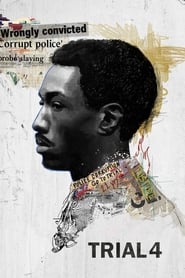
Trial 4
Λήψη English Υπότιτλων
Πληροφορίες έκδοσης
Ετικέτες
Download English Subtitle Files for Mobile (8)
Προεπισκόπηση υποτίτλων English
Οι πρώτες 200 γραμμές.
Court, all rise.
Suffolk County Court is open.
Please be seated.
I worry that my decision in this case, which of course I stand by…
has, in the eyes of the public, reflected negatively
on some very honest and honorable police officers
who were involved in the investigation of this case.
My decision is not intended in any way to impugn their reputation.
Having said that, I feel strongly about what I said in my decision
that-- that your client, Mr. Ellis, did not get a fair trial.
Sean Ellis was just 19 when he was arrested
and is over 40 years old today upon his release.
Ellis was just a teenager
when he was charged with the murder of detective John Mulligan back in 1993.
Boston detective John Mulligan was in his vehicle
when he was shot five times in the head
and robbed of his service weapon.
Sean Ellis faced three trials, two of which were mistrials,
his fourth most likely a year away.
It's laughable to think the court thinks
that this guy deserves another chance.
He's been in jail for 21 years, 7 months.
My brother's been dead for 22 years.
You know, nobody's giving him another chance.
This guy's a savage.
I am convinced without a shadow of a doubt that he is innocent.
I'd like to thank the Honorable Judge Ball for giving me the opportunity of freedom.
I'd like to thank my family and my supporters,
everybody that helped me and stood by me and helped to raise the bail.
It's a great day for him and for his family.
Um, he's tasted his first taste of freedom in 22 years. It's just great.
Do you think Sean's fourth trial will be a fair one?
I will do everything in my power to make sure Sean gets a fair trial.
Everything in my power.
There was a systematic problem with the Boston Police Department
in the late '80s, early '90s,
and I think it screams out for an investigation
to determine how this could have happened to someone like Sean
because if we don't figure out how it happened,
we can't ensure that it won't happen again.
For my fourth trial, I want to be vindicated.
I want to be exonerated.
But I won't be the only one that's on trial.
The Boston police will be on trial.
I want the jury to have the opportunity to hear everything
that went on in the case, everything.
I definitely want the world to know that-- that I'm innocent.
Do you know what he was charged with?
My name is Rosemary Scapicchio.
I am a criminal defense attorney here in Boston.
My name is Sean Ellis, and I am 44 years old.
I went to prison for 21 years, 7 months and 29 days,
uh, to be exact.
Um, when I talk, I typically round it out to 22 years.
So, I remember going to see him the first time. I remember him coming in.
He was sweating. He was nervous,
um, and shook my hand and started stuttering.
And I was thinking, "Huh."
But, um, so I got the nickname Studda, um,
because, um, I had a very, very bad speech problem.
There was me and another guy named Sean.
Uh, he's bigger than I was.
Uh, so he said, "Yeah, I'm Big Sean and you're Little Sean,"
and I'm like, "Nah, I'm-- I'm-- I'm not going with 'Little Sean.'" Um…
And so, um, Lorenzo said, "Man, I got the perfect nickname for you, man."
He said, "We gonna call your ass Studda."
And, um, it just stuck.
Um, so, I listened to him for a while. I took a ton of notes.
Um, and I walked out of there thinking, "Doesn't seem like a cop killer."
Once I decided to take Sean's case, I looked at everything and I said,
you know, "Something just doesn't fit…" It's a puzzle,
and the pieces weren't fitting together the way I thought they should.
The way that the police said it happened didn't make any sense.
I thought he walked into something, and he became sort of the perfect suspect.
Three forty-nine and 50 seconds.
Boston Police 281.
Yes, sir, this is Walgreens Roslindale and…
Well, there's a policeman we have outside for a detail.
I think he needs assistance outside.
It's an emergency. He may have a bullet in his head.
At Walgreens? We'll get to it right away.
All right. Bye.
Two-two, I'm arriving at Walgreens.
433. Over at the Walgreens, sir.
On my way.
That night, I was on the schedule working weekends.
A little after 4:00, 4:15,
I got a call. I answer the phone,
and, you know, the overnight editor said,
"I just heard something very weird on the police scanner."
And the thing about the police scanner
is most of the time, you can't understand a word they're saying,
and most of the time, it's, like, boring stuff.
But you know when something is happening when cops start huffing and puffing
because the adrenaline's going, and they're running or they're just excited.
And when they don't want you to know,
then they change to a channel that we don't necessarily have access to.
Okay, look, no further radio transmission
relative to that incident that you're all investigating
except on channel seven. Is that understood?
I said, "Did you hear an address?" He said, "I heard an address
on American Legion Highway, but there's nothing there."
So, I just set off and said, "Okay, I gotta find this thing."
Um, if a cop has been shot,
there is no way I'm going back into The Globe
and--and--and looking at anybody and saying, "I couldn't find it."
There was no way that was gonna happen.
So, I'm at a red light, I'm looking around,
and I feel something coming up behind me.
Whoosh! Just-- just like that.
And I recognized it as a Crown Vic,
and I said, "Ha, ha, ho, I know where that guy's going."
I just picked up on the scanner, uh, the Boston Police Department.
They are pushing an ambulance for a-- an officer shot.
They've given the location as 670 American Legion Highway.
I'll be out of the car here, and we'll see what's going on.
-Dennis, how are you? -Thanks for getting my hopes up.
- What's up? -Do you want to step back?
- He was answering. -Uh.
We're up here in the Hyde Park-Roslindale section of Boston. Uh…
We have a report of a Boston officer who's been shot. Uh…
I'm declining to identify him, at this point,
uh, but we do know that he suffered a gunshot wound to the face.
Uh, we understand that the officer is, uh, is dead at this time,
and, uh, there is an unconfirmed report that his firearm is missing.
So, uh, that's all I can tell you.
I knew the officer, uh, as well as anybody else did here,
so I don't know what else to tell you, so…
Police Detective Mulligan was shot five times in the face
as he slept in his car on a security detail.
He was in his vehicle when he received five gunshots in the face.
Mulligan was shot five times in his SUV outside of a Walgreens in Roslindale.
Ladies and gentlemen, for those who don't know what's gonna happen,
the police commissioner will speak first.
Detective Mulligan was a veteran Boston police officer,
a much-decorated Boston police officer.
He was performing a paid detail at a Walgreens, uh, pharmacy.
The officer was found in the driver's seat of the vehicle.
He was removed to this hospital
where he was pronounced dead this morning at 4:18 a.m.
Detective Mulligan had been shot a number of times in the head.
It is quite clear this was a cold-blooded, premeditated murder
of a Boston police officer
who was shot at point-blank range a number of times.
Might be descri-- It has some elements
that might, uh, lend one to describe it as an execution,
an assassination.
The gun was placed up his nose. That was really disturbing.
I remember just thinking, at that moment when I heard about the wounds
and the-- just the way it-- way he was killed,
that you'd have to be pretty a cold dude
to-- to sit there and-- and pump bullets into somebody's head like that
at-- at very close range.
Yeah, it-- it-- it sounded like an execution to me.
But again, we wouldn't know that until we had all the facts,
and unfortunately, in homicide, we don't speculate.
You know, uh…
There was a fellow, Richie Ross, who I'll attribute it to,
said, "If it's not written down, it didn't happen."
Now, the detectives assigned to this task force
are out interviewing people, canvassing areas, checking into the background,
cases that Detective Mulligan has been working on.
What we're trying to do is determine the facts and circumstances
which led up to the shooting of detective John Mulligan this morning.
John had arrested an awful lot of people over the years. An awful lot of people.
If you want to define him as an enemy that somebody he arrested,
yeah, a lot of people are probably still in state's prison today
because of John Mulligan.
I remember thinking that would be a long suspect list.
There were a lot of criminals who would want to kill him.
One Boston police officer said,
"If there was a list of the ten most likely officers to be killed,
John Mulligan would have been at the top of the list."
Today, the list became real and Mulligan was at the top.
When Detective Mulligan was murdered, I remember the sort of feeling in the city
because there was a police officer who was killed.
Everybody was rallying around the family.
Everybody was rallying around the police department at the time.
And I remember thinking to myself,
"This is going to be a really tough case for whoever gets, uh, arrested,"
uh, because it's a cop killing. It's always very difficult.
And I'm telling you, it seems to me that rules go out the window,
uh, when you're dealing with cop killing.
The entire force is-- is behind the commonwealth's case.
So, you're not just fighting the prosecutor and sometimes the judge,
uh, it's also the entire police force that-- that will vilify you,
will vilify your client.
It's a tough case. It's always gonna be a tough case.
The Thin Blue Line wasn't so thin
and a lot longer than the eye could see.
From Boston to Worcester to Springfield and New York City,
thousands of police officers, most of whom had never met John Mulligan,
escorted his family and the hearse carrying his body
to Holy Name Church.
Anytime a policeman gets killed in the line of duty, there's a big turnout.
You get police that come from all over the country,
other countries.
Cop funerals are big.
Lot of cops from different agencies outside. Cops cling to one another.
There's a great camaraderie. You know, blue.
Trial 4 subtitles in other languages
More English subtitles for Trial 4
- Trial 4 S01E01 08 Full season WEBRip x264-ION10 · 17 downloads · 2020-11-12
Σχόλια
No comments yet. Be the first to leave one.