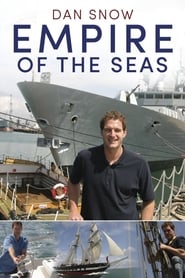
Empire Of The Seas
Elŝuti English Subtekston
Eldonaj informoj
Etikedoj
Antaŭrigardo de English subtekstoj
La unuaj 200 linioj.
On a blustery November day four centuries ago, the English were preparing
themselves for one of the greatest national celebrations ever seen.
Beneath the dome of St Paul's they gathered to celebrate
their tiny nation's victory over the world's greatest superpower, Spain.
On the walls hung the captured ensigns of the Spanish fleet, that was even then being dashed
on the rocky shores of Scotland and Ireland.
The year was 1588 ...
..and the battle was the Armada.
Today's celebrations mark the centenary of the Fleet Air Arm, and it still seems
like the most natural thing in the world to devote a great cathedral to the Royal Navy,
a tradition that began on that autumn day 400 years ago.
1588 marked a turning point in our national story.
Victory over the Armada transformed us
into a seafaring nation and it sparked a myth
that would one day become a reality, that the nation's new destiny,
the source of her future wealth and power, lay out there on the oceans.
This series tells the story of how the Navy expanded from a tiny force
to become the most complex industrial enterprise on Earth.
Of how the need to organise it laid the foundations of our civil service and our economy.
Of how it transformed our culture, our sense of national identity
and our democracy.
It's a story of heroism and innovation,
but also of disasters and dark chapters in our history.
It's the remarkable story of a 400-year struggle, fought at sea
and on land, of how the Navy drove Britain into the modern age and changed the world.
Clear the hatch! England's extraordinary journey
from a third rate nation to global superpower
began on a clear October day 20 years before the Armada.
OK, bring on the beer.
Not that anything so grand was on the minds of the sailors
who scurried to and fro in the old harbour in Plymouth,
making a small fleet of six ships ready for sea.
The gangplank groaned as last minute supplies were brought on board.
Large barrels of fresh water and beer and even whinnying goats, and chickens as well.
When anything was brought on board they were lashed down
to the bulkheads in expectation of a bumpy passage.
The two men in command were cousins.
On that fine autumn day, they were thinking not about making war but about making money.
The older of the two was John Hawkins who, at the age of just 35,
was already Plymouth's leading merchant venturer.
The younger was his cousin,
a poor relation who'd grown up with Hawkins, 27-year-old Francis Drake.
They were leaving behind a poor, insignificant town on the edge of a poor, insignificant country
which itself clung to the fringes of Europe.
But this place had one thing going for it — this,
one of the finest natural harbours on Earth, gateway to the Atlantic and, beyond that, the New World.
First discovered only 60 years before,
the New World of the Americas offered wealth beyond imagining —
if they could get there and bring it back, that is.
A round trip of 12,000 miles.
No mean feat in the 1560s.
Stand by. Two, six!
Two, six! Two, six!
Take a break.
Is that halfway? Yeah. You're kidding me! No!
This wonderful replica of the Tudor ship, The Matthew,
gives me a strong sense of what life might have been like on board.
Sailing one of these you're just so struck by the ingenuity, aren't you?
The sort of combination of wood, rope, bit of metal,
and you can sail round the other side of the world.
Among the profit-hungry investors in the venture was the Queen herself.
She'd lent two ships, the Jesus of Lubeck and the Minion.
Both were old, spent and rotten, as were most of the vessels in her tiny navy.
The crew, too, would get their share of the booty.
All were young. Some were just boys, among them Hawkins' nephew Paul
and the 13-year-old Miles Philips,
whose journal relates the terrors of frequent storms and leaking hulls.
There were no creature comforts for those on board either.
The single-minded Hawkins made his men sleep on deck.
Because every inch of hold space was reserved for the cargo that would make the cash.
On that expedition, the cargo was a human one.
Drake and Hawkins have the terrible distinction of being the first Englishmen
to bind African men, women and children in chains
and transport them in the holds of ships like this.
They were slave traders.
Six weeks out of Plymouth, they picked up 500 slaves in Guinea then headed west.
Few Englishmen had ever made this journey.
England had been slow to spot the opportunities of the New World and the Spanish had got their first.
Now Spain jealously guarded a lucrative American empire stretching from South America
through the Caribbean to Mexico and further north.
Drake and Hawkins just wanted a little slice of the action.
Nip in, sell a few slaves and return home with a hold full of silver.
The problem was that the Spanish had banned foreigners from trading within their lucrative empire.
Hawkins had managed it once or twice before and got away with it.
He hoped to do so again. But this time would be different.
In the Caribbean they traded their human cargo for silver, gold and pearls, then turned for home.
But it was hurricane season.
Storms drove them to San Juan on the coast of Mexico,
where a powerful Spanish fleet first promised them safe passage
then decided to teach them a violent lesson.
In the fight that followed, Hawkins lost three of his ships,
including the Jesus of Lubeck and 200 men killed or captured.
He managed to escape on the Minion,
and with him was the 13-year-old Miles Philips,
who watched what happened to the prisoners.
"They took our men ashore," he wrote,
"and hung them up by their arms until blood burst out from their fingers' ends."
And the moment of personal tragedy for Hawkins —
he realised that his nephew Paul was among them.
Disease and famine followed and by the time they limped home
fewer than 20 men were left alive aboard the Minion.
But, for the survivors, this disaster acted
not as a deterrent but as a spur to action.
The experience marked Drake and Hawkins for the rest of their lives.
Neither would ever forgive the Spanish for their treachery,
and they threw themselves into a bitter, personal crusade against Spain.
It was fuelled by the heady mix of a lust for cash, religious zealotry
and a desire for personal revenge.
In time, this crusade would become a national enterprise
and in doing so it would forge a new idea of Englishness.
But if England's seafarers were to have any chance of catching up with Spain,
they would need better ships to do it.
Hawkins' answer was the race-built galleon,
his radical breakthrough in warship design,
preserved in these original drawings.
By using maths and geometry instead of rule of thumb,
by cutting down high decks and by streamlining hulls,
Hawkins produced the fastest ships of their kind anywhere in the world.
The first was built in 1570 at the Queen's dockyard in Deptford.
More were to follow.
With greater space for guns, they were perfectly designed for war.
But 20 race-built galleons, the most the Tudor state could afford,
would not be enough on their own.
Hawkins landed a job on the Navy Board, the committee that ran the Queen's modest fleet.
And, in 1582, the board commissioned a series of extraordinary surveys
preserved here at the National Archives.
I've read about this but never seen it before.
This is a list of every ship in England compiled under Hawkins' leadership.
And as you can see, it's broken up by county.
Here Norfolk, Suffolk, absolutely meticulously written down It's beautiful.
Every single ship, with the tonnage here, so these ones are St Mary, the Solomon, 200 tonnes.
Absolutely incredible.
As we go further on, here, they didn't just list the ships,
they list the masters and then the number of mariners
and seamen there are as well for each port.
So here we go. In Cornwall, there are 108 masters,
626 mariners and 1,184 seamen.
So precise. Incredible.
This information is being gathered centrally in London at the beck and call of the Tudor state.
It's actually very moving seeing the names of people that lived all those centuries ago.
Once you have a list like this, when war comes, when there's a national emergency,
you can knock on the door of men like John Cooper and Peter Dolomore
and say, "Right, mate, you're coming in the Navy to protect the country."
It does make you wonder whether men like William Bennett, William Mort
from Littleham, whether they end up fighting against the Spanish Armada.
And this is just fantastic. You get right to the end.
The total number of mariners available to the Tudor state,
16,259.
Men that could be mobilised to protect little England
against the greatest superpower in the world.
Drake, meanwhile, was taking his revenge on Spain in a much more direct fashion.
On an April day in 1587, the residents of Cadiz woke to the sound of gunfire.
By the end of the day, over 30 Spanish ships lay at the bottom of the harbour
and Drake's fleet had sailed away with holds full of treasure.
It was the culmination of a ten-year pillaging spree
that had seen Drake circumnavigate the globe,
attack Spanish colonies and steal their loot.
Belligerent, venal, a peerless seafarer,
he was Protestant England's new hero.
In Catholic Spain, he was anything but.
Standing here, looking at it from the Spanish point of view,
the English appear little different from Vikings.
Men who came from the north in ships bent on plunder and destruction, to whom nothing was sacred.
The most infamous of all was Drake,
still hated, still known as El Draque, The Dragon.
And now The Dragon had pushed the King of Spain
to take his own terrible revenge on Drake and England.
That revenge came in July 1588.
When the Armada appeared off England's coast,
one eye witness wrote that the ocean groaned under their weight.
It had taken Spain three years and a titanic amount of silver to assemble it,
while the English fleet had been mobilised in just three months.
The battle raged for several days.
But the leadership of men like Drake and Hawkins had given the English a decisive edge.
People have tended to attribute victory over the Spanish Armada
to the courage of the English sailors
or the intervention of divine wind.
But the Spanish fought equally bravely,
and at different stages of the campaign the wind favoured both sides.
The real reason is a lot less glamorous, it's the inspired organisation of Hawkins.
He ensured that England had a fleet of fast, manoeuvrable ships,
each of which carried something like three times the weight in armament of its Spanish equivalent.
He laid the foundations for modern naval warfare,
bringing ships, men and cannon together
in a decisive combination.
So when the great and the good arrived in their finery at St Paul's on that day in November 1588,
they were celebrating not just a victory,
but the beginning of a new future.
The Queen, as one author wrote, was carried in a golden chariot
through her city of London in robes of triumph ...
while the still bloody heads of Catholic traitors,
executed for praying for the Armada's success,
stared down from spikes nearby.
The Tudor PR machine went into overdrive.
A new portrait showed the Queen triumphant, her hand on a globe,
the Spanish ships crushed on the rocks behind her.
The scale of the victory expanded the horizons of a small, impoverished nation.
One commentator wrote,
"The sea had become a means to seek new worlds,
"for gold, for praise, for glory."
More English subtitles for Empire Of The Seas
- BBC Empire of the Seas 2 The Golden Ocean [2010 720p HDTV x264 AC-192] · 31 downloads · 2010-04-10
- BBC Empire of the Seas 4 Sea Change [2010 720p HDTV x264 AC-192] · 34 downloads · 2010-03-16
- BBC Empire of the Seas 3 High Tide [2010 720p HDTV x264 AC-192] · 32 downloads · 2010-03-16
Komentoj
No comments yet. Be the first to leave one.