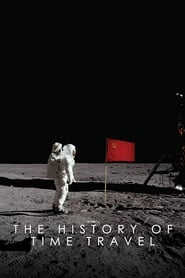
The History of Time Travel
Elŝuti English Subtekston
Eldonaj informoj
Etikedoj
Antaŭrigardo de English subtekstoj
La unuaj 186 linioj.
You're watching, History Television.
In 1895 writer H.G. Wells published his science fiction masterpiece "The Time Machine."
This novel would be one in a long line of literature, motion pictures, and television shows
depicting man breaking the laws of time and space to travel beyond his present existence.
One of the great struggles, if not the greatest struggle, has been man versus time.
I mean, we always want more.
We are prisoners to time. Mankind has always been fascinated with the idea of escaping from it.
To be able to go back in time and fix a mistake or change the outcome of a future event.
It's a tantalizing prospect.
Could it even be possible? Well what did Einstein think?
Due to the extraordinary work of two men,
Edward Page, his son Richard,
and the personal tragedy that drove them, time travel became a reality.
Anne told me that Edward worked for the government,
but even she didn't know what he did.
Time Travel? I always that that sounded like a bunch of bull----.
I can only imagine what it must have been like...
...to have been there when he actually did it.
We're no longer bound to the rules of time,
but what of the rules of morality?
It changed everything.
Storytellers hold a special place in the history of mankind.
From the fables of Aesop to the Brothers Grimm,
we look to storytellers to give us truth about human nature and our place within the world.
To discuss the genre of time travel,
it's place within science fiction, and how it ultimately became a reality,
we talked with noted author and screenwriter Kevin Ulrich.
Ulrich is the creator of the popular time travel series "Nic of Time."
We meet up with him at a book signing in Los Angeles, California.
Time travel had already been a popular genre even before science fiction.
You have fantasy stories where someone is magically transported to the past
like Mark Twain's "A Connecticut Yankee in King Arthur's Court"
or they wake up in the future like "Rip Van Winkle."
Even Charles Dickens' "A Christmas Carol" has elements of time travel with Christmas Past, Present, and Future.
To discuss the history of science fiction becoming science fact
we talked with Professor Edward Yarborough of Harvard University.
Prof. Yarborough is a professor of American History
and one of the world's foremost authorities on the history of time travel.
Before time travel became a reality mankind was always intrigued with how it could possibly work
and many ideas and theories were purposed.
For many years I subscribed to the multiverse theory.
Which is that there can be numerous timelines
and parallel universes running concurrently with our own.
For an example...
...if I go back in time and stop the Lincoln assassination
I would immediately create a new timeline which branches off from the old one.
It is within this timeline that Lincoln would live.
If I were to travel into the future,
it would be the future of that new alternate timeline not the one I originally came from.
Another possibility was the fixed timeline theory.
Now in the fixed timeline theory if you were
to go back in time and accidentally kill someone you haven't altered the course of history,
you were already a part of it.
You were always meant to go back in time and accidentally kill that person.
Your future was already a part of the past, and you couldn't change it.
To discuss the hard science of time travel and the possibility of paradoxes
with meet with Dr. Jack Fincher of Yale University.
Dr. Fincher is an astrophysicist specializing in quantum mechanics
and the author of two New York Times bestselling books on the subject.
An interesting side effect to the fixed timeline theory is the infinite loop.
Now for example, say we take my grandfather's pocket watch...
...lets say I go back in time and I lose the watch.
Later on my grandfather finds the watch and many years later gives it to me.
Now the question becomes, where did the watch originally come from?
Had I not gone back in time and lost the watch
my grandfather never would have found it in order to give it to me,
my grandfather couldn't have given it to me if I hadn't lost it.
So the pocket watch has now become stuck in an infinite loop.
The final aspect of time travel we will explore is the moral implication of altering time.
We meet with philosopher Dr. Adam Lindquist,
international lecturer and a highly regarded voice in the world of ethics.
Most people had a basic understanding of what time travel was,
or what it could be, from movies, TV shows, and books.
They also realized the moral can of worms it would open.
But we were all unprepared for when it actually happened.
August 2, 1939, Physicists Leo Szilard and Albert Einstein,
concerned by Nazi Germany's research into nuclear weapons,
send a letter to American President, Franklin D. Roosevelt.
The "Einstein-Szilard Letter" warned President Roosevelt about the Nazi nuclear program
and urged him to create our own program to counter the threat from Germany.
One month latter Nazi Germany invades Poland
and plunges Europe into war.
But it isn't until early 1942, when America has entered the war,
that research into our own program begins in earnest.
However by this time Adolph Hitler has already turned his attention to something beyond nuclear fusion.
In July of 1942 Einstein writes another letter to President Roosevelt.
Einstein was made aware, by sources back in Germany,
that the Nazis were experimenting in the manipulation of time and space.
Einstein was very concerned about the Nazis actually becoming successful in doing this.
He considered it and even bigger threat then the Atomic bomb.
After receiving Einstein's letter President Roosevelt meets with him in secret.
Soon after the president establishes a top secret
research initiative code named "The Indiana Project".
The project's main objective: To produce a machine
capable of traveling through and altering time.
The Indiana Project begins in secret in a small facility just outside Portland, Indiana.
Initially the program consists of a small group of scientists
but it soon expands to included several hundred workers.
Only a select few know about the project's true objective.
Washington was spending millions of dollars
to fund the Indiana Project over the course of the war
and the Pentagon was not happy with the lack of, tangible, results.
By 1944 the tide had turned in Europe and an Allied victory over Nazi Germany was inevitable.
To offer insight into the Indiana Project's importance
and place within the Pentagon we talked with General Douglas Sanborn.
When Germany fell and the Nazi threat was subdued
the Pentagon couldn't decide what to do with the Indiana Project.
The project had it's supporters but some saw no reason why they should continue funding it.
They felt the money could be better spent in preparation for the invasion of Japan.
On August 6, 1945 the United States drops
an atomic bomb upon the Japanese city of Hiroshima.
Steadfast the Japanese government refuses to surrender.
Three days later a second bomb is dropped over Nagasaki.
On August 14th Japan surrenders and the second world war ends.
With the war now over many government projects are either shut down or severely cut,
but the Indiana Project manages to survive due to it's supporters in the Pentagon.
They argued that the research could be useful down the line.
The Indiana Project's budget is cut and many of the scientist leave for other employment.
Among the researchers who remains with the project is a young physicist named Edward Page.
Edward Charles Page was born in Boston, Massachusetts, on March 3rd 1916.
He grew up in an upper middle class family the son of a doctor and socialite mother.
He developed a love for reading, especially the science fiction stories of Jules Vern,
H.G. Wells, and the adventures of Robert Louis Stevenson.
His love of science fiction would lead to an interest in becoming a scientist himself.
After graduating high school Edward enrolled at MIT.
He graduated from MIT in the Spring of 1942,
he was immediately offered a job from the government to work at the Indiana Project.
In addition to government resources and equipment, he was offered a full salary
and a house for both himself and his wife Anne.
Anne Havard was born in Paterson, New Jersey on May 25th, 1921.
A precocious child Anne had a love of nature and science at an early age.
Anne moved with her parents to Boston when she was around six years old.
She attended Brighton High School, graduated valedictorian
and then was accepted to MIT in the fall of 1939.
Anne was working as a research assistant at MIT when she met Edward.
Spending long hours in the lab together their relationship soon turned to romance.
Edward and Anne would marry in June of 1941.
When Edward was offered the government job Anne was pregnant and not in the best of health.
She had wanted to stay on the East coast to be near her parents,
but being the devoted wife she went with Edward to Indiana.
She hoped the war would end quickly so they could come home.
Soon after arriving in Portland, Anne gave birth to their son, Richard.
Due to complications the birth had been quite difficult and Anne remained bedridden for several weeks.
Edward wasn't particularly good with the baby
and after a few days Anne called me to come stay with them until she was well.
Anne's health improved and she grew fond of motherhood and raising young Richard.
When the war was over Anne hoped they would move back to Boston.
But in early 1946 Edward accepted the position of head researcher for the Indiana Project.
He took it very seriously and devoted himself completely to it,
and as a result his relationship with Anne would begin to strain.
Edward was spending more and more time in the lab.
Due to the limited funds he ran a very tight ship
and Edward ended up doing most of the lab work himself.
Anne wrote me a letter in the fall of forty-eight about how lonely she felt.
Edward was spending more time in the lab and Richard had started elementary school.
She confided in me that she hoped to have another baby.
Unfortunately another child was not in her future.
In the summer of 1949 Anne had become sick and was bedridden once more.
At first Anne just thought she had the flu and so she stayed in bed,
but Edward was never really good at taking care of anyone especially when they were sick
so Anne sent for her friend Dorothy to come out and help.
I came as soon as I heard.
When I got there she was already frail and was having difficulty breathing.
I just had a feeling she wasn't going to make it though the night.
I tried to call Edward at his office but there was no response.
I decided to call an ambulance to take her to the hospital.
Apparently Edward had taken the phone off the hook so that he wouldn't be disturbed.
So Dorothy sent her husband Mike to the Indiana Project to get Edward
and bring him to the hospital.
By the time Mike drives him to the hospital Anne had already died.
Edward was devastated.
It wasn't until after she died that we found out she was suffering from polio.
Dr. Helen Cagle of John Hopkins University is a specialist in the treatment of infectious diseases.
We met with her to talk about the polio epidemic in America during the 1940s and 50s.
In the summer of 1949 there was a serious polio epidemic that swept through Indiana.
All public activities and gatherings were banned to prevent the spread of the disease.
We think of polio as something affecting young children, and infants,
but adults could contract the disease as well.
Unfortunately Anne was one of the unlucky ones who did.
Edward had no idea how sick she really was.
I told him he wasn't home enough to notice.
I thought Anne's death would change him but it only made him worse.
Haunted by the death of his wife Edward completely withdrew from everyday life
and spent his time in the lab.
Edward blamed himself for his wife's death.
I mean here he was a man of science and he couldn't even save his own wife.
The History of Time Travel subtitles in other languages
Komentoj
No comments yet. Be the first to leave one.