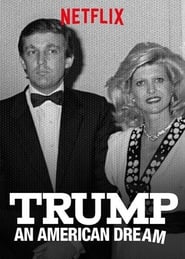
Trump: An American Dream
Elŝuti English Subtekston
Eldonaj informoj
Etikedoj
Download English Subtitle Files for Mobile (4)
Antaŭrigardo de English subtekstoj
La unuaj 197 linioj.
Mr. Speaker, the president of United States.
The city was sort of like very tense, you know.
This is my police academy photo.
I'm up there. Top row, all the way in the back.
New York had on average 3,000 homicides a year.
- Got the knife? -That's my knife!
-Shut up! -
Things were grim.
Some people once called New York "Fun City."
Now the police in New York are calling it "Fear City."
You have to be careful and watch where you go now.
How late you stay out, and...
It scares you.
The city was in dire, dire need.
I was excited because...
I recognized there was something to write about every day.
We got a man up there behind...
I was a political reporter for the New York Post.
The business community thought that politicians had ruined the city...
that they didn't know how to govern the city.
Politicians with money are like kids with marijuana.
And you have to tell them, you know, "This is all you've got."
New York, within a matter of weeks, may be bankrupt...
...'cause eight million people have taken out far more
in social services and welfare than they've contributed in taxation.
They thought that they could overspend
and just roll over the debt to the following year and the following year,
and the last mayor of the city would be caught with it.
New York's Mayor Abraham Beame
led a delegation up to Washington today,
seeking federal financial aid for New York.
The City has done all it can.
Thousands of City employees
have already been laid off.
Nineteen thousand municipal workers lost their jobs today...
Nineteen thousand. Yes. I was one of them.
Pistols and badges were turned in at the precinct houses
by the policemen who were laid off.
This is comparable to laying off soldiers during a war.
I mean, that's how ridiculous it is.
It's a war out in the street.
Everyone deals with stress differently.
Marriages dissolve because of the stress.
I actually know, personally, of two people that I worked with
who committed suicide during that time.
I lost all faith in the job.
How can you work when you don't know
whether you're gonna get paid on Friday? Two weeks ago, they stopped the checks.
Three thousand sanitation workers were laid off...
There's about 30,000 tons of garbage sitting uncollected
on the streets of New York today...
Mayor Abraham Beame asked the city's largest banks for help.
Two weeks ago, he asked President Ford for help.
Tuesday, he flew to Albany to ask the state legislature for help.
- -They've all said no.
It was a feeling of hopelessness, that this is the way it is...
and nothing will get better.
Hey, yo! Save that shit for me!
People were hoping that out of this crisis would come change.
The great American Dream has always been to become a millionaire
for the people who have nothing.
-Do you think that's a reality today? -
Excuse me. I can hear all of you over there and I can't concentrate,
so could all of you please disappear?
Is there anything you can't have?
Well, I believe if you think that you can't have it, you probably won't have it.
They say that the human mind is only using one percent of its potential,
but if you can get a little bit more out of it than the 1%,
I think you're gonna be able to do pretty much whatever you want to do,
if you have the basic ingredients going in.
I keep hoping that something will happen
so that we will be safe from this, uh...
catastrophe.
My father was very successful
and my father built homes and apartment houses, and did very well.
And I was brought up in the construction business, so to speak,
and I enjoyed it from day one.
-Are you like your dad? -Well, I hope so.
I have a very wonderful father, and I would hope
I'd be somewhat like him.
-What's he like? -Strong, dynamic...
Fred Trump was stern.
And I think he was a taskmaster to his son.
I was a, um... a baby journalist at that point.
My intent was to write about politics.
I was angry, I was a kid--
I was in my twenties, and I was... I was angry.
My parents were a working-class family from Coney Island, Brooklyn,
and they lived in Trump Village.
That's where Fred Trump, the father, made the money for the family.
Many working-class people lived in these high rises with long, low dark guarders.
My father had a little sporting goods store,
and he would often go around the corner to Gargiulo's restaurant.
And Fred Trump was there every day with his assistant having lunch.
And he would say, "Hi, Pat," my father-- That's how they knew each other,
just first name. They didn't-- Never talked.
But I was a Daily News columnist at the time with my picture in the paper,
so Fred Trump would whisper to his son, who would often have lunch with his dad...
"That guy over there, Pat, his son writes for the Daily News."
And Trump said, "Oh, I know him. I know him."
The 24-second clock, we're down to six seconds.
I'm a New York Knickerbocker basketball fan and he was too,
he would go to games. And he sees me one year at a Knick game...
He says, "Hey, Kenny!" I don't know anyone who calls me Kenny.
And he says, "Hey, Kenny, how's your pop?" And I said, "Actually-- Oh, he died."
"Oh, I'm sorry to hear that."
The next year at a Knick game, "Hey, Kenny, how's your pop?"
I said, "Actually, he died."
The third year he says, "Hey, Kenny, how's your pop?"
I said the same... and walked away.
Could you bring me a mirror?
- There you go, your mirror. -Thanks, honey.
I met Donald in about '74.
I met him at a club called La Club,
which was a private club in the Upper East Side.
I remember distinctly the first time that I saw Donald...
and I-- I spotted him immediately. I thought he was extremely attractive.
My kind of guy. He was about 6' 3", blond hair.
He had a captivating air about him.
And that's how Donald and I became friends.
And I knew immediately Donald had big dreams.
I always liked people that, you know,
think outside of the box and think bigger than life.
His family was in the building business, but not in Manhattan.
You wanna do something small, you do it in Brooklyn.
You wanna do something big, you do it in Manhattan.
There's no comparison.
For Donald, it was important to become a...
upscale version of his father.
A major builder, but in Manhattan, with the big boys.
I'm a positive person, so I look for solutions, not for problems.
September of 1975, I saw the listing for a chauffeur-bodyguard.
It seemed interesting, so I went out to Mr. Trump's Brooklyn office...
and I walked in, and there was about six other, uh...
Uh. Police officers in my situation also waiting for an interview.
When I finally met him, I came into his office...
firm handshake, he always had a firm handshake.
And one time he squeezed my wife's hand too hard.
And...
we sat down and we talked, and he asked me about my time in the police department,
asked me about my time in college.
He asked me about my time as captain of my school karate team.
And, uh...
And meanwhile, I'm just looking at this office and saying,
"Wow, this guy got it going on."
I remember the plate number. That was the car, "DJT."
And his father's car I think had "FT."
Yeah, it was 40 years ago. Wow, yes.
I was grateful for the job,
and I was curious about the things that were going to happen.
He needed a footprint in Manhattan.
Everyone yearns to get close to the mayor.
They'd figured that's the way to do business.
We didn't write about it.
Wayne Barrett of The Village Voice wrote about it.
Donald, he was a rookie and I was a rookie.
Donald was the face of Fred, bringing the company into Manhattan.
Dark times are times of great opportunity...
- -...for people of great stealth.
Desperation, it's the land they inherit.
Abe Beame, the mayor of New York,
was as close to Fred Trump as you could possibly be.
- -Abe Beame is waiting on the steps,
to say to Fred Trump and Donald Trump, whatever they want, they get.
Beame is New York City's 104th mayor.
He's also the shortest mayor in New York history, five feet two inches.
Well, I liked him mainly because
he was the only guy shorter than me in government. Uh...
I hadn't heard of the Trump family.
The first time I had heard of it was when I met Donald Trump for the first time.
If the City would gather around with us,
we can produce with a lease guaranteed by the state of New York...
I mean, he was extremely presentable, full of good cheer, full of optimism.
It was very refreshing to see somebody come in and have ideas
and try to move things forward.
Where it really started to gel was when he came in with the Commodore Hotel project.
The Commodore Hotel, once one of the finest in New York,
is closing its doors next Tuesday because of financial losses.
I feel very bad. The-- The whole hotel going down the drain.
- Forty-five years of service! - ...showing 340 dollars.
If we could just stop playing around
and get the politicians, the City officials, who have generally...
His father's name opened the doors for him.
...especially very good for sales...
The Commodore Hotel project. I was there from the beginning.
I remember going to City Hall.
We had the easel to help carry in...
You know, the big cards that you take down one at a time.
This is the easel.
He walks into my office, unannounced, and he has these boards with him
with renderings of the Commodore Hotel.
And he sits down and starts pitching me as if I'm the mayor
and he's pitching me on the Commodore Hotel.
And then after he gets me all excited about what a great project this is,
and how it's going to stave off a disaster,
'cause the Commodore was just about to close,
he says, "But I can't do this project," because he needed 70 million dollars.
Trump: An American Dream subtitles in other languages
Komentoj
No comments yet. Be the first to leave one.