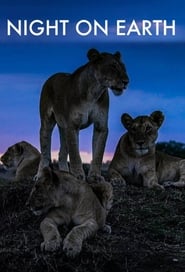
Night on Earth
Descargar subtítulo en English
Información de lanzamiento
Etiquetas
Download English Subtitle Files for Mobile (6)
Vista previa de los subtítulos en English
Las primeras 149 líneas.
Darkness...
...brings danger.
And on the Earth’s most exposed plains...
...there’s nowhere to hide.
Using new technology,
we can see into the blackness.
To discover a hidden side to the world's great deserts...
and grasslands.
Nocturnal worlds...
full of fear...
...and wonder.
Where life...
and death...
...is governed by the light of the moon.
Cheetahs are known as solitary,
daytime hunters.
Sunset was thought to signal the end of their activity.
But this gang of cheetahs are just getting started.
What they do after dark has never been filmed.
Until now.
The full moon.
Just enough light for ultra-sensitive cameras
to reveal the African savanna...
as if it's day.
These five males are heading out on night patrol.
Only the stars in the sky and the lights of Maasai villages
show that it’s night.
Together, they can better defend their territory.
And take on larger prey.
With five mouths to feed...
they're driven to hunt...
deep into the night.
This is the gang's most accomplished hunter.
He can sprint at over 100 kilometers an hour.
But he needs light to see his prey.
The bright nights around the full moon are his best chance.
His speed is explosive.
But only over short distances.
He must get close.
The light of the full moon helps cheetahs hunt.
But it also exposes them.
Most hunts end in failure.
They must keep trying.
Few people believed that cheetahs could hunt after dark.
Now... there's no question.
Darkness brings opportunity.
But it also brings danger.
Seven times heavier than a cheetah,
and with vision six times more sensitive than our own,
lions are the kings of the night.
They can kill a cheetah.
But they have to catch them first.
The cheetahs’ nocturnal success depends on the moon.
Hunting won't be this good again for weeks.
There are only a few bright nights every month.
Full moonlight is 400,000 times dimmer than the sun.
But still enough to see by.
Over 14 nights, its brightness fades.
Until the new moon,
when nights can be 1,000 times darker.
On the open plains, each night brings a different challenge.
The African savanna is getting darker.
A heat-detecting thermal camera can see into the blackest of nights.
And reveals what’s hiding in the darkness.
A lioness and her 13-strong pride are on the hunt.
A reflective layer in their eyes amplifies what little light there is.
Ninety percent of lion kills happen at night.
But this pride is still struggling.
Over half of them are youngsters.
Hungry and inexperienced.
Darkening nights should make things a little easier.
But picking the right target takes experience.
There are lots of options.
Hippos keep cool in water during the heat of the day,
only coming out to graze at night.
It is thought that their night vision is not much better than ours,
so it's hard for them to see danger coming.
But these thick-skinned, one-ton tanks...
are more than these youngsters can handle.
Something smaller, perhaps.
A porcupine...
with two babies.
A painful lesson.
Never underestimate a protective mother.
This young pride’s survival depends on its lead lioness.
With experience on her side, she's their best hope of making a kill.
As the moon continues to wane,
she must make the most of the blackest nights.
It's not only animals that are influenced by the moon.
It gets so hot in the scorching Mexican desert...
many cacti only bloom at night.
It's much cooler,
but there are no birds or bees to spread their pollen.
Cacti need special nighttime assistance.
As the flowers open, their sweet fragrance
and moonlight-reflecting petals act as a beacon.
Through sight, smell and echolocation,
Mexican long-tongued bats hone in on the flowers.
And with tongues almost the length of their bodies,
they lap the sugary nectar deep within.
These tiny bats migrate hundreds of kilometers each year,
following the opening blooms.
And as they do so, they help the cacti reproduce.
Carrying pollen from flower to flower as they fly.
This partnership is fundamental to life here in the Sonoran Desert.
Towering cacti provide food and shelter.
Helping to make this the most biodiverse desert on Earth.
But despite the vast variety of life here,
it isn't an easy place to live.
The scorching sun means many desert animals only come out at night.
Ultraviolet light reveals hidden hunters.
A giant hairy scorpion.
Why scorpions glow under ultraviolet light is still a mystery.
A tiny grasshopper mouse might want to steer clear.
Locked in a mating embrace, this pair is focused on each other.
The female is testing the male's strength.
She's not impressed.
Many animals try to avoid venomous scorpions...
but not this little rodent.
He's a scorpion eating specialist.
His body can block the pain from even the most lethal scorpion toxins.
Sting disarmed...
scorpion dispatched...
he claims his territory.
His cry carries over a hundred meters in the still night air.
Intruders beware.
With the break of dawn,
temperatures soar.
In the arid Peruvian desert, there’s no escaping the relentless heat.
But where the desert meets the cool Pacific...
there is life.
And life isn't easy for a fur seal pup.
Up to a third will die before they are a month old.
She must fend for herself while her mother is fishing.
Nightfall may bring relief from the heat,
but after dark, new threats emerge.
No one has recorded what happens on this beach after sunset...
before tonight.
The waning moon means there's little light.
It's dangerous to sleep in the dark.
The pups' eyes work best underwater.
On land and at night,
her sight is worse than ours.
It's hard to see the demons that haunt her.
Vampire bats are most active on the darkest nights.
Seeking blood in the blackness.
A young pup is an ideal victim.
But with so many protective mothers around,
and the pups on high alert,
Night on Earth subtitles in other languages
More English subtitles for Night on Earth
- S01 - NF WEB-DL - NTG / GHOSTS / CiELOS / ION10 · 17 downloads · 2020-01-29
- S01 - NF WEB-DL - NTG / GHOSTS / CiELOS / ION10 · 15 downloads · 2020-01-29
- Night on Earth S00E01 Shot in the Dark 2020 NF WEB-DL DD5 1 x264-NTG · 26 downloads · 2020-01-29
- Night on Earth S00E01 Shot in the Dark 2020 NF WEB-DL DD5 1 x264-NTG · 23 downloads · 2020-01-29
- Night on Earth S01 WEBRip x264-ION10 · 17 downloads · 2020-01-29
Comentarios
No comments yet. Be the first to leave one.