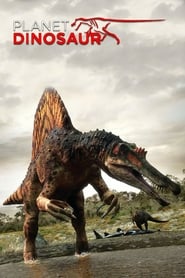
Planet Dinosaur
Descargar subtítulo en Farsi Persian
Información de lanzamiento
Etiquetas
Download Farsi Persian Subtitle Files for Mobile (2)
Vista previa de los subtítulos en Farsi Persian
Las primeras 125 líneas.
We're living through the golden age of dinosaur discoveries.
All over the world,
a whole new generation of dinosaurs has been revealed.
From the biggest giants
and the deadliest killers
to the weird and the wonderful.
From the Arctic to Africa, from South America to Asia.
In just the last few years,
we have uncovered extraordinary fossils,
exquisitely preserved and tantalisingly intact.
Combined with the latest imaging technology,
we have been able to probe deeper
and reveal more than ever before.
It gives us our first truly global view
of these incredible animals.
Planet Dinosaur "New Giants"
In this programme we examine the new giants -
the heavyweights of the dinosaur world.
It's only in recent years
that we have unearthed the biggest dinosaurs that ever lived.
Animals on such a huge scale it is difficult to comprehend.
Just how and why did these titans grow so massive?
And could any animal attack such a huge beast?
One of these new giants has eclipsed all others.
At 35 metres, it was as long as Diplodocus.
Yet this dinosaur was seven times as heavy.
The first glimpse of this new giant was made in the 1990s
during a dig in Argentina.
In Patagonia, a fossil was pulled from the ground.
It was a single vertebra, but it was as tall as a human being.
Other bones followed.
They belonged to the biggest dinosaur
ever known to have walked the Earth.
It lived in South America 95 million years ago.
In a world very different from our own -
a world that is only now giving up its secrets.
The start of a new life.
But on these plains, danger is never far away.
This is a chaoyangopterid pterosaur,
attracted to the easy prey of a nest site.
Throughout the late 1990s,
extraordinary dinosaurs were uncovered in Argentina.
At one location, a nest site was found, so full of dinosaur eggs
that they could barely avoid crushing them underfoot.
Some eggs even contained exquisitely preserved dinosaur embryos.
Then, in 1999, at the same nest site,
a complete adult dinosaur skeleton was uncovered.
It appeared they'd found the parent.
But first impressions can be deceptive.
This isn't the parent.
This is a Skorpiovenator -
a predator.
The skeleton found at the nest site was almost certainly a nest raider,
preying on the hatchlings.
The hatchlings' real parent,
and the owner of the enormous vertebra is Argentinosaurus.
A plant-eating giant that dwarfs everything around it.
From the bones that were found,
we've calculated that Argentinosaurus
was a colossal 35 metres long,
and weighed as much as 75 tonnes.
When born, the hatchlings themselves weigh a paltry 5kg
and need to fend for themselves immediately.
From studying the embryos, and looking at the bones of the adults,
we know that the growth of these giants was phenomenal.
Over 40 years,
they grow from 5kg to an astonishing 75,000kg.
At their peak, it's been calculated they grow up to 40kg every day.
The dinosaur embryos are so well preserved
we can see they already have their teeth,
in preparation for a lifetime of eating.
But becoming a giant takes more than simply turning tonnes of food
into muscle.
It's about the success and survival of a species
over millions of years.
One way to increase the chances of survival
is by having lots of offspring.
And the best way to do that is by laying eggs.
Lots of them.
The nest site in Patagonia stretches for an astonishing 15km
and contains tens of thousands of eggs.
And the site was used continuously for hundreds of thousands of years.
For killers like Skorpiovenator, the nest site provides a feast.
But, with thousands of hatchlings,
they have little impact on the success of the species.
And pose no threat to the adults.
But, wherever we find giant plant-eaters...
..there is always a giant killer lurking nearby.
And, sure enough, another startling discovery was made in Argentina.
In the same region, a nearly complete skeleton
of an enormous predator was unearthed amazingly well preserved.
The skull alone was over 1.5 metres long.
And when a second, even larger, specimen was found,
it became clear that this was bigger than any predator
that had been found before.
Bigger than T Rex.
It was clear that giant predators roamed South America as well.
And it appeared that Argentinosaurus may have met its match.
In fact, wherever giant plant eaters have been discovered,
it appears a giant predator lived alongside them.
From America, to Europe and Asia,
we see the same relationship repeated.
But there was one place on earth that remained a mystery.
For decades, Africa was the forgotten continent,
a huge gap in our understanding of planet dinosaur.
Then, in 2000, a cluster of bones was unearthed in North Africa.
The bones were huge - one single leg bone was as tall as a human.
It seemed this, too, was a land of giants.
And that could only mean one thing.
There must also be a giant killer.
95 million years ago, this was a dry and difficult place to survive.
Food and water were hard to come by and often only found in one place -
along the banks of a river that has earned the name River of Giants.
This is Paralititan, a 45-tonne animal...
..and the undisputed heavyweight here.
For an animal this size, it's not easy to keep cool,
so being near water is vital.
But rivers are dangerous places.
This is not a good place for a young animal to get stuck.
And it's not just because of these crocodiles.
This river holds much, much bigger threats.
It may look familiar...
but this was no ordinary crocodile.
With a skull nearly two metres long,
it's more than twice the size of any modern croc.
Planet Dinosaur subtitles in other languages
More Farsi Persian subtitles for Planet Dinosaur
- زیرنویس 6 قسمت مستند BBC Planet Dinosaur - کاری از میهن دانلود · 18 downloads · 2013-07-30
- Planet Dinosaur S01E06 720p HDTV x264 SFM persian by m norouzian · 23 downloads · 2011-11-18
- Planet Dinosaur S01E04 720p HDTV x264 persian by m norouzian · 25 downloads · 2011-11-18
- Planet Dinosaur01x03Last KillersPDTV XviDPersian By felora60 · 23 downloads · 2011-11-08
- Planet DinosaurS01E02Feathered Dragons720p hdtv x264 persian by m norouzian · 31 downloads · 2011-11-05
- Planet Dinosaur01x01Lost WorldPDTV XviDPersian By felora60 · 26 downloads · 2011-11-04
Comentarios
No comments yet. Be the first to leave one.