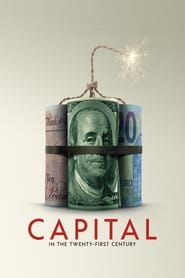
Capital in the Twenty-First Century
Descargar subtítulo en English
Información de lanzamiento
Etiquetas
Vista previa de los subtítulos en English
Las primeras 80 líneas.
I was born in 1971 and was 18 in 1989 when the Berlin Wall fell.
I sat glued to the radio and listened when the communist regime fell.
As a student, I traveled to Romania, Hungary and Russia.
I was there and saw the consequences of the collapse.
I saw a failed economic and social system.
A political system that had promised personal freedom
but instead created misery and political repression.
When the Communist House of cards fell,
the capitalist argument was reinforced
but it went too far.
The fall of the Soviet Union led to an eternal belief in liberalization.
It was accompanied by a new glorification of private property.
As a result, rising injustices increased nationalism and xenophobia
just as before the First World War.
The 21st century scares me, because when I compare it with history,
we risk returning to a capitalist system similar to the unequal world of the 19th and 20th centuries.
In Europe during the 18th century,
capital was concentrated to a small group of people.
The nobility made up one percent of the population.
Money limited social mobility.
You could not climb very high relying on work or study.
Often, in literature, films and popular culture
we can follow the importance of capital throughout history.
It is a darker story than the idyllic notion of development and enlightenment.
The 18th century was no static world.
New political ideas demanded equal rights for all
and an end to inherited benefits.
The French Revolution was to a certain extent based on double standards.
Their vision of "equality" was at best optimistic, somewhat naive and at worst a bit cynical.
It was pretended that it would be equally spontaneous, a bit like a fairy tale.
But political institutions needed educational institutions, health care,
transport and a tax system aimed at high-income earners.
At the time of the French Revolution there was no such thing at all.
It was during this time in the 19th century
that division of labor, inequality and power was established worldwide.
First with slaves and then with a relentless colonial rule.
It is difficult to say how much of Europe's wealth comes from their colonial past,
but the dominance gained during the industrial revolution
was linked to a military rule.
Between 1870 and 1914, Britain and France, the great colonial powers,
owned very much the world over.
They raised so much profits, dividends, interest and rents
that they continued to invest in other parts of the world.
The rest of the world worked for them.
Around 1914, in a city like Paris,
one percent of residents owned 70 percent of what was possible to own.
Two thirds of the population died without owning any property.
Nationalism increased and the countries of Europe began to compete a little
because of the extremely strong social tensions
due to a stagnant standard of living and injustice.
Nationalism, competition between countries, was used by the elite
to forget the class conflict and instead rally around a national identity.
It contributed to the outbreak of the First World War
in the summer of 1914.
If you read John Steinbeck's "Grapes of Wrath"
you understand how enormous the shock was when the system broke down.
When the banks went bankrupt, people lost their money.
Demand in other areas declined, which in turn led to bankruptcies and unemployment.
The great crisis of the 1930s was so traumatic
that the public and their political representatives blamed capitalism.
War itself destroys capital.
First, you bomb and totally destroy cities.
But that's only a third of the capital.
What are the other two thirds?
One third is inflation, which destroyed public debt to private individuals who funded the war.
The other third are new rules such as rent regulation, state ownership and budget regulation.
The destruction of capital was not only bad because society's balance of power was changed.
All are equal in the face of death.
War, all the victims and all the hopelessness, make us realize that we are all human beings.
The new political context ultimately led to the enlightenment and equality proclaimed in the 1700s.
If you follow the evolution of inequality during the 20th century,
the strong middle class is the most striking change.
Until 1914, there was no middle class.
It was almost as poor as the poorest.
During the first 30-35 years after the war, economic growth prevailed.
Purchasing power increased significantly especially among the lower classes and the middle class.
They could buy consumer goods, get a better standard of living,
save for a house and raise capital.
They were not very wealthy, but not poor either, and held much of the country's capital.
But the middle class's share of capital has declined more in the United States than in Europe.
Capital in the Twenty-First Century subtitles in other languages
More English subtitles for Capital in the Twenty-First Century
- Capital in the Twenty-First Century 2019 1080p USA Blu-ray AVC DTS-HD MA 5 1-KRUPPE SDH · 45 downloads · 2024-02-24
- Capital In The Twenty-First Century 2019 1080p BluRay x264 AAC5 1-[YTS MX] · 56 downloads · 2021-03-07
- Capital In The Twenty-First Century 2019 1080p BluRay x264 AAC5 1-[YTS MX] · 31 downloads · 2021-03-07
- Capital in the Twenty-First Century 2019 WEBRip x264-ION10 · 43 downloads · 2020-08-02
Comentarios
No comments yet. Be the first to leave one.