Breaking the Bee
دانلود زیرنویس English
هماهنگ با نسخههای زیر
برچسبها
پیشنمایش زیرنویس English
نخستین 200 خط.
Champion spellers, we are now in uncharted territory.
We're throwing the dictionary at you
and so far you are showing this dictionary who is boss.
We've now reached the start of round 20,
the round I informed you would be the final one of this competition.
When we get to the end of round 20,
we will take an extraordinary step of declaring as co-champions
those of you still remaining in the competition.
You are correct!
You are correct!
You are correct!
You are correct.
You are correct.
Correct.
Correct.
You are correct.
It's complete.
You're all champions of the 2019 Scripps National Spelling Bee.
They will forever be remembered as the Elite 8,
the eight spellers that for three and a half hours
took the best parts the dictionary had to throw at them,
and this is the night that the kids won the Spelling Bee.
And there you have it,
a picture that will be on the front page of every newspaper and website.
Spelling bees are a time-honored American tradition
and the Scripps National Spelling Bee
is the most prestigious contest in the country.
South Asian-American kids
are dominating the Scripps National Spelling Bee.
I think people are curious about, like, do they have a secret?
Is there something that they’re genetically predisposed to knowing?
The most phenomenal assemblage of super spellers.
Meet the kids who exhausted the dictionary itself.
The Octo-Champs, ladies and gentlemen!
What kind of a name is Erin?
Since 2008, a decade of dominance.
We rival the Yankees, the Dallas Cowboys, Celtics, Lakers.
Indian-American kids in spelling, like, we’re in that.
When we find something that works, we go all in.
Something clearly is going on that needs to be better understood.
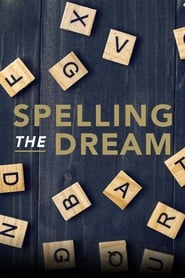
SPELLING THE DREAM
...international society of people with high IQs has two new members.
They're children!
Three-year-old Akash Vukoti and five-year-old Amritha Vukoti
have been accepted into the American MENSA.
Welcome to Little Big Shots!
You have never seen kids like the ones who are coming out here today.
Cona-sewer.
No! Not "cona-sewer."
Okay, catch it up.
The kids getting the big buzz at the Spelling Bee.
A six-year-old making history
as the first first-grader ever in the competition.
Inviscate.
- Inviscate. - That is correct.
Well, funny story. First, my uncle... One of my uncles...
was feeding me something like a type of rice thingy.
And then he showed a spoon, told me to spell "spoon."
I said...
So the next day, the same uncle came to me and said to spell "spoon" again.
I spelled...
That was not normal for, you know, for a two... just two-years-old kid
to spell it back in the same sequence, in the same order of the alphabet.
That was the first time when we noticed that, oh, he...
He has something into the spellings.
That’s when my parents saw that first interest.
First interest.
Hmm.
- Who are the Spelling Bee champion? - I am!
I am the Spelling Bee champion.
-What's "L" for? -Lion!
-What’s "lion" spelling? -Lion? L-I-O-N. Lion!
I came from a rural village in India.
If I didn’t dream high, I wouldn’t be coming to America.
A kid who was born here in America should do a lot more.
The goal for Akash would be to be a good citizen.
So whatever he does, whatever he learns, it should benefit the community,
the country, the world.
Something like, you know, Microsoft, for example.
Or the Google, or the Facebook! Should be something like that,
that should change the lives of the people around the world.
We don’t know.... I mean, if it happens, we’ll be really blessed.
One of the myths, I think, that people have about Indian-Americans
and their success is that it's somehow genetic or even ethnic.
So what happened in the United States?
The Indians who do well in Spelling Bees in America
are drawn from Indians who were very adventurous,
who decided to take advantage
of the relaxation of American immigration rules in 1965.
This bill says simply that from this day forth,
those wishing to immigrate to America
shall be admitted on the basis of their skills
and their close relationships to those already here.
This is a simple test, and it is a fair test.
Those who can contribute most to this country,
to its growth, to its strength, to its spirit,
will be the first that are admitted to this land.
That stopped the relatively racist quotas on who could immigrate from where
in other parts of the world,
and it allowed for immigrants to come in
from Asia, Africa, the Caribbean...
Parts of the world that had been oftentimes cut off.
It wasn’t like every South Asian was allowed in.
They picked people who were the most educated,
who could add a very clear, like, monetary value,
and serve a clear purpose for America and its economy.
And Indians take advantage of this,
but mostly, they are engineers, doctors.
One of the interesting things to notice is how many Indian doctors you’ll find
in very remote parts of America.
And you see them in rural Alabama or Mississippi or Louisiana,
and you ask yourself, "Why was there an Indian doctor in one of these places?"
'Cause no white person wanted to go to rural Alabama and be a doctor,
and those were the job openings that the Indians filled.
Then in the '80s, and really mushrooming in the '90s
and since then, has been the growth of the IT industry.
There wasn’t conflict.
There wasn’t persecution or prosecution.
They weren’t fleeing. It was all really revolved around possibility.
So I don’t think it’s this magical Indian cultural superiority stuff
I hear all the time.
A portion of the story is culture,
but a large portion is how people got here.
In addition to, like, you know, India’s a colonized country.
English was around.
They come to the United States.
They get trained or they go to companies. They do well.
Now, they have children,
and they want to ensure that their children
take advantage of these extraordinary opportunities
that they see in America as immigrants.
My parents came for opportunity.
There was a lot of emphasis on language growing up inside the house,
and English was extremely stressed.
I think a lot of my interest in spelling
came because of that early exposure to English through my mom
and somewhat my dad.
It took a solid four years for me to get from start to finish
in my National Spelling Bee win pursuit,
and then eventually, in 1985, I was able to win.
Milieu.
It was his third try at the National Spelling Bee.
Third time’s the charm!
For him this year, no bell will bing.
I don’t think I recognized the magnitude of that
probably until decades later.
And when I realized
how relevant it was that the son of immigrants
had won the National Spelling Bee
was when I saw other immigrants, primarily Indian parents,
um, say that it was 1985
that put the National Spelling Bee on the map for Indians.
And so while I never pretended that it was a big deal
other people informed me that it was a big deal to them.
Playing tennis and spelling are pretty similar
because it takes persistence,
because the first time you go to a match or a spelling bee, you might not win.
Because the more you practice, the better you get,
and then you can just get better and better.
And then eventually, you just...
Everything will fall into place and maybe you’ll win.
Well, I’ve been doing this for many years.
I started when I was in second grade, and every year I’ve constantly improved,
so, like, hopefully that this year will be the year.
We are originally from India.
India has lots of languages, so I think that bilingual concept
helped them learn a lot of other languages too.
There is an expectation that he’ll do well and probably win.
Um, but also I think he’s kind of used to the pressure,
and also it’s not like a random guess.
He has proven himself that he could win the other competitions.
So that gives him the confidence.
I think he doesn’t feel that pressure so much.
How good is he, really?
He's really good.
Um...
I mean, when I was...
When I was still in eighth grade, I would say we were about equal,
but, like, since then, he’s kept on going.
I wanna say he is probably the best speller in the world.
-He's like Michael Jordan. -Obviously, Michael Jordan. Yeah.
Michael Jordan is just, like, consistently the best player in,
like, in the league when he was playing,
and I think Shourav is, like, consistently the best speller in the school,
and probably, like, in the state,
and, like, maybe, probably even the nation.
We found a word that Ashrita did not know!
S-U-P-E-R-C...
...you have all day!
-Oh! -Woo!
By the time she was two, two and a half, she was already good at solving puzzles,
and she was asking for more,
and she was able to recognize some of the letters.
And by the time she was three, she was able to read the smaller books,
the books with a few words in each sentence.
So we did not think of it as a talent.
We thought it was a normal thing
-that all kids do... -For all kids!
...and so we just continued filling her with more and more,
whatever she was comfortable with.
Breaking the Bee subtitles in other languages
More English subtitles for Breaking the Bee
- SpellingtheDream(2020)720p WEB x264[TRiNiTY] · 36 downloads · 2020-06-23
- Spelling the Dream (2020) 720p WEB x264 [TRiNiTY] · 39 downloads · 2020-06-23
- Spelling the Dream 2020 720p WEBRip 800MB x264-GalaxyRG · 38 downloads · 2020-06-19
نظرات
No comments yet. Be the first to leave one.