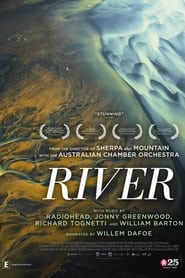
River
دانلود زیرنویس English
هماهنگ با نسخههای زیر
برچسبها
پیشنمایش زیرنویس English
نخستین 113 خط.
- Ready for a check? - Cello one.
I'l just call take numbers as we go.
- Okay. - Violin one, two, two.
I've got lots of images in my head.
So "of" is to be included?
Okay.
- How're you doing on my juicy S's? - That's a fairly easy fix.
That's what I thought, I wanted to hear it to reassure me.
- We're going to go for a take. - Okay.
Humans have long loved rivers.
But as we have learned to harness their power,
have we also forgotten to revere them?
When the first rains fell,
the Earth awakened.
It rained without pause for thousands of years
sculpting new landscapes into being.
Drops gathered as streams,
streams braided into rivers
growing in force as they flowed ever onwards and downwards.
For eons, running water obeyed only its own laws.
Patient and persistent, it wore mountains away.
It looped and meandered
laying down great plains of lush, rich silt.
Where rivers wandered, life could flourish.
For rivers are world-makers.
They have shaped the Earth,
and they have shaped us as a species.
For thousands of years we worshiped rivers,
as the arteries of the planet,
the givers of gifts,
the well-springs of wonder.
Rivers are the source of human dreams,
and they have flowed through our lives as surely
as they have flowed through places.
High among peaks flow vast rivers of ice.
Glaciers seem frozen into stasis,
yet they are always in flux.
Their ice has currents,
rapids,
eddies.
Crevasses creak open where they spill down valleys,
or carve round comers.
And through these glaciers,
wind streams of meltwater.
Freed by the sun from its slow-motion existence as ice,
running water starts to sing its way to the sea.
To be truly alive, a river must be wild,
wilful and unhindered.
Yearning for the ocean, its only purpose
is to descend.
For millions of years humans wandered the earth.
It was rivers that created fertile valleys;
made it possible for us to settle and to dwell.
The first cities arose on the banks of great waterways.
Our early destiny was shaped by the will of rivers.
We both feared and revered them as forces of life,
and of death.
We worshiped them as Gods.
Rivers inspired us as a species,
allowing us to thrive.
Over time, they became the highways by which trade,
and technology spread inland,
and along them also flowed poetry,
stories and religions,
politics and conflict.
Rivers grew our towns and cities
but they were also indifferent to human plans and dreams.
Fickle and unpredictable,
in flood they could wreak havoc,
and in drought
they could disappear completely.
And so, we devised extraordinary means of controlling them,
of hamessing their force and taming their wildness.
We discovered how to regulate and manage them,
how to run them like machines.
We shifted from seeing rivers as living beings
to seeing them as resources.
Our gods had become our subjects.
Qur ability to control rivers
has changed the course of history.
Droughts and floods have been averted,
arid land made fertile.
Rivers have helped make war and bring peace.
They have shaped empires,
divided nations and nourished humanity.
In many places the river is still revered,
still vital to life,
and to death.
The worship of water is a given to millions of people.
The river's power remains a sacred power.
It heals, consoles, and purges.
It washes away sin and purifies the dead.
It is a source of hope, love, and longing.
It is the way of life.
To those who live and die by the river,
their river is the river.
Essential for emotional and spiritual sustenance.
Essential for survival.
We've learned to carry rivers
to places they would never naturally have flowed.
Rivers stil exert an immense influence upon us.
A global network of transport and connection
scarcely remembered in everyday life.
Today, the world's greatest cities
all have a river at their heart.
Rivers have enabled unimaginable prosperity for some.
For all their might though,
rivers are fragile:
easily harmed, not so easily mended.
Vast waterways have been drained,
and re-directed to meet our growing needs.
We've made deserts bloom
fostering delusions of infinite abundance.
River subtitles in other languages
More English subtitles for River
- River 2021 BDRip x264-ORBS · 41 downloads · 2022-05-29
نظرات
No comments yet. Be the first to leave one.