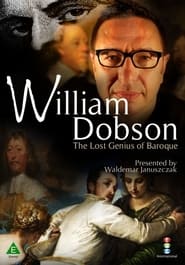
William Dobson, the Lost Genius of Baroque
دانلود زیرنویس English
هماهنگ با نسخههای زیر
برچسبها
پیشنمایش زیرنویس English
نخستین 197 خط.
In 1642,
a terrible civil war broke out in England.
Brother attacked brother, friend betrayed friend,
the nation was torn in two.
To ensure this dark moment was never forgotten,
Britain needed an artist to step forward
and witness her turmoil.
Fortunately, such a man was found.
History doesn't often feel graspable, does it?
Touchable, under your nose.
It's usually something that takes place far away,
out there, in the past.
You can read about it in books,
you can learn about it from David Starkey on the telly,
but where it really counts, in here,
you can't really feel it.
Unless, that is, something or somebody
manages to bring it back to life for us.
Make it tangible, give it flesh.
There's only one way that can be done, with art.
It's what art's really good at,
capturing the moment, taking you there.
If an artist is eloquent enough and talented enough,
then even an event as chaotic and unruly
as the English Civil War can be brought back to life
and felt again.
This is a film about a lost genius of English art.
A painter of deep and real talent,
who was there and who put a face
to a particularly traumatic moment in our history.
His name was William Dobson.
He's the one in the middle, the handsome one
with the Cavalier ringlets,
and that contemplative stare.
Dobson was the first truly great, British painter.
Our first native genius.
If you've never heard of him before,
don't beat yourself up about it, most people haven't.
History isn't always fair to its heroes,
and William Dobson was certainly one of those.
Dobson had an exciting life to go with his exciting talent.
It was short and fateful,
because these were not relaxing times.
Dobson was born in London in 1611
and baptized in this fine city church,
St. Andrew's Holborn, on March the fourth.
The register of his birth has survived.
It's one of just half a dozen documents
of the times that bear his name.
We know that his father, also called William Dobson,
was prosperous, a gentleman it says here.
But he frittered away the family fortunes
on what his contemporaries called licentious living.
Dobson Sr. it seems, wasted his estate on women.
Do you know what they say about the sins of the father?
How they're visited again upon the son?
Well that certainly seems to have been true in this case.
Our William Dobson, the first great English painter,
would also gain a reputation for loose living.
We don't know exactly what went wrong
with the Dobson family fortunes, but something did.
And in around 1625, Dobson Jr. was forced
to start making his own living.
So he decided to become something rather ungentlemanly,
and un-English, he decided to become a painter.
Mind you, William Dobson could not have picked
a better time to become an artist,
because there hasn't been a better time.
The English king, Charles I,
was an unusually cultured monarch.
Charles loved art with a passion
that England had never seen before in a king.
Look how superbly he rides into history
in this fine, Van Dyck that now hangs in Buckingham Palace.
Buckingham Palace hadn't even been built in Dobson's time.
And the King didn't think much
of this place either, Windsor Castle.
He allowed it to fall into ruin.
Instead, the King preferred to reside
in another of his sumptuous palaces,
one which isn't even there anymore,
at Whitehall in London.
Whitehall Palace was the largest palace in Europe.
Located roughly where 10 Downing Street is today,
it burnt down in 1698.
Bigger than the Vatican, bigger than Versailles,
it stretched all the way down to the river.
Whitehall was gigantic.
It had 1,500 rooms, yes 1,500.
And the plushest of them were filled to the rafters
with great art.
If you think Windsor Castle looks impressive today,
you should've seen Whitehall Palace in around 1630
when William Dobson must first have encountered it.
All these Mantegnas were in Charles' collection,
nine of them.
The first Rembrandt ever to leave Holland
hung in Whitehall in the Longest Gallery.
And naughty Veroneses displaying
such un-English nudity.
And this famous Leonardo now so popular
in the Louvre in Paris.
Then there were all these Raphaels,
showing the gospels of the apostles,
the finest cycle of Renaissance art ever to leave Italy.
What an education a young painter starting out
on the road of art would've received in here
just by wandering about and looking.
Dobson must've done more than that.
Somehow he got the opportunity
to study the Royal Collection in depth
and he studied it so fiercely
that he ended up as good as this.
This is such a revolutionary image.
You have to remember that Charles believed
in the divine right of kings.
That he'd been put on Earth by God
to command the English and educate them.
Charles lavished all this money on art
because he thought it was his divine duty to do so.
It's what God wanted him to do whatever the cost.
But Dobson didn't paint a divine monarch.
That wasn't his way.
Dobson gives us a small and troubled man,
so nervous, so unsure.
These are sensitive insights,
and they're completely new in British art.
The question is, how did William Dobson
get to be this good?
Not knowing the exact details of Dobson's apprenticeship
is very annoying.
I've stomped through the stately homes of Britain
but the information just isn't there.
You'd have thought an artist of William Dobson's importance,
a man who changed British art,
would've had everything about him noted down.
But these are turbulent times he was living through,
and when history swallowed up William Dobson,
it swallowed up his past as well.
One exciting story about him
is that he worked for the Royal Tapestry Works,
at Mortlake in London and was somehow involved
with the design of these stunning hangings.
Another story about Dobson doing the rounds
is that he was actually a pupil of Van Dyck,
the King's official painter,
who came over to London from Antwerp in 1632
and who proceeded to lord it over Charles' great Golden Age.
Van Dyck was the King's flatterer-in-chief,
the official improver of the royal image.
This is his portrait of Charles' detested queen,
Henrietta Maria, a Catholic from France.
Whose teeth, according to the Venetian ambassador,
stuck out like the guns on a battleship.
But that was in real life, not in Van Dyck's
portrayals of her.
But if Dobson really was Van Dyck's pupil,
he was headstrong enough to see things very differently
and become his own man.
For one thing, Dobson could not, or would not, flatter.
He just couldn't do it.
Instead, his art makes a beeline
for character and truth, for plainness, bluffness,
and even ugliness.
Telling it like it is is a uniquely British talent.
And to show it off properly,
you need a uniquely British situation.
So having finally found an artist
who could paint with the best,
the fates decided to test him mightily
by dumping him in the middle
of some of the most traumatic events in British history.
There are many complicated reasons why in 1642
a savage civil war broke out in England.
Why Parliament took on the King,
Royalist took on Roundhead,
and Cavalier took on Puritain.
Charles had become a deeply irritating monarch.
People didn't like his Catholic wife,
they didn't like his foreign policy,
his taxes were unpopular,
they really didn't like that immodest claim of his
to be God's representative on Earth.
But perhaps what galled them most
was his extravagant appetite for art
and the huge amounts of money that had been spent on it.
Art was an affront to Puritan thinking.
The second commandment actually bans the making of it.
Thou shalt not make any graven image, it says,
of anything that is on Earth or on the sea below.
So for the Puritans on Parliament's side,
art wasn't just immodest and popish,
it was actually sinful.
The most notorious
of all the Puritan art-haters,
William Prynne, published a 1,000 page book on the subject
in which he stamped on dance, theater, painting,
نظرات
No comments yet. Be the first to leave one.