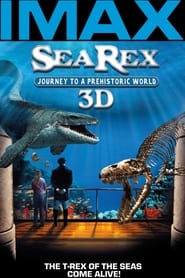
Sea Rex 3D: Journey to a Prehistoric World
دانلود زیرنویس English
هماهنگ با نسخههای زیر
برچسبها
پیشنمایش زیرنویس English
نخستین 200 خط.
It was in one of the galleries of St Peter's Mount,
at about 500 paces from the main entry
and at 90 feet below the surface,
that the quarrymen exposed part of the skull
of a large animal embedded in the stone.
They suspended their work to tell of their discovery to Dr Hoffmann,
who had for some years been collecting fossils from the quarries.
Dr Hoffman, observing the specimen to be the most important
that had yet been discovered,
took every precaution to preserve it in one piece.
After having succeeded in removing
a large block of stone surrounding it,
and reducing the mass to a proper condition,
it was transported to his home in triumph.
25 years later,
after the occupation of Maastricht by the French Revolutionary Army...
You are here at last.
Please, gentlemen, take it.
..the famous fossil shows up one cold winter night
at the National Museum of Natural History in Paris.
Be careful, it's priceless.
This strange thing
they called at the time "the unknown animal of Maastricht"
started to raise interest among the scientific community.
It's here!
Let's go, let's go!
Little bit more.
Put it on the table.
Be careful!
Gentlemen, open this chest.
Yes let's open it. Be very, very careful!
Gentlemen, all together now.
What they discovered that night
looked unlike any known living creature.
Some thought it was a crocodile.
Others believed it to be a whale.
Neither the shape of its teeth
nor the size of the jaws
helped them to determine its true identity.
It's too big for a crocodile. A whale would be more appropriate.
Back then, that is 40 years before the discovery of the first dinosaur,
nobody had ever thought that thousands of species could have lived
and disappeared in a distant past.
But everything was about to change.
JOURNEY TO A PREHISTORIC WORLD
I'm sure marine dinosaurs still exist!
My apologies for intruding upon your thoughts, mademoiselle,
but, strictly speaking, only reptiles that walked on dry land
are called "dinosaurs".
If they lived under the water, they are called marine reptiles.
And they all disappeared a very, very long time ago.
- What happened? - You'll see, Julie.
65 million years ago reptiles ruled the world.
On land.
In the air.
And reptiles were kings in all the seas as well.
But then came a great cataclysm from outer space.
An asteroid 1 2 miles in diameter struck the Earth.
This asteroid's massive impact unleashed the power
of more than 1 00 atomic bombs.
The sky went dark, and the Earth's climate changed drastically.
70 per cent of all life on the planet perished.
And, with the end of the dinosaurs,
it was also the end of the reign of the reptile in the sea world.
And... when did you say that happened?
65 million years ago.
So... then humans came right after that?
Humans will come... a little later.
How much later?
65 million years.
You're kidding.
Modern humans, like you and I, only appeared barely 200,000 years ago.
In comparison to the age of the Earth, that's a blink of the eye.
200,000 years?
An instant, in geological time.
Somewhat difficult to comprehend, is it not?
Comparing thousands and millions and even billions of years.
Don't you agree?
Um...
Then follow me, Julie.
And when you want to stop time, say "stop".
- Stop? - All right, then. Forward to the past!
Now, let's start slowly, from the beginning.
Earth forms four and a half billion years ago.
Then life appears but remains microscopic for three billion years.
In this time spiral, only the last turn interests us
that leads to our time.
Let's consider this as a 1 2-hour clock.
540 million years ago, at 2 o'clock,
the Primary Era begins.
Life grows and evolves in every environment.
At 7.30 the Secondary Era, or the Mesozoic, begins.
It is the age of reptiles.
Including the famous dinosaurs?
Yes, as well as flying and marine reptiles.
The next and last era, the Cenozoic, is the age of mammals.
On this clock, Homo sapiens, our miniscule species,
appears just eight seconds before 1 2.
The Mesozoic takes place between the two major ecological crises
that led to the extinction of many species on Earth.
The largest at 7.30, and the last, right there, at 1 0.50.
That one caused the extinction of the dinosaurs and large marine reptiles.
But how did it start?
Well, first, you'll need a microscope.
Life on Earth starts in the water, as bacteria,
3.5 billion years ago.
Slowly, this micro-life evolves.
Then, 650 million years ago,
life becomes visible to the naked eye, soft-bodied organisms.
The following 400 million years bring with them an explosion of life.
New morphological forms appear, reaching considerable sizes.
And, finally, amphibians follow fish with feet
to conquer terra firma.
300 million years ago, the first reptiles appear on land.
And in the sky, the wingspan of some insects reaches over three feet.
By the end of the Paleozoic, the land and the seas are bursting with life.
It is the golden age for biodiversity.
But this period ends with gigantic cataclysms,
which exterminate up to 95% of the species,
the largest extinction of all time.
95% of the species? But that's enormous!
Nothing much must have remained after that!
You're right, my dear.
And most of the world's great predators have disappeared.
But life persists.
And in the seas many fish and molluscs remain.
What about the marine reptiles?
Their reign begins now.
Three different groups, one after the other, will rule the world's oceans.
First the lchthyosaurs, that use their tails to swim.
- Like a fish? - Much like a fish.
And then the Plesiosaurs,
that use their four paddle-like limbs to fly through the water.
And next, the Mosasaurs, that use an undulating movement
similar to... to a snake.
And these animals ruled the seas for 1 80 million years,
throughout all three Mesozoic periods,
Triassic, Jurassic and Cretaceous.
From the early Triassic period onwards,
Ichthyosaurs are the kings of the seas.
During this time, above the water,
all the continents on Earth are joined together
in a single mass of land,
a supercontinent called Pangea.
Off to the Pangean coast!
- Switzerland? - Yes.
At this time, most of Europe is under water,
a shallow and warm sea.
In the middle Triassic, it's hot and dry on land with little to eat.
In the sea, life flourishes again.
Several reptile species have returned to the marine environment,
thriving on the plentiful food supply.
The Tanystropheus hold a world record.
In proportion to their bodies, they have the longest necks ever recorded.
With its flat teeth, this Placodont mostly eats seashells and molluscs.
- Aren't those turtles? - Not at all.
But they, too, have developed a tough armour
to keep them relatively safe from the great predators of the Triassic,
like... the Nothosaur.
Over 1 3 feet long.
Very dangerous, and an excellent swimmer.
But it has no chance of catching up with a Mixosaurus.
- (JULlE) lt looks like a dolphin. - Except it's a reptile.
Like marine mammals today, it, too, must come to the surface to breathe.
It belongs to the large group of lchthyosaurs,
which will rule the seas for some 1 50 million years!
That one doesn't seem quite big enough to rule anything.
There are also some very large Ichthyosaurs,
some measuring up to 75 feet long and weighing 50 tons!
Like the Shonisaurus, the biggest of them all.
Wow!
Like all lchthyosaurs, it lives in groups
and mainly eats molluscs and small fish.
They look like dolphins and whales!
That's right. They're even born in a similar manner.
What do you mean?
Well, let's hear from an expert, the palaeontologist Ryosuke Motani.
He has just finished studying some very fine specimens
from a famous fossil site in Germany.
Many Ichthyosaur fossils have been found at Holzmaden
with their bones intact
and even with the imprint of their skin on the rock,
which helped us to know the position of their fins.
Some Ichthyosaur fossils are so well preserved
that we can actually see foetuses
inside the mother's bodies,
and some even being born.
Unable to get out of the water
to lay their eggs like other reptiles,
Ichthyosaurs gave birth in the water.
The babies came out tail first,
like dolphins today.
Another one of the lchthyosaur's characteristics are its huge eyes,
protected by doughnut-shaped bones
able to withstand extreme water pressure.
A Jurassic lchthyosaur, the Ophthalmosaurus,
stands out in the animal kingdom
as having the largest eyes in proportion to its body.
With these enormous eyes,
it could make out its prey in the darkness of great depths.
Sea Rex 3D: Journey to a Prehistoric World subtitles in other languages
More English subtitles for Sea Rex 3D: Journey to a Prehistoric World
- Sea Rex Journey To A Prehistoric World 2010 BRRip XviD MP3-RARBG · 25 downloads · 2017-04-25
نظرات
No comments yet. Be the first to leave one.