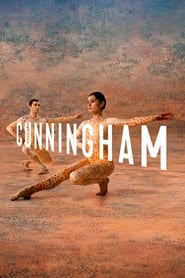
Cunningham
دانلود زیرنویس English
هماهنگ با نسخههای زیر
برچسبها
پیشنمایش زیرنویس English
نخستین 193 خط.
I never was interested in dancing that referred
fo a mood, or a feeling, or in a sense,
expressed the music.
So that the dancing does not refer.
It is what it is.
It's that whole visual experience.
Out. Stretch.
Two, down and down.
Up. Yeah. Step.
Hold. Hold. Hold.
Tonight, the world of dance welcomes Merce Cunningham.
He has asked us not to call him an avant-garde choreographer,
or a modern dance choreographer.
So I'm going to ask him what we may call him.
Well, I'm a dancer.
That says everything?
Well, that's sufficient for me.
Since my dancers and I are a group of human beings,
we are that on the stage,
as we are in real life,
people moving around in various ways.
But we don't interpret something.
We present something, we do something,
and then any kind of interpretation is left
up to anybody looking at it in the audience.
My idea about movement is that any movement
is possible for dancing.
That ranges all the way from nothing, of course,
up to the most extended kind of movement
that one might think up.
Your background is in modern dance,
is it, Merce Cunningham?
Yes.
Now, did you evolve a technique of your own?
Well, physically or technically,
I was interested in extending
movement possibilities as I saw them.
I thought that a ballet technique for the legs
was astonishing, and I thought many things in the modern dance
were remarkable for the torso.
And so I tried to find ways to combine those
to make a body which was flexible and pliant
and allowed for as many movement possibilities
as I could see.
Dance exercises over dancers an insidious attraction
that makes them work hours daily
at perfecting an instrument
which is really deteriorating from birth.
To what end this eternal daily struggle?
Because inside of all that is an ecstasy.
Brief perhaps, not always released,
but when it is, like a moment in balance
when all things great and small coincide.
This can happen at any moment,
and when it does for a dancer,
he can smile without knowing it.
There is no guarantee of this, but it does exist.
We see it, and we know it.
Myself, I don't think of discipline as, like, rules.
I think of discipline as being something private,
which, in the case of a dancer,
he realizes that the discipline,
say, of going to class, is part of his life.
He arrives at this point within himself.
It's more like meditation, devotion, I think,
than anything else.
I went to school in Seattle, Washington,
and Mr. Cage was there,
and he taught us a composition class.
And it was so remarkable, I never forgot this.
The next year, I went to New York,
and Mr. Cage joined eventually.
So he's been writing music for me ever since.
People have, um, often defended art
on the grounds that life was a mess,
and that, therefore, we needed art
in order to escape from life.
I would like to have an art that was so, uh, bewildering,
complex, and, uh, illogical that we would return
to everyday life with, uh, great pleasure.
There is no such thing
as silence.
I have nothing to say,
and I am saying it.
And that is poetry
as I need it.
First time I met Merce Cunningham,
he was touring the States with John Cage.
I'd never seen anyone move like that,
from such a quiet center,
with such animal authority and human passion.
Merce Cunningham's doctor used to be Dr. Lotman.
Dr. Lotman's the one who prescribed
Merce's vitamin pills and breakfast powders.
He told Merce to sit when he didn't have to stand,
to lie down when he didn't have to sit,
and to sleep whenever he could sleep.
Possessed of an active disposition,
Cunningham keeps busy even when he's sitting.
With pen or pencil he makes calendars,
circling the days involving performances
or other engagements.
One calendar finished, he starts another.
For years, sitting at the breakfast table,
he taught himself Russian.
This enabled him to speak in their language to members
of the Bolshoi Ballet before performing
with his company for them.
Having learned to knit, he knitted
the many-colored costume he wears in "Lavish Escapade."
I simply decided years ago that I would make
a dance free of the music.
And then we would put the sound and the dance together.
Then, actually, you have never heard his music,
and has he seen your dance? CUNNINGHAM: No.
And the night of the performance,
you will combine the two?
CUNNINGHAM : With any luck.
What, then, reactions have you had to that?
Well, all the way from absolute stupefaction
on the part of an audience to, uh...
to people liking it very much.
When I began to work with dancers
who were trained in other techniques,
it didn't function for me.
So I decided that maybe if I could teach...
I must say the first class I gave,
There was one person who showed up,
a wonderful Marianne Preger-Simon,
who said, "Well, will you give the class?"
And I said yes. So I began.
I've always felt,
during the time when I worked with him,
although he was giving out
all of the activity that we did,
there was a great space for you to do it yourself.
I think that Merce was interested
in what could be considered our flaws as dancers.
And he hesitated to correct us
unless he just got irritated by what he saw.
I think he was much more of an artist
rather than a teacher
who was going to try to get us to do things
up to some perfect and ideal standard.
I found I was doing things
that I never dreamed were possible.
And the world was opening up in a whole way
that I hadn't understood.
The thing that's so hard about working with Merce
is that he demands that you are first of all yourself
as a human being,
and from that, a dancer.
And you move on it?
Yes. There again, you can walk up or not.
I myself never liked that competitive thing
that so much of dancing seemed to me to have,
so I never tried to do that in my own situation.
I went on the assumption that each dancer was a person
who had certain abilities.
I would attempt to let each of the dancers
find out for himself how he danced,
what kind of a person he was in that situation.
It's not politics, it was dancing,
but that's as reasonable a place to do that
as any other situation.
One, two, three, four, five, six, seven, eight.
In the early '50s,
that point that my company, So to speak, began.
I didn't form it. It just began.
We just sort of got together and tried to keep together.
That's all there is to it.
Suddenly, there's a company of three people,
or eight people, or 60 people,
I don't think it matters, it's only in proportion.
Then you have to consider all of those people
in all the ways. The fact that they are people,
they must somehow get from day to day, you know,
and have some place to sleep, something to eat, all of that.
And all of that has to be taken into consideration,
as well as the fact that you are now
not only responsible for making a dance for yourself,
but for these other dancers too.
And that implies something about clothing, heh,
covering them up some way,
something about music, however you think of that,
and all that gets more...
involves more funds, one way or another.
But you do it, don't you?
The way you function?
Yes. You find a way to function or you quit.
Yes, of course.
What do you do during rehearsal?
How does this all happen? We rehearse,
More English subtitles for Cunningham
- Cunningham 2019 720p BluRay x264-GHOULS · 18 downloads · 2020-08-02
نظرات
No comments yet. Be the first to leave one.