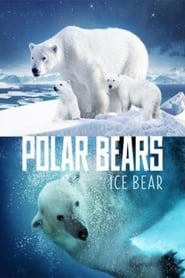
Polar Bears: Ice Bear
دانلود زیرنویس English
هماهنگ با نسخههای زیر
برچسبها
پیشنمایش زیرنویس English
نخستین 163 خط.
He is the apex predator of the Arctic.
Now, the ice bear is under siege.
The threat, an adversary that's deadlier,
more powerful than any he 's ever faced.
A gauntlet of challenges beyond any the Arctic has dealt him.
After millions of years of ruling the ice,
has the polar bear met his match?
The Arctic ice guards a secret.
Bleak and barren as it seems, it stirs with life.
Just look a little deeper.
To last the year, the ice bear needs to eat 40 seals.
One more is all it'll take.
Spring is almost over.
If he doesn't catch this one, he may not survive.
That may be his death knell.
He can 't hunt seals without the ice.
Now the ice is about to disappear.
It's late June.
A few generations ago, the ice bear would have had another month
before he ran out of time to make his quota of seals.
But, this year, his world is shrinking early.
He 's got no choice.
He has to enter a new world
of danger.
Ice Bear is three years old.
Just a teen by polar bear standards.
Now he's got to somehow make it to shore
almost 500 gruelling kilometres away.
He 's done it before, guided by his mother.
Now he 's on his own
and it's going to be one of the longest, cruelest summers on record.
He 's one of 2, 000 bears who live in Canada 's Hudson Bay.
Every year, when the ice melts, some have to head south.
First to islands along their way,
then to the mainland.
Ice Bear and his community live farther south than any other polar bears on the planet.
For generations, they've been the only group forced to survive off the ice all summer.
If the world keeps warming,
they won 't be alone.
Polar bears around the world may also be exiled,
and face the same life-or-death struggle.
All across Hudson Bay,
marine mammals are looking for summer homes.
Walruses, a tempting source of fat.
Ice Bear can pick up a scent almost a kilometre away.
This may be his one chance to make up
for that seal he missed before the ice melted.
The walrus' nose is keen, too.
The mothers' guards go up.
Ice Bear is taking on a creature who 's adept in the water.
A ton of tusk and trouble.
It is a remarkable encounter.
A scene rarely witnessed.
Being on his own for the first time is harrowing.
One in five adolescent bears die.
For cubs to survive, their mother's lessons have to last them a lifetime.
Cub boy, cub girl,
neither's got much fat for energy and insulation.
They keep close to Mum, mimicking her every move.
For the first two years of her cubs' life, they're completely dependent on her.
They're still nursing.
She needs to find herself food, or her cubs won 't last.
This desolate slab is just a pit stop.
Though its scent
is now forever ingrained in her cubs' memory.
That's what's keeping Ice Bear going now.
His memory has led him to the same islands.
The scent he's picked up? Thick-billed murres.
The division between sky and sea is lost on them.
This time of year, the plankton bloom draws herring and shrimp,
a feast for murres.
The bear smells a meal, too.
But there 's 200 metres between him and it.
It's a challenge no sensible adult bear would go for.
Leave it to a desperate teen.
The murres pick cliffs for their colonies to keep predators from approaching.
The ledges are just enough purchase.
Nobody expects a cliff-climbing polar bear.
This is behaviour never before captured on video.
The question is, for all the risk and work, is it worth it?
Not for one chick.
Bones and feathers are a recipe for starvation.
Ice Bear needs fat.
His only hope is still 250 kilometres away.
He 's got to make it to the mainland.
There are no landmarks to guide him.
Incredibly, he can orient. By day, to the sun.
By night, the stars are his compass.
He may actually use them to track his course ahead.
Night after night, Ice Bear doesn't sleep or eat.
After 1 0 days,
land.
But then polar bears are built to last on ice, not land.
For Ice Bear, survival might be a long shot.
Ice Bear actually evolved from a land bear, like the grizzly.
Now he 's forced to revisit his roots, and adapt.
He 's not equipped to hunt this strange prey.
Animals of the earth, not the ice.
And he's not designed for the heat.
It's 28 degrees Celsius.
Misery.
At least the bugs get to eat.
There's no way to get comfortable.
Another older male has been here long enough to know.
Get wet.
Ice Bear has got to learn the ropes.
That's one thing he's got going for him. Polar bears are eager students.
One life lesson he needs now is how to keep from starving.
In fact, scarfing down snacks is a mistake.
The veteran knows that eating would throw off the altered state he 's in.
To get his metabolism to slow down, the older male is fasting the whole summer.
It's a zombie-like state called "walking hibernation. "
He'll live off his fat reserves and spend his waking hours half-awake.
But the ice bear can 't swing it.
He 's too young to make the metabolic change.
He can last the length of a typical summer before starvation sets in.
The problem is summer has gotten longer.
This female is already at death 's door.
She didn't eat enough seals before the ice broke up.
Drinking is a sign of desperation.
If she were healthy, she 'd get hydrated by metabolising her own fat.
But she has no fat.
It's a cruel fate.
To come so far just to suffer on a distant shore.
Not all Hudson Bay bears put their trust in the land.
It's August, and a straggler is still adrift.
He's got a strategy to stay here the whole season long.
He 's learned to hunt along the way
and take on a walrus.
In the water, the straggler is no match for a walrus.
But, eventually,
the herd needs to rest.
The perfect opportunity for an ambush.
They've been out on a four-day binge, foraging for clams.
Now they're exhausted.
One catch, and the straggler
will have enough to last him for days.
A calf's body is one-third fat.
But the young are all surrounded by adults.
Big, dangerous animals.
While they're restless, their guard is up.
There 's no such thing as one itchy walrus.
The herd that moults together, itches together.
Finally.
Most bears wouldn't risk it.
The hungry straggler isn't thinking twice.
The straggler approaches downwind to avoid detection.
A mother's instinct to care for her young is a powerful drive.
There 's only one that can be stronger.
Hunger.
The straggler will follow the herd all summer, picking off calves with ease.
He won 't need to bother migrating to land this year.
Some castaways aren't so lucky.
Here, far from where the bears belong, death is a fact of life.
He may have died from an injury.
Or from swimming those hundreds of kilometres to get here.
But his misfortune may be the starving female 's salvation.
Cannibalism is rare among polar bears.
Being forced to live on land changes everything.
On the ice, she 's a noble hunter.
Now she 's reduced to scavenging the flesh of her own kind.
In 1 6 years, the Western Hudson Bay polar bears
have dwindled by a staggering 22%.
Polar Bears: Ice Bear subtitles in other languages
نظرات
No comments yet. Be the first to leave one.