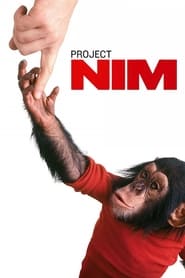
Project Nim
دانلود زیرنویس English
پیشنمایش زیرنویس English
نخستین 200 خط.
A chimpanzee infant left with his mother is a thing, a lump.
Taken away, he acquires
human psychological test performances
which are well-nigh unbelievable.
Nim was born at the primate centre in Oklahoma
and I went out there to get him.
I had never been near that many chimpanzees.
It was frightening, intimidating,
and I knew Dr Lemmon and his wife were watching me
to see what kind of a mother would I be.
Carolyn, Nim's mother, was sitting right there holding Nim,
and she knew what was going to happen better than I did.
She had had six of her previous babies removed, apparently, in the same way.
When the time came to take Nim from his mother,
she instantly took on this drama,
this feeling of something about to happen.
And Dr Lemmon shot her with a tranquilising gun
And then said,
"Quick, we have to get him before she falls over and falls on him. "
She was trying to protect him and cradle him.
So, he raced in and got Nim
and handed Nim to me
and said, "Go back." You know, go back in the other space.
He was very dense.
Unlike a human baby that has fat,
he was dense and hard.
He didn't struggle. He didn't try to get away.
He just screamed.
As much as he may be screaming and protesting, he's also clinging.
He was attaching for dear life.
Wouldn't it be exciting
to communicate with a chimp
and find out what it was thinking?
If they could be taught to articulate
what they were thinking about, this would be an incredible expansion
of human communication, and possibly give us some insight
into how language, in fact, did evolve.
And that's essentially why I started Project Nim.
I don't know what was in his mind, but he just called.
He was asking me to bring an infant chimpanzee into my home,
raise this infant as if he were a child,
and see if he acquired language
as a function of being part of a family.
Stephanie was a former student of mine.
She had a large family of her own children and her husband's children,
was exceedingly empathic and warm.
A chimp could not have a better mother.
I know nothing about chimpanzees,
and I never actually sat down to study them
as one could have. As I should have, perhaps.
But my appetite and my drive to have that intimate a relationship
with an animal was... Nothing would have stopped that.
The fact that we could share language with an animal
seemed like a very radical possibility at that time.
It had been known for some time
that chimps aren't able to make the sounds of human language.
- Do this, Viki. (blows raspberry) - (blows raspberry)
So why not teach them sign language?
The real breakthrough would be
if, like human children, a chimpanzee
could create grammatical sentences.
So, without much preparation and without really asking permission
of my children, my husband, I said, "Fine, I can do it."
"I even have the funds to do it with. We don't need to worry about money. "
And so it was launched. The experiment was launched.
When Nim came to New York, he was barely two weeks old.
The idea was that he would be treated, in every way, like a human infant.
I had recently moved to a brownstone on the Upper West Side
with my three children
and with my husband, who had four children, Wer Lafarge.
Wer was a poet and a writer.
He redefined himself, became what, at that time, was called a rich hippie.
A new husband, new family, new house,
and I brought Nim into that rather turbulent situation.
It just happened. There was no family discussion about,
"Should we? Shouldn't we?"
It was just, "Oh, we're having a chimp."
We're going to teach it sign language.
And then the reality of it is sort of hitting you that it's really...
You know, it's alive, it's not a doll, it's not a toy,
it's not a human, it's a chimp and it's an amazing, sweet little
newborn baby, needy creature, so...
I think I fell in love instantly.
Nim didn't like Wer.
And Wer didn't like him.
Almost instantly I saw how complicated this was going to be.
I think Wer went along with it.
It was clearly Stephanie sort of saying, "Let's have a chimp."
It was the '70s! (laughs)
I breast-fed him for a couple of months.
It seemed completely natural.
Everything was about treating him like a human being.
By the time I had Nim, of course, I felt very comfortable with babies.
I wasn't prepared at all for the wild animal in him
and the drive.
By the time he was three months old, I think,
and starting to be ambulatory,
he was just right there,
nothing passive, nothing passive, ever.
I think he figured that he could just get in between Wer and Stephanie
on some level.
And Wer put his arm around her, and Nim just, you know,
half asleep, having a bottle,
turned and bit Wer on the arm quite hard.
He didn't want Wer in the picture.
He wanted Stephanie all for himself.
Wer definitely felt excluded.
Nim had just become part of my being.
That was incompatible with the role that I played as wife.
"Herb's coming, Herb's coming, Herb's coming. "
"Herb's coming" was a big deal.
I would just go over and visit , just to see what his state was
and how he was getting along.
Herb was infinitely exciting.
I admired his intellect and his goals and his arrogance, all those things.
There was something that didn't sit right with me about him.
The people that I am the closest to, throughout my life,
are people that I have had some period of sexual contact with.
I don't think that the previous sexual relationship
between Herb and myself
made a difference to the project at all,
other than it was part of the glue
that allowed it to happen.
Herb didn't come very much.
He wasn't part of the caretaking package at all.
Young newborn chimps
are always raised by their mothers, not by their fathers.
And I didn't see any way of trying to change...
Or any point in trying to change that.
For better or worse, I never regarded him as a child.
I regarded him
as an intelligent, personable centre of a scientific project.
I had an implicit faith that Nim would learn signs.
We had to wait and see.
How do they start teaching the child to sign?
Does the child just watch and... Whatever. I don't know.
It was a problem. We were trying to teach this chimp sign language
and nobody in the house really was fluent in sign language.
We would mould his hand into the sign for "drink", which is this,
and then give him the bottle to drink.
It just happened.
It was just amazing.
And I thought, "Piece of cake."
I was absolutely delighted.
He picked up quite a few signs after that rather quickly.
"Eat", "me", "Nim"
were part of his first signs.
"Hug" was another one.
And it was as if, then, "Okay, we're off.
"Now we just got to build up the vocabulary. "
As much as we were moulding him,
we were moulding these damn hands and all this stuff,
he was starting to mould us.
He knew every dynamic that was in the room, instantly.
He knew when you were upset.
Whatever had happened in, you know, a 13-, 14-year-old's life.
And he would come over and he would just come and sit with you and hug you,
and then just kiss the tears away.
You know, it was amazing. Just unconditional.
He was my life line, he was my buddy,
and he was bringing something out in me,
a freedom to defy expectation and authority.
His greatest focus of defiance was against Wer.
He would kind of pull books off the shelves,
and Wer liked his books a certain way.
When he saw Wer coming, he would really do it.
It was very focused. It was intentional.
"Fuck you, I'm touching these."
It was a problem.
Wer was so impotent.
I mean, what could he do? He'd chase him around. "Drop that! Blah, blah."
I mean, he won every time.
Nim saw Herb as his next adult male challenge.
I mean, that is the life that he's hard-wired for.
To take on increasingly powerful male figures until he's the top.
When Herb would come over, expecting to step in
and have control of Nim, and he couldn't and didn't,
we loved it. We loved it.
I cornered Nim
and just went to pull him out of some
hiding place, and he bit me.
Frankly, everybody in the family got a kick out of Nim
doing just what Herb hated.
No one ever put him in his place,
and he just grew more and more and more powerful,
and that was exciting to me.
We didn't have to try to control him in any way. In fact,
we enjoyed just letting him hang out and see how it went.
Stephanie being the kind of mother she was,
was not very concerned about discipline.
It was sort of the hippie mentality,
and I think what I would tell her would go in one ear and out the other.
Herb would have wanted a schedule and a structure
and charted progress and notes and all of that.
I didn't supply that, I couldn't create that,
and I don't think Nim would have thrived in that.
I was taking classes at Columbia University
and there was a small sign that said,
"Research assistant needed, course credit granted. "
A man opened the door
Project Nim subtitles in other languages
More English subtitles for Project Nim
- Project Nim 2011 1080p WEBRip x265-RARBG en · 32 downloads · 2026-01-24
- Project Nim 2011 1080p AMZN WEB-DL DD5 1 H 264-SiGMA · 33 downloads · 2018-09-30
- Project Nim 2011 1080p AMZN WEB-DL DD5 1 H 264-SiGMA · 48 downloads · 2018-09-30
- Project Nim 2011 DVDRip 350MB MKV Ganool · 56 downloads · 2012-01-19
- Project Nim 2011 DVDRip XviD-UNVEiL · 33 downloads · 2012-01-10
- Project Nim 2011 DVDRip XviD-UNVEiL · 44 downloads · 2012-01-10
- Project Nim 2011 DVDRip XviD-UNVEiL · 32 downloads · 2012-01-10
نظرات
No comments yet. Be the first to leave one.