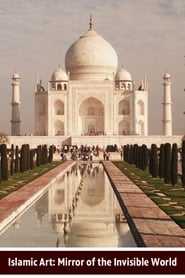
Islamic Art: Mirror of the Invisible World
دانلود زیرنویس English
هماهنگ با نسخههای زیر
برچسبها
پیشنمایش زیرنویس English
نخستین 200 خط.
The narrative of human history
is punctuated by war and conquest,
triumph and catastrophe.
But in the end, what endures?
It is not the struggle that has lasting in our consciousness
and treasured in our museums.
It is the outpouring of creativity and intelligence
that is civilization's greatest gift.
The true legacy of Islamic culture
is revealed in the nuance and ingenuity
of its art and architecture.
That feeling
of the encounter with majesty,
the encounter with monumentality,
it transcends culture.
It transcends history.
It is a kind of universal human experience of the arts.
We use art, we use architecture to crystallize our deepest
emotions and our deepest aspirations
for an understanding of our place in the world.
These monuments and artifacts
continue to inspire us.
They herald the finest qualities of Islamic culture
and show us the best of individual achievements.
Each contributes a crucial part in the ascent
of world civilization.
The seventh century was a turning point in history.
In Europe,
the Germanic tribes that had overrun the Roman Empire
struggled for supremacy as they shaped their feudal kingdoms.
To the east, the once great empires of Byzantium and Persia
were weakened by centuries of mutually destructive wars.
At that moment, the tribes of Arabia
began one of history's greatest revolutions
in power, religion, culture, and wealth,
united under the new faith of Islam.
From its birth in the Arabian Peninsula,
Islam spread across the basin of the Mediterranean Sea,
eventually we changed from Indonesia to Spain.
And from this diverse civilization,
and the extraordinary wealth of its rulers,
came an outpouring of artistry.
Objects and buildings, gardens and paintings
reflect how this new culture grew
in a varied and complex world.
It's not only about beautiful things.
It's not only about looking at specific techniques
or how a beautiful object looks in a museum.
It's more like a window on a culture.
Islamic art is a reflection of the people and the context
in which it was produced.
And that, of course, makes
art even that much more important because
it is a reflection of who we are,
and what we are, and
will be memorialized in the years to come.
The themes that emerged as Islamic art developed
show us the similarities in our common cultures,
how our techniques and styles are shared and transformed.
Well, there are aspects of art and architecture
that are universal, that you don't need to learn
to appreciate to get it.
So I might have to learn Arabic to read the inscriptions,
but I don't have to read Arabic to appreciate
the purity of simple black script
on a white background on a plate.
It is elegance,
and it's elegance that speaks through the centuries.
In Muslim tradition,
Islam began in 610
in a cave in Mecca,
where an angel came upon the prophet Muhammad
and revealed to him the words of the Koran.
In the first revelation, God proclaimed himself the creator
and said, "Read, for your Lord is the most generous,
the one who taught the use of the pen,
taught man what he did not know."
More than poetry, more than a holy book,
it was the very word of God.
For Christians, God's gift was his son.
He sent down his son to save mankind.
For Muslims, god sent down a revelation.
So the parallel is between Christ and an oral revelation.
Because God's gift to mankind in Islam is the Koran,
writing becomes the central feature of Islamic culture.
And the use of the word everywhere,
from day-to-day objects to Koran manuscripts,
is the one feature that separates Islamic culture
from all others.
The earliest dated words of the Koran
are found in a stone building in Jerusalem,
one of the most sacred and politically charged cities
in the world.
Built in 692, it is called the Dome of the Rock.
The Dome of the Rock
would have been a familiar building in terms of form,
that is, that the shape, the arches, the techniques
of decoration would have all been
within the local Christian vocabulary.
It borrows the form
from a Byzantine martyrium.
And a martyrium is simply a building
that marks the place of a martyrdom
or perhaps the burial place of a saint.
But instead of a burial site,
the dome covers a massive rock believed by Muslims
to be the sacred place from which Mohammad ascended
to heaven on his mystical night journey
to pray with Abraham, Moses, and Jesus.
The thing that
makes this a uniquely Islamic building is
the Arabic inscription that runs around it.
That is, in effect, the sign that says,
this is from a new culture.
This isn't just somebody putting up words.
This is somebody who cares.
This is carefully composed.
This is beautiful writing, calligraphy.
The interior inscription talks constantly
about how God is the one not three.
And this is clearly a rebuttal to Christianity
where the primary focus is that God sent down his son
and God is tripartite.
And for Muslims, this is anathema.
God is one, not three.
So clearly there is some kind of response
to the Christian presence in the city.
That inscription is made in gold cubes.
They're small glass cubes with gold foil on them.
They are by far the most expensive kind of cube.
And in Christian buildings often are used for halos
or used behind the figure of Christ.
In the Dome of the Rock, they are
used for this inscription that runs around the building.
The Koran became the focus of devotion,
but it also became the focus of art.
From the earliest times on,
Muslims try to make Koran manuscripts as
beautiful as possible.
Calligraphy, the art of beautiful writing,
is considered more important than all the other arts.
Today, one of the most well-respected
Muslim calligraphers in the world
is a convert from California.
After teaching himself Arabic, and working for over 20 years
to perfect his art, Mohamed Zachariya
finally traveled to Turkey to learn from the masters in 1983.
Basically, they made a deal.
They said, if you want to start all the way from the beginning,
if you want to forget everything you learned about calligraphy
for a while and sort of go from blank from start, just
like you'd never picked up a pen before,
and go through the lessons,
we'll be behind you all the way with this thing and help you out.
But if you can't do that, have a nice time in Istanbul.
Zachariya accepted the challenge
and began to learn his craft again,
just as the first masters had before him.
Traditionally Muslims always
wrote with a reed pen.
So you went out and you had reeds or you imported reeds.
Trimming the pen is even more important.
Cutting the nib is even more important
than actually the reed itself.
And you have a tool on which you lay the reed when
you cut it and a special knife.
And people collected these tools and gathered them
in their little tool boxes.
Decorated with geometric designs
and calligraphy, these toolboxes alluded
to the practical use of the box,
as well as the mystical power of the pen.
I've always had a facility for carving.
But to cut a pen, you need a knife of a certain shape
and a certain curvature in the blade.
If it isn't that curvature,
you're never going to cut a good tip.
In the seventh century,
calligraphers wrote the Koran on treated animal skins
called parchment.
The parchment was
so important and so expensive that sometimes they
even reused it.
And they scraped away an earlier text
and rewrote on top of it.
And what's happened over time is the earlier text has darkened,
and you can actually see it underneath.
Most of them-- they're readable,
or legible, or practical.
They're very, very interesting.
But they don't rise to the level of art.
But every now and then you see one of them,
and you look at it
and say, how on earth could this guy have done that?
You know?
How did they do their reed?
How'd they cut their pen?
We don't even know what angle the pens were cut.
But it simply takes your breath away.
Islamic calligraphy was forever
نظرات
No comments yet. Be the first to leave one.