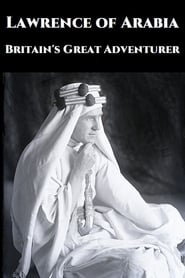
Lawrence of Arabia: Britain's Great Adventurer
دانلود زیرنویس English
هماهنگ با نسخههای زیر
برچسبها
پیشنمایش زیرنویس English
نخستین 200 خط.
Thomas Edward Lawrence -
the brilliant British Army officer
depicted in these exhilarating moments from the movie classic
Lawrence Of Arabia.
It was 600 miles on a camel and, I mean, really extraordinary.
He's seen as a military visionary who led an Arab uprising...
Lawrence adapts guerrilla warfare to the circumstances on the ground.
..and changed the world forever.
The British and the French are able to negotiate the portioning
out of these Arab territories.
But Lawrence is one of the most enigmatic figures
of the 20th century.
Those deep-rooted cross-currents and contradictions.
It's mainly because of that that we find him so fascinating.
Was he a man simply running from his past?
They hid what at the time would've been considered a dark secret.
They were masquerading as a normal family.
A man tormented by doubts about his identity?
He was describing abuse that was physically
and sexually painful, but that he may have enjoyed.
How much was Lawrence driven by escapist fantasy?
Lawrence's mind is full of these sort of heroic images.
This is a real life quest.
His journey took him into the heart of a Middle East
transformed by monumental forces.
What you end up with is these boundaries,
often cutting across through tribes, through ethnicities.
They don't really make any sense.
A lifetime of guilt was Lawrence's reward.
Arab expectations are really absolutely dashed.
There is a great sense of disappointment and betrayal.
This is the story of the real Lawrence of Arabia.
For a decade and a half, until his death in 1935,
Thomas Edward Lawrence,
Lawrence of Arabia,
is the most famous man in England.
He counts kings among his friends.
His name sells newspapers in their thousands.
But the most famous man in England might easily be the unhappiest.
TE Lawrence is running for his life.
He runs here, Clouds Hill,
a tiny primitive cottage in Dorset,
a refuge from the fame that is killing him.
I think it was a case of wanting fame,
but when it arrived, he didn't like what it looked like.
It was very uncomfortable for him.
He would sometimes sit absolutely silent and not move
from the same position all morning - not move, not say anything.
He was really very depressed.
Lawrence retreats.
He retreats from the limelight,
but I think he's also retreating into himself.
His Dorset retreat is also a place to write,
a place to try and make sense of the fame that has so unsettled him.
Letters to friends punctuate his progress.
"I've found a ruined cottage.
"I've roofed it and am flooring it.
"At present, one chair and a table.
"Too many people talking to me.
"Can't write."
The Lawrence myth turned a strange, solitary man
into an international celebrity.
That myth had been born as an exhausted and broken Europe
had dragged itself through the last bloody days of the First World War.
The British and the French are struggling on the Western Front.
And not only do you have France experiencing what became
known as "the mincing machine" of Verdun, but you also have the
infamous Battle of the Somme, the bloodiest day in the history
of the British Army, with almost 20,000 dead in a single day.
Lawrence's legend has chance beginnings.
He is a minor figure in the British war effort in the Middle East
when America joins the conflict in 1917.
At the same time,
the US government wants good news stories to sell the war at home.
A slick New York journalist gets a call.
Lowell Thomas was an American journalist who was sent out
to get copy, really, that might
persuade American boys to sign up for the war.
Went first of all to the Western Front.
Found nothing but mud and guts and appalling things,
so he thought, "Oh, dear, this is no good."
Alerted to what sounds like a more marketable war being fought
1,000 miles to the east, Thomas and his cameraman wash up in Cairo.
Here, the British, under General Allenby,
are fighting the Ottoman Turks.
Initially, Lowell Thomas goes out with his camera, and he takes some
great shots of Allenby marching up and down
and lots of British soldiers.
And then he becomes aware of this character, this young officer
who was having exploits,
sort of Boys' Own adventure stuff in the desert.
"As this young Bedouin passed by in his magnificent royal robes,
"the crowd in front of the bazaars turned to look at him."
The "Blond Bedouin", as Lowell's tabloid instincts christen him,
is Thomas Edward Lawrence.
He gets permission to go and film him
and immediately sees that this is cinematic gold.
This guy's wearing robes, there are camels.
This is going to sell well to the great American and British public.
So, in 1919, he started up this picture show called
With Allenby In Palestine And Lawrence In Arabia.
And after a while, he began to see that people were more
interested in the Lawrence in Arabia bit.
So, he dropped the Allenby In Palestine
and called it With Lawrence In Arabia.
Lowell's travelogue is a genuine multimedia experience -
film,
colour stills,
studio portraits of Lawrence,
dancing girls,
braziers burning incense
and all topped off with Lowell's own breathless commentary
delivered live on stage.
This show, which is a blockbuster success,
effectively creates the legend of Lawrence of Arabia.
It turns Lawrence into a famous man, into a household name,
into what Lawrence himself described as "a matinee idol".
Here is the story of a war hero who goes to Arabia,
and almost single-handed raises, for the first time, a united Arab army.
He's the first mediated celebrity,
the first person to be actually filmed
and bigged up on celluloid,
one of the first was Lawrence.
But the effect on him was very ambivalent.
The story is that he would quite often go and watch the show,
but he'd sit incognito at the back.
Another letter betrays his irritation.
"I am painfully aware of what Mr Lowell Thomas is doing.
"He came out to Egypt on behalf of the American government,
"spent a fortnight in Arabia -
"I saw him twice in that time -
"and there he seems to have realised my star value on the film."
As the world's press gathers beyond the walls of his Dorset retreat,
the most famous man in England sits paralysed by self-doubt and guilt.
A legend has been born on the screen,
but a broken and hollow-eyed spectre watches on from the wings.
Who was this haunted man?
What had happened to Lawrence of Arabia?
TE Lawrence grew up in a family that was the very picture
of upper-middle class respectability.
He was the second of five sons born to Thomas and Sarah Lawrence.
But the comfortable home at number 2,
Polstead Road, North Oxford is not all it seems.
And Lawrence's chance discovery of the family's dark secret
turns his world upside down.
At the age of ten,
Lawrence overheard his father talking about his family background.
And what he heard absolutely staggered him.
His father, it turns out, has another family in Ireland,
and the name Lawrence is a total fiction.
The mother and father weren't married.
Lawrence's father, Thomas Chapman as he was, had abandoned
his first wife and daughters, left them back in Ireland.
His mother, Sarah Junner, worked as the governess
to Thomas Chapman's daughters.
And Thomas Chapman fell in love with Sarah Junner,
eloped with her.
Thomas Chapman's wife was never willing to grant a divorce,
which meant they were never able to legitimise their relationship
by getting married.
It was conditioned in the young Lawrence that this was
an unclean thing to be, that illegitimacy was a badge of shame.
They were a normal family, or masquerading as a normal family,
a regular upper-middle class family, but with this very dark secret.
Behind closed doors, it is
the Lawrence children who pay the penalty for their parents' choice.
The mother in particular, who came from a very strict religious
background, never reconciled herself to her unmarried status,
and she raised her boys almost as though they would
atone for her sins.
She was very guilty about the illegitimacy of her five boys,
and at some level I think she regarded them as artefacts of sin.
In particular Ned, as he was called in the family,
Thomas Edward Lawrence,
who was the most wilful, the most independent, the most rebellious,
and that took the form of beatings.
It wasn't a quick once across the bottom for some infraction.
They were meant to be much more serious than that.
And if not physical, I think that he
carried emotional scars for life as a result.
She left him with a bunch of paradoxes.
The key one for me that stands out
is this unhealthy connection between love and pain.
The two things were part of the same equation.
He is then torn apart by his illegitimacy,
by the social stigma associated with illegitimacy,
by all of the anxieties that that gives rise to
if you're a part of the English upper-middle class
in the period before the First World War.
The neighbours picked up there was something odd about this family.
They kept themselves to themselves in a way that others didn't.
So, he very early on got the sense of otherness.
He started to question received wisdom.
He didn't think that the established rules applied to him.
There's a sense of not fitting in, not belonging.
In his troubled isolation, Lawrence takes to his books
and finds companionship and a simple morality in Arthurian fantasy
and its tales of heroic knights.
He's looking for a world that's black and white,
where you can tell the heroes from the villains.
نظرات
No comments yet. Be the first to leave one.