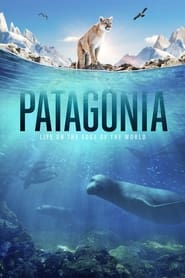
Patagonia: Life at the Edge of the World
دانلود زیرنویس English
هماهنگ با نسخههای زیر
برچسبها
Download English Subtitle Files for Mobile (6)
پیشنمایش زیرنویس English
نخستین 177 خط.
Gaffet: First time I saw orca was quite unexpected.
A quite large group was hunting.
It was this combination of feeling awe
and at the same time,
a little bit of horror and shame.
It goes into your heart
and into your mind, and it doesn't leave you.
Narrator: At the ends of the Earth
is a land of extremes...
...home to spectacular wildlife.
For centuries,
people and animals have battled for supremacy.
But now enemies are becoming allies.
Together they face new challenges...
...in a rapidly changing world.
You are at the mercy of the elements.
Narrator: This is the story
of what it takes to survive...
...on the edge of the world.
The land along Patagonia's eastern coast is barren.
But the sea is rich with life.
The Andes cut through Patagonia,
blocking moist air flowing from the Pacific,
creating the eighth-largest desert in the world.
But off the Atlantic coast,
a cold southern current mixes with a warmer Brazilian one,
producing the perfect conditions for marine life.
On land, a wild patchwork of desolate beaches...
...rocky outcrops,
and towering cliffs
overlook one of the most important
marine reserves on the planet.
The top predator patrolling these waters?
Orca.
Also known as killer whales,
the largest members of the dolphin family.
This pod of 10 is a close-knit group
that will stay together their entire lives.
The leader of this family is wise old grandma,
known as Maga.
It's high tide, and the 40-year-old matriarch
leads her family towards shore.
Their target?
Unsuspecting seals and sea lion pups.
But how to get to them on the beach?
The family has perfected an ingenious way to hunt here.
First, they swim sideways to hide their telltale dorsal fins.
The seals have no idea
that these six-ton killers are so close.
Then the orca do something extraordinary.
They beach themselves.
It's a remarkable technique.
Beaches are death traps for whales and dolphins.
It's too easy to get stranded.
But not for this family.
They've learned how to expertly maneuver back into the sea.
Maga and her pod are one of only two orca families in the world
known to pull off this dangerous feat.
Ever since she first laid eyes on them,
orca expert María Leoní Gaffet
has been fascinated by these predators.
Gaffet: I was born here in Patagonia,
quite close to the Península Valdés.
It was quite a strong experience
to see them for the first time,
especially, you know, hunting in this manner.
And I guess that's when they started to exist for me.
Narrator: María Leoní was determined
to understand their behavior.
She decided to camp out along this desert coastline
for three months a year when the orcas hunt the most.
For 20 years she's observed Maga and her family
and can identify individuals by their unique markings.
Gaffet: You take photos of their fins,
of their saddle patches.
The idea is to do observation of this population
and of their behavior over long periods of time.
Narrator: María Leoní realized their hunting technique
was not instinctive, but learned.
Gaffet: They start teaching the calves
when they are really tiny.
You know, they start to bring them to the shore slowly
and safely until eventually they can do it on their own.
Narrator: It's an incredible skill
taught by one generation to the next.
This morning, Maga's hunting class is in session.
She's working with her grandchildren
on their stranding technique.
Gaffet: She's a great teacher.
She's really proficient and professional.
Narrator: Today's challenge --
the young calves are to swim into the shallows,
grabbing clumps of seaweed.
A practice run like this is critical.
If they master this skill,
they'll never go hungry.
But one wrong move and they could beach themselves
and die.
Maga leads her class up to the breakers,
daring them to grab some seaweed.
And one bold student goes for it,
launching into the shallows.
Success.
María Leoní has discovered that it takes four years
for each new generation to master this behavior...
...allowing this orca pod to thrive along the desert coast.
While Maga and her family return to open water,
on land, a real-estate dispute is about to get bloody.
Narrator: The beaches along Patagonia's desert coast
at El Pedral are wild and exposed.
It's not an easy place to raise a family.
Just ask some of its more iconic residents...
...Magellanic penguins.
Each spring, these migratory waddlers
return from their feeding grounds up north to breed...
...under the watchful eye of conservationist Popi García.
Garcia: The first time I heard about
something called a penguin,
it was through my grandmother.
She used to tell me very, very warm and nice stories
about penguins when I was a small boy.
Narrator: When Popi finally saw them, he was captivated.
Garcia: I was 19, 18 years old.
I came to one of the colonies here in Patagonia,
and that was an epiphany moment because I had the feeling
that I had to dedicate my life to their conservation.
Narrator: Today the beach is busy.
But it wasn't always like this.
Garcia: The first time I came,
there were only six pairs of nests.
This place was a real mess.
There were a lot of reckless people and careless fishermen
coming here, throwing garbage everywhere.
We needed to protect this colony because otherwise
they would leave and they would never come back.
Narrator: It took several years of clearing trash
and getting local support to turn this polluted beach
into a protected area.
Popi's efforts paid off.
And the penguins returned.
Garcia: The colony grew from those
six original pairs of penguins
to over 3,000 pairs now,
so that was a home run.
Narrator: Popi now lives nearby with his wife, Laura.
During breeding season they regularly monitor the penguins.
Garcia: When you work with them
and you visit them very frequently,
you get to know them better.
And one of the favorite penguins in this colony
is called Clarita.
Narrator: She is one of the original few
that restarted the colony.
Garcia: We know that she's about 16 years old.
She was able to raise 14 chicks,
and the last two chicks are hatching right now.
Narrator: Popi weighs and measures Clarita's newborns
to make sure they're in good health.
Garcia: Clarita, for me, represents
the hope for this planet.
Whatever we do in terms of conservation
is really worthwhile,
because this colony is showing us
that a small action that we decided to do a long time ago
is having a big impact.
Narrator: The penguins are doing so well here
they're running out of nest sites,
leading to a real-estate crunch.
This male has decided to move in on another family's burrow.
The resident female watches on concerned.
She calls for her partner.
His guttural squawks are a show of dominance.
[ Continues squawking loudly ]
But the intruder isn't taking the hint.
The two square off, beak to beak.
The resident on the left gets in some good jabs.
Finally, bloodied and battered,
Patagonia: Life at the Edge of the World subtitles in other languages
More English subtitles for Patagonia: Life at the Edge of the World
- Patagonia Life on the Edge of the World S01 BluRay 1080p FLAC 2 0 AVC REMUX-FraMeSToR · 78 downloads · 2023-01-19
- Patagonia Life on the Edge of the World S01E02 Fjordlands 1080p HULU NTb eng · 42 downloads · 2022-08-17
- Patagonia Life on the Edge of the World S01E01 · 50 downloads · 2022-08-15
نظرات
No comments yet. Be the first to leave one.